


Where is Sapa in Vietnam? Complete travel guide to Sapa town
Nestled in the Hoang Lien Son mountain range of northern Vietnam, Sapa is a charming town known fo

Nestled in the Hoang Lien Son mountain range of northern Vietnam, Sapa is a charming town known for its misty landscapes, terraced rice fields, and vibrant ethnic culture. For travelers wondering where Sapa is in Vietnam, this guide will show you its exact location, the best ways to get there, and what to expect during your visit. From trekking the famous Fansipan Peak to exploring colorful local villages, Sapa promises a journey filled with breathtaking scenery and unforgettable experiences.
Where is Sapa in Vietnam?
Sapa is a famous mountain town located in the northwestern region of Vietnam, belonging to Lao Cai Province. Nestled on the slopes of the majestic Hoang Lien Son mountain range – one of the highest in the country – Sapa sits at an altitude of about 1,500–1,600 meters above sea level. Thanks to this special location, Sapa has earned the nickname “the town in the clouds”, offering cool weather all year round and breathtaking landscapes.

Where is Sapa in Vietnam? (source: Gecko routes)
Administratively, Sapa is the tourism hub of Lao Cai Province, about 315 km northwest of Hanoi, making it an important gateway to the mountainous north. Its position near the Vietnam–China border also makes Sapa a convenient stop for travelers exploring the wider Northwest region.
The town’s topography is shaped by lush valleys, towering mountains, and especially its iconic terraced rice fields, which stretch for thousands of hectares. These terraces have been recognized among the most beautiful in the world, a living testament to the skill and tradition of local ethnic groups. Close to Sapa lies Mount Fansipan, standing at 3,143 meters, proudly known as the “Roof of Indochina” – a dream for adventurers and trekkers alike.
Beyond its natural setting, Sapa’s location is also culturally significant. It is home to a diverse mix of ethnic minorities such as the Hmong, Red Dao, Giay, and Tay, whose traditions, colorful costumes, and way of life enrich the region’s identity. The combination of dramatic geography, rich culture, and cool alpine climate makes Sapa one of Vietnam’s most captivating destinations.
How to get to Sapa?
Located more than 300 km from Hanoi, Sapa is not too far, yet the journey itself is a rewarding experience as you can admire the majestic mountain landscapes along the way. There are several ways to reach this misty town, suitable for both travelers who prefer convenience and those who enjoy a slower pace. Currently, visitors usually travel in two main directions: directly from Hanoi to Sapa, or by train to Lao Cai and then continue by bus or car.

Visitors usually travel by train to Lao Cai and then continue by bus or car to Sapa
From Hanoi to Sapa
If you start from the capital, there are three common transportation options:
- Sleeper bus: This is the fastest and most convenient option for those who want to save time. Simply board the bus at night, get some sleep, and by the next morning, you’ll arrive in Sapa ready to begin your journey.
- Hanoi – Lao Cai train: For travelers who enjoy a slower and safer rhythm, the train is an ideal choice. The 8-hour journey takes you past rice fields and northern mountain ranges. Once you arrive at Lao Cai station, you continue by bus or taxi for about one more hour to reach Sapa.
- Private car: Thanks to the Noi Bai – Lao Cai Expressway, traveling by your own car has become easier and more flexible. In just about 5–6 hours, you can get to Sapa, stopping anywhere along the way to enjoy the scenery. However, the final mountainous stretch requires experienced driving skills due to many winding curves.
From Lao Cai to Sapa
After arriving at Lao Cai station, you still have one short yet scenic leg before reaching the misty town.
- Local bus is the most popular option thanks to its low cost and frequent operation throughout the day.
- Taxi offers more comfort and privacy.
- For adventure seekers, renting a motorbike allows you to stop for photos along the winding mountain road—a truly unforgettable experience.
Useful travel tips
Before starting your trip, it’s worth keeping a few things in mind to make your journey smoother:
- If you are prone to motion sickness, consider taking the train and then switching to a bus, since the final mountain road to Sapa can be winding.
- In winter, the roads may be foggy or even icy, so drive carefully and dress warmly.
- Once in Sapa, renting a motorbike to explore villages and terraced rice fields is one of the best ways to experience the region freely and authentically.
Climate & Best time to visit Sapa
Sapa carries a charm that changes with the seasons, making every visit a unique journey. With its cool mountain climate, this highland town unfolds like a four-season painting, giving travelers endless reasons to return.
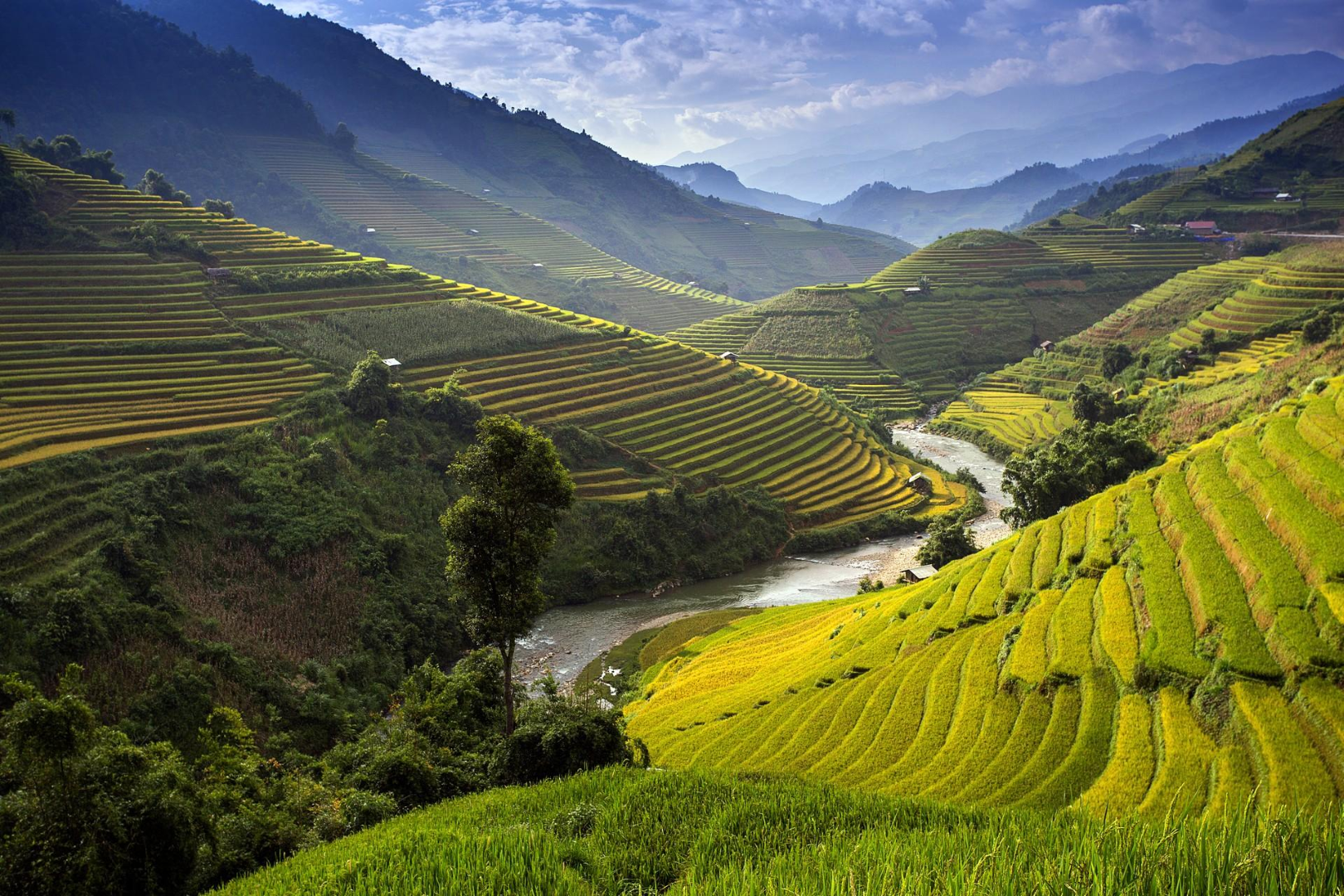
Climate & Best time to visit Sapa (source: Suheron)
Spring (February – April)
When spring arrives, Sapa comes alive with vibrant colors. Pink peach blossoms and pure white plum flowers spread across hillsides and villages, creating a poetic landscape. During this time, visitors can stroll along flower-lined paths and join traditional festivals of the H’Mong, Dao, and other ethnic groups. Spring is not only a season for sightseeing but also an opportunity to immerse in the cultural richness of the Northwest.
Summer (May – August)
While the lowlands swelter in heat, Sapa offers a refreshing retreat with temperatures ranging between 15–25°C. The weather is pleasantly cool, perfect for trekking along mountain trails, exploring lush green rice terraces, and enjoying the crisp mountain air. For nature lovers, summer is when Sapa feels most vibrant and full of life.
Autumn (September – November)
Many consider autumn the most beautiful time of the year to visit Sapa. Terraced rice fields turn golden, stretching like silk across the mountain slopes. The skies are clear, the air is dry and crisp, ideal conditions for photography, mountain climbing, or simply soaking in the breathtaking scenery of the harvest season.
Winter (December – January)
Winter wraps Sapa in thick fog, and the biting cold seeps into every corner of the town. On rare occasions, snow blankets rooftops and fields, transforming Sapa into a magical scene hardly found elsewhere in Vietnam. For adventurous travelers, winter is both challenging and rewarding, especially for those eager to experience the thrill of snow hunting.
Each season in Sapa has its own charm: colorful spring, refreshing summer, golden autumn, and mystical winter. Travelers only need to choose the right time that matches their preferences to make their journey truly unforgettable.
Culture & Ethnic Diversity
Sapa is not only famous for its breathtaking natural landscapes but also for its vibrant cultural mosaic, shaped by the ethnic minority communities who call this land home. Today, Sapa is inhabited by several groups, with the H’Mong, Red Dao, Tay, Giay, and Xa Pho being the most prominent. Each community preserves its own customs, language, traditional attire, and festivals, creating a cultural identity that is truly unique.
As you walk through the villages, you’ll often encounter H’Mong women dressed in brightly colored hemp and brocade skirts or Red Dao girls wearing intricately embroidered headscarves. These traditional outfits are not only part of everyday life but also symbols of cultural pride, passed down from generation to generation.
Beyond clothing, the spiritual and cultural life of Sapa’s people is rich and diverse. The Sapa Love Market, held on Saturday evenings, is a gathering place where young men and women connect through folk songs and the sound of traditional instruments. Festivals such as the H’Mong Gau Tao or the Red Dao Fire Dance reflect both spiritual beliefs and the deep bond between humans and the natural world.
Visitors to Sapa will find themselves welcomed into a simple yet heartfelt way of life. Whether it’s being invited to share a cup of corn wine in a wooden stilt house or listening to stories by the warmth of a crackling fire, every encounter carries a sense of authenticity and warmth. This hospitality, combined with the region’s rich ethnic diversity, makes Sapa not only a place to admire scenery but also a destination to experience profound cultural values.
Top attractions & experiences in Sapa
Sapa captivates visitors not only with its cool year-round climate but also with a wealth of breathtaking landscapes and unique activities. Every journey in this misty highland town reveals a new perspective, making each visit unforgettable.
- Conquer Fansipan Peak
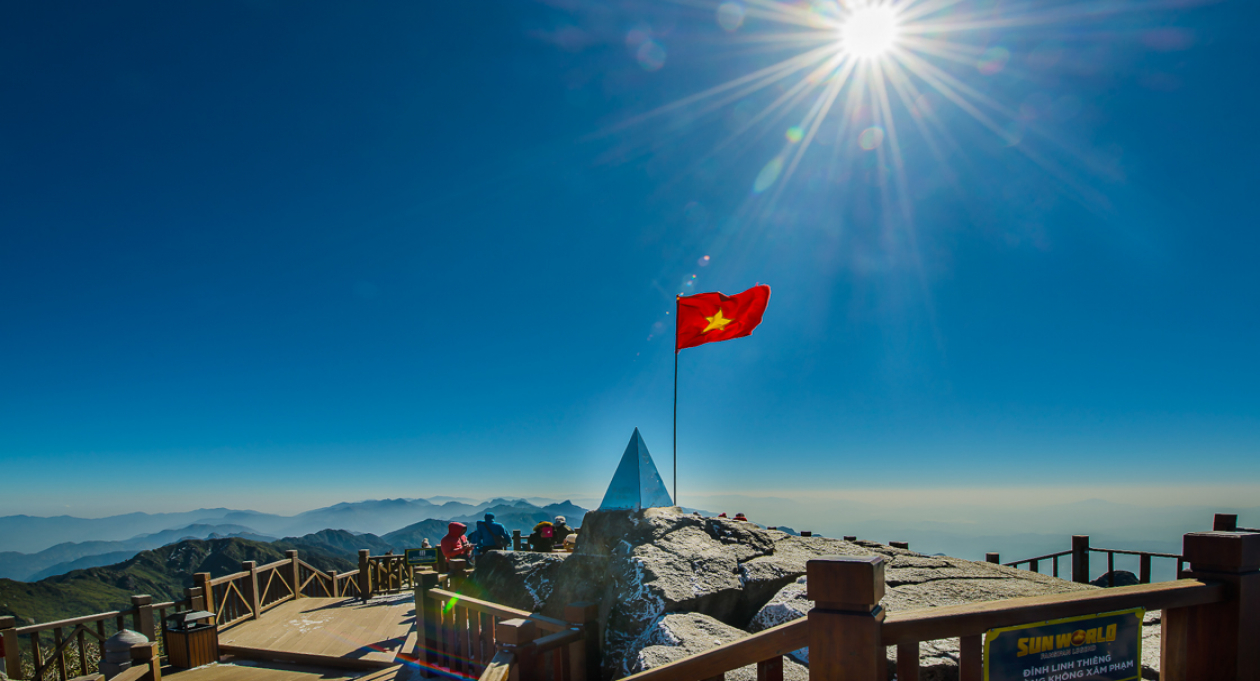
Conquer Fansipan Peak (Silk path)
Known as the “Roof of Indochina,” Fansipan stands at 3,143 meters and is a must-visit landmark in Sapa. Travelers can choose to trek for a challenging adventure or take the modern cable car to enjoy panoramic views of the mountains and a sea of clouds beneath.
- Explore Muong Hoa Valley
Muong Hoa Valley is famous for its endless terraced rice fields and mysterious stone carvings adorned with ancient symbols. The valley is home to many ethnic minority communities, offering travelers an authentic glimpse of local daily life and culture.
- Stroll up Ham Rong Mountain
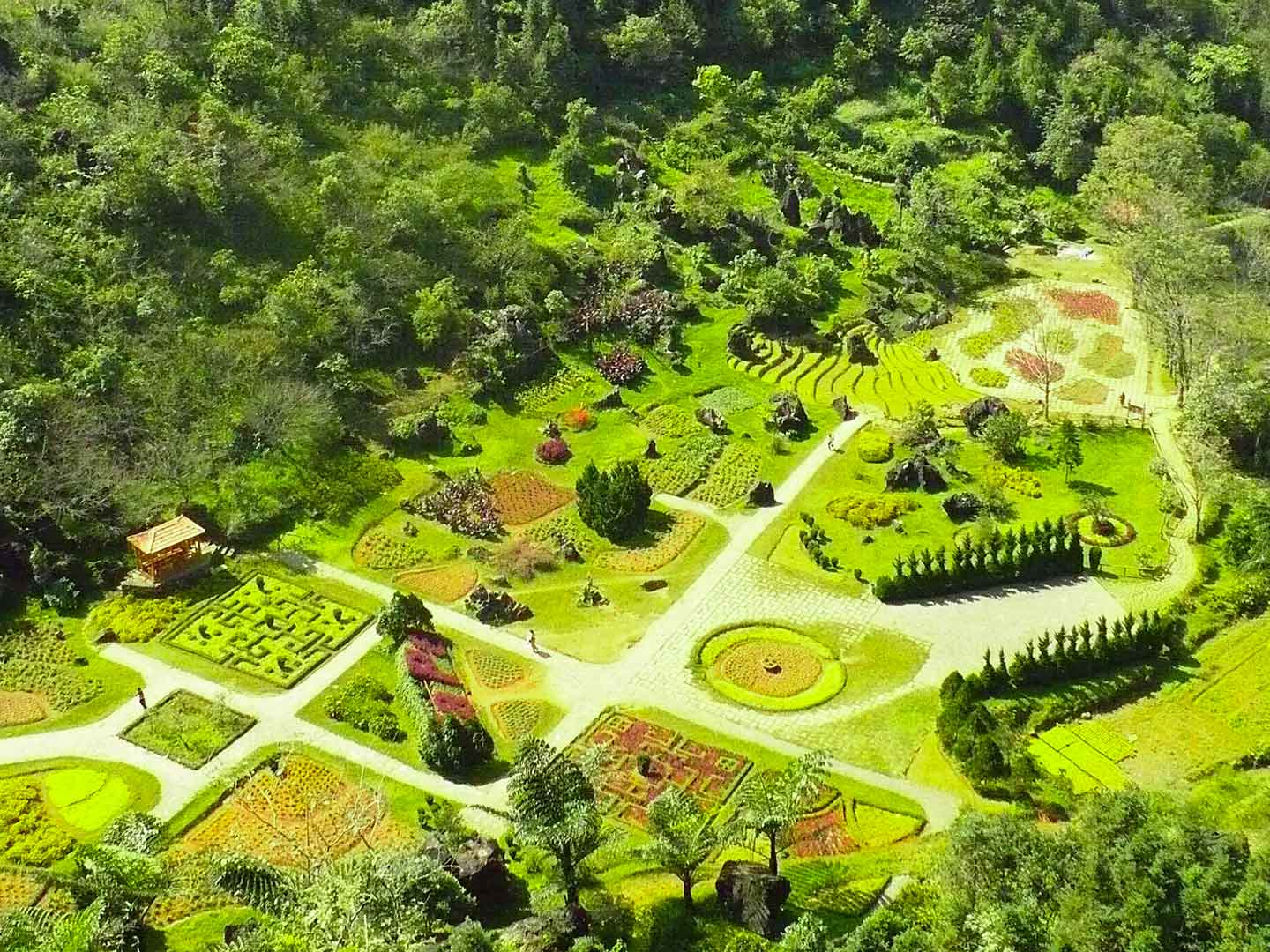
Stroll up Ham Rong Mountain (source: Sapa nomad)
Located near the town center, Ham Rong Mountain is perfect for a leisurely walk with seasonal flower gardens and winding stone paths. From the top, the panoramic view of Sapa town and the Hoang Lien Son range unfolds like a painting, especially stunning in spring when flowers bloom.
- Visit Ethnic Minority Villages
Villages such as Cat Cat, Ta Van, Ta Phin, and Ban Ho are ideal for discovering local traditions. Visitors can experience brocade weaving, Red Dao herbal baths, taste traditional dishes, and immerse themselves in the simple daily life of ethnic communities.
- Admire Sapa Stone Church
Located in the heart of the town, the Gothic-style Stone Church is a historical landmark. In the evenings and on weekends, the area comes alive with the Love Market, music, and traditional dances, offering a unique cultural experience.
- Marvel at Silver Waterfall (Thac Bac)
Just a short drive from the town center, Silver Waterfall cascades over 200 meters, creating a stunning spectacle. The waterfall is powerful and majestic during the rainy season, while calm and gentle in the dry season.
- Experience Rồng Mây Glass Bridge
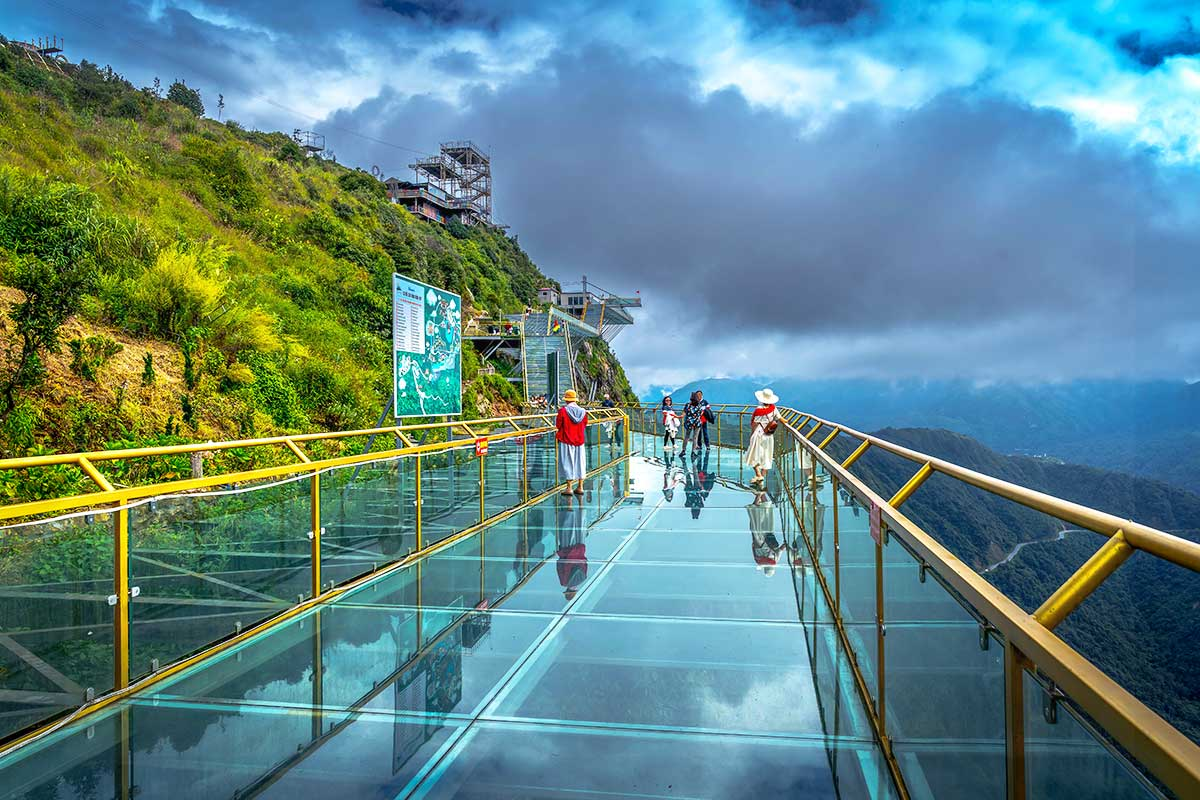
Experience Rồng Mây Glass Bridge (source: Vinwonders)
For thrill-seekers, the Rồng Mây Glass Bridge offers a unique experience. Walking on the transparent bridge gives the sensation of floating among the clouds while enjoying spectacular views of the Hoang Lien Son mountains. The area also features adventure activities like paragliding, rock climbing, and bungee jumping.
Read more: Glass Bridge Sapa – Thrilling experiences and exploring Northwest Vietnam Mountains
- Find tranquility at Séo Mý Tỷ Lake and Ban Ho
Hidden in the Hoang Lien forest, Séo Mý Tỷ Lake is a serene spot with crystal-clear waters reflecting the surrounding mountains. Nearby Ban Ho village offers a peaceful retreat where visitors can connect with nature and the simple, quiet lifestyle of the locals.
- Discover Sapa Market and Love Market
Sapa Market is perfect for shopping for handcrafted textiles, souvenirs, and sampling local specialties. On Saturday evenings, the Love Market becomes a cultural hub, where H’Mong and Dao youths meet and mingle amidst traditional music and folk songs.
- Conquer Ô Quy Hồ Pass
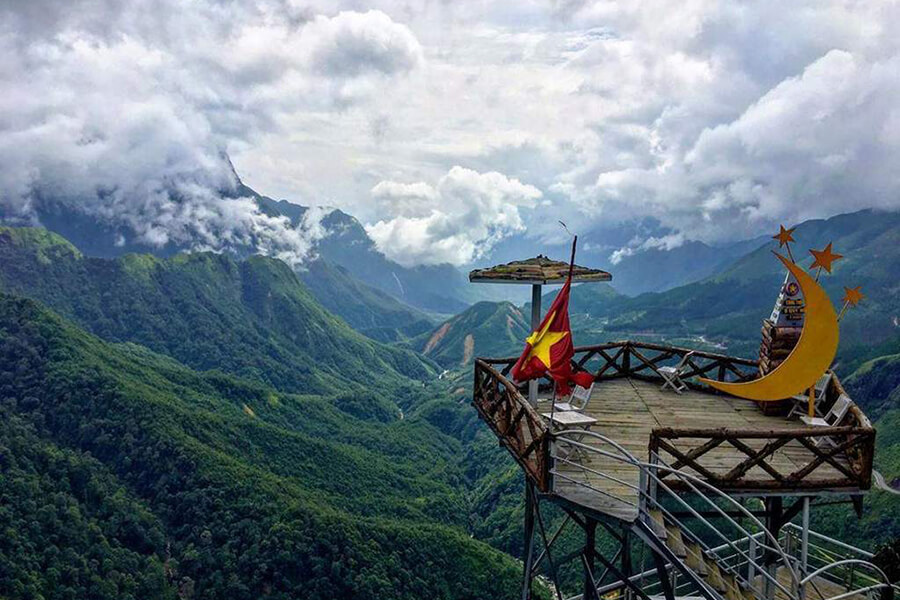
Conquer Ô Quy Hồ Pass (source: Hanoi local tour)
Known as one of the “Four Great Passes” of northern Vietnam, Ô Quy Hồ offers breathtaking drives along winding curves. From the summit, travelers can admire endless mountains and clouds, particularly magical at sunset.
Read more: Love Waterfall Sapa - A romantic escape into nature’s beauty
Now that you know where Sapa is in Vietnam and its top attractions, it’s time to turn your plans into an unforgettable journey! Let Sinhcafe accompany you with all-inclusive tours to Sapa – from trekking Fansipan, exploring Muong Hoa Valley, to experiencing the vibrant culture of ethnic minority villages. With Sinhcafe, planning your trip becomes easy, travel is convenient, and you can fully enjoy the misty highland town. Book your tour today and start your memorable adventure in Sapa!
Sapa is more than just a destination, it’s a place where nature, culture, and adventure come together. Knowing where Sapa is in Vietnam and planning your journey accordingly will allow you to fully enjoy the town’s stunning landscapes, rich ethnic heritage, and unique experiences. Whether you’re seeking challenging treks, peaceful valleys, or immersive cultural encounters, Sapa offers something memorable for every traveler.
Share via




Related articles
Top 10 must-try things to do in Sapa for an unforgettable adventure
Blog | 02/10/2025

Sapa or Ha Giang: Which Mountain Destination Is Better?
Posts | 02/07/2026
Sa Pa or Ha Giang in July and August? Where to Go for the Best Weather and Experiences in Northern Vietnam
Posts | 02/07/2026

Travel to Vietnam with Kids: The Complete Family Travel Guide
Posts | 26/06/2026









There are no reviews yet