


Sapa or Ha Giang: Which Mountain Destination Is Better?
Two iconic mountain destinations, two completely different adventures. Discover whether Sapa or Ha Giang is the perfect match for your northern Vietnam journey
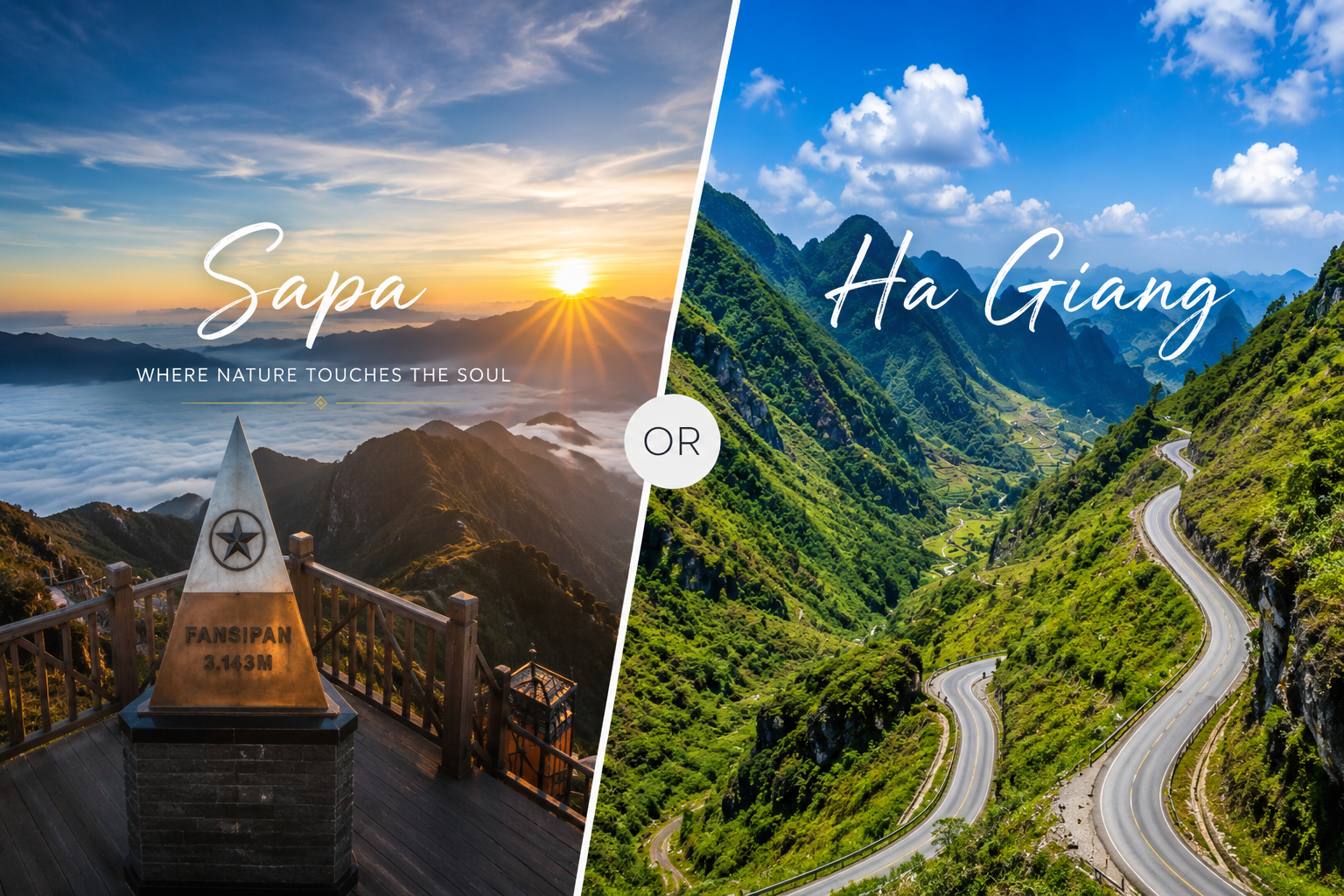
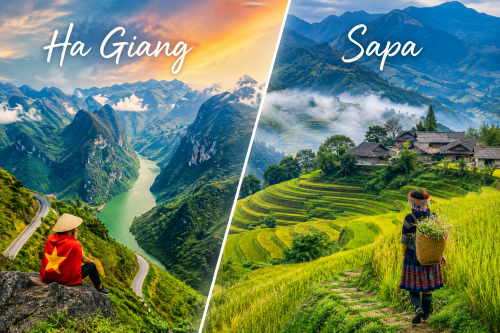
Choose Sapa if you prefer comfortable trekking, rice terraces, and easy access from Hanoi. Choose Ha Giang if you're looking for an epic road trip through dramatic mountain landscapes and remote ethnic villages. If you have 7 days or more, visiting both is the best option.
Sapa and Ha Giang are two of Northern Vietnam's most popular mountain destinations, but they offer very different experiences. This guide from Sinh Cafe Travel compares them based on scenery, accessibility, budget, activities, travel difficulty, and the best time to visit, helping you decide which destination best matches your travel style.
Sapa vs Ha Giang at a Glance
Before comparing each destination in detail, here's a quick overview of their biggest differences.
|
Category |
Sapa |
Ha Giang |
|
Best For |
First-time visitors, families, couples |
Adventure travelers, photographers, road-trip lovers |
|
Landscape |
Rice terraces, valleys, mountain town |
Limestone mountains, dramatic passes, deep canyons |
|
Main Experience |
Trekking, Fansipan, local villages |
Ha Giang Loop, mountain roads, ethnic villages |
|
Accessibility |
Easy from Hanoi by train or bus |
Longer journey, usually by sleeper bus or private car |
|
Travel Difficulty |
Easy |
Moderate |
|
Ideal Stay |
2 - 4 days |
3 - 5 days |
|
Budget |
Moderate |
Budget to moderate |
Although they're often compared, Sapa and Ha Giang aren't direct competitors. Sapa is built around one mountain town, where most attractions are within easy reach. Ha Giang is a journey rather than a destination - each day brings new roads, viewpoints, villages, and landscapes. If you're looking for convenience, Sapa has the advantage. If you want an unforgettable road trip, Ha Giang is hard to beat.
Who Should Choose Sapa or Ha Giang?
Choosing between Sapa and Ha Giang isn't really about deciding which destination is "better." It's about understanding which one matches the type of holiday you want. Although both regions showcase northern Vietnam's incredible landscapes, they appeal to different kinds of travelers.
First-Time Visitors to Vietnam
 Getting Sapa is safer for first-time visitors (Source: Collected)
For most first-time visitors, Sapa is the safer and more convenient choice. Getting there is straightforward, accommodation ranges from budget hostels to luxury mountain resorts, and organized tours make it easy to explore without extensive planning. English is also more commonly spoken in tourist areas, making independent travel less intimidating.
Ha Giang is certainly accessible, but the experience requires more preparation. The region is spread across long mountain roads, and many attractions are best explored over several days. Travelers with limited experience in Vietnam may find Sapa easier to navigate while still enjoying spectacular mountain scenery.
Families with Children
Families generally have a smoother experience in Sapa. Many attractions are suitable for children, including the Fansipan cable car, easy village walks, and scenic viewpoints that don't require long hikes. Parents can also choose from a wide variety of hotels with family-friendly facilities, cafés, and restaurants close to the town center.
Ha Giang is not impossible with children, but the itinerary often involves several hours of driving each day along winding mountain roads. Younger children may become tired or uncomfortable during longer journeys, especially if visiting the full Ha Giang Loop.
Couples
 Explore Sapa with couples (Source: Collected)
Both destinations offer unforgettable experiences for couples, but the atmosphere is quite different. Sapa feels romantic in a classic mountain-resort sense. Picture mornings overlooking mist-covered rice terraces, afternoons spent wandering local villages, and evenings relaxing in boutique hotels or cafés with panoramic valley views.
Ha Giang, on the other hand, is ideal for couples who enjoy adventure together. Riding through mountain passes, stopping at scenic viewpoints, and spending nights in traditional homestays creates a shared experience that feels more immersive than luxurious. If your idea of romance includes comfort and scenery, Sapa is likely the better fit. If you enjoy discovering remote places together, Ha Giang offers a stronger sense of adventure.
Adventure Travelers
This is where Ha Giang clearly stands out. The Ha Giang Loop is widely regarded as one of Southeast Asia's greatest road trips. Over several days, travelers pass through dramatic mountain passes, deep valleys, limestone plateaus, and small ethnic villages that remain largely untouched by mass tourism.
 Solo Travel with Ha Giang (Source: Collected)
Unlike Sapa, where many attractions are concentrated around one town, Ha Giang rewards travelers willing to spend more time on the road. The landscapes constantly change, making every day's journey feel different from the last. For travelers seeking excitement rather than convenience, Ha Giang delivers an experience that's difficult to replicate elsewhere in Vietnam.
Budget Travelers
Both destinations remain affordable compared to many mountain regions in Asia, but Ha Giang often provides better overall value, particularly for accommodation and local meals outside the main tourist areas.
That said, your total budget depends largely on how you travel. In Sapa, it's possible to enjoy the destination comfortably without renting a vehicle, as many attractions are accessible through short transfers or guided tours.
In Ha Giang, transportation becomes a larger part of the budget. Whether you join an Easy Rider tour, rent a motorbike, or hire a private car, you'll spend more time moving between destinations. While the daily cost isn't necessarily higher, the style of travel naturally includes more transport expenses.
Instead of asking which destination is cheaper, consider which one offers the experience you're looking for. Spending slightly more on a multi-day Ha Giang Loop may be worthwhile if adventure is your priority, while Sapa provides excellent value for travelers seeking comfort, convenience, and iconic mountain scenery without extensive travel.
Getting There: Which Destination Is Easier to Reach?
Although both Sapa and Ha Giang are located in northern Vietnam, getting there is quite different. If transportation convenience is an important part of your decision, this comparison may be just as valuable as the scenery itself.
|
From Hanoi |
Sapa |
Ha Giang |
|
Distance |
~315 km |
~300 km |
|
Travel Time |
5.5 - 6.5 hours |
6 - 7.5 hours |
|
Train |
✔ Yes (to Lao Cai) |
✘ No |
|
Sleeper Bus |
✔ Frequent |
✔ Frequent |
|
Limousine Van |
✔ Available |
✔ Available |
|
Private Car |
✔ Available |
✔ Available |
Traveling to Sapa
Sapa is one of Vietnam's easiest mountain destinations to reach. Travelers can choose between an overnight train to Lao Cai followed by a short transfer to Sapa, comfortable sleeper buses, limousine vans, or private cars. The modern expressway connecting Hanoi and Lao Cai has significantly reduced travel time, making Sapa accessible even for visitors with limited vacation days.
Because transportation is well developed, many travelers leave Hanoi in the evening and arrive in Sapa early the next morning, maximizing their sightseeing time without spending an extra day on the road.
Read more: Sapa - Cocli market 4 days
Traveling to Ha Giang
 Ha Giang's breathtaking blend of poetic charm and majestic mountain scenery (Source: Collected)
Reaching Ha Giang requires a little more planning. There is no railway to the Ha Giang region, so most visitors travel by sleeper bus, limousine van, or private transfer from Hanoi. While the journey to Ha Giang City is only slightly longer than the trip to Sapa, it's important to remember that the adventure usually doesn't begin there.
Most of Ha Giang's famous attractions including Dong Van, Ma Pi Leng Pass, Meo Vac, and the Nho Que River are several hours beyond Ha Giang City. This means you'll spend considerably more time traveling during your trip than you would in Sapa.
Which Destination Is Easier?
If convenience is your priority, Sapa is the clear winner. Transportation is straightforward, attractions are close together, and you can experience many of the region's highlights without changing accommodation.
Ha Giang requires more travel time, but that's part of its appeal. The roads, mountain passes, and constantly changing scenery are not simply a way to reach attractions; they're one of the main reasons people visit in the first place.
Travel Tip: If you plan to visit both destinations in one trip, many experienced travelers recommend starting with Sapa before continuing to Ha Giang. The slower pace and shorter excursions make Sapa an excellent introduction to northern Vietnam before tackling the longer driving days of the Ha Giang Loop.
Landscape and Experiences: What Makes Each Destination Unique?
At first glance, Sapa and Ha Giang may appear similar. Both feature towering mountains, ethnic minority villages, and spectacular landscapes. Yet the experience of exploring each destination feels surprisingly different. Rather than asking which place is more beautiful, it's more useful to ask what kind of mountain experience you're looking for.
Why Travelers Love Sapa
Sapa is often the first mountain destination international visitors discover in Vietnam, and for good reason. It combines dramatic scenery with excellent tourism infrastructure, making it easy to experience northern Vietnam without venturing too far off the beaten path.
The region is best known for its cascading rice terraces, particularly those stretching across Muong Hoa Valley. During the growing season, the hillsides transform into layers of vibrant green, while September brings golden rice fields that attract photographers from around the world.
One of Sapa's biggest highlights is Fansipan, the highest mountain in Indochina. Visitors can reach the summit by one of the world's longest cable car systems, allowing even non-hikers to enjoy breathtaking panoramic views above the clouds.
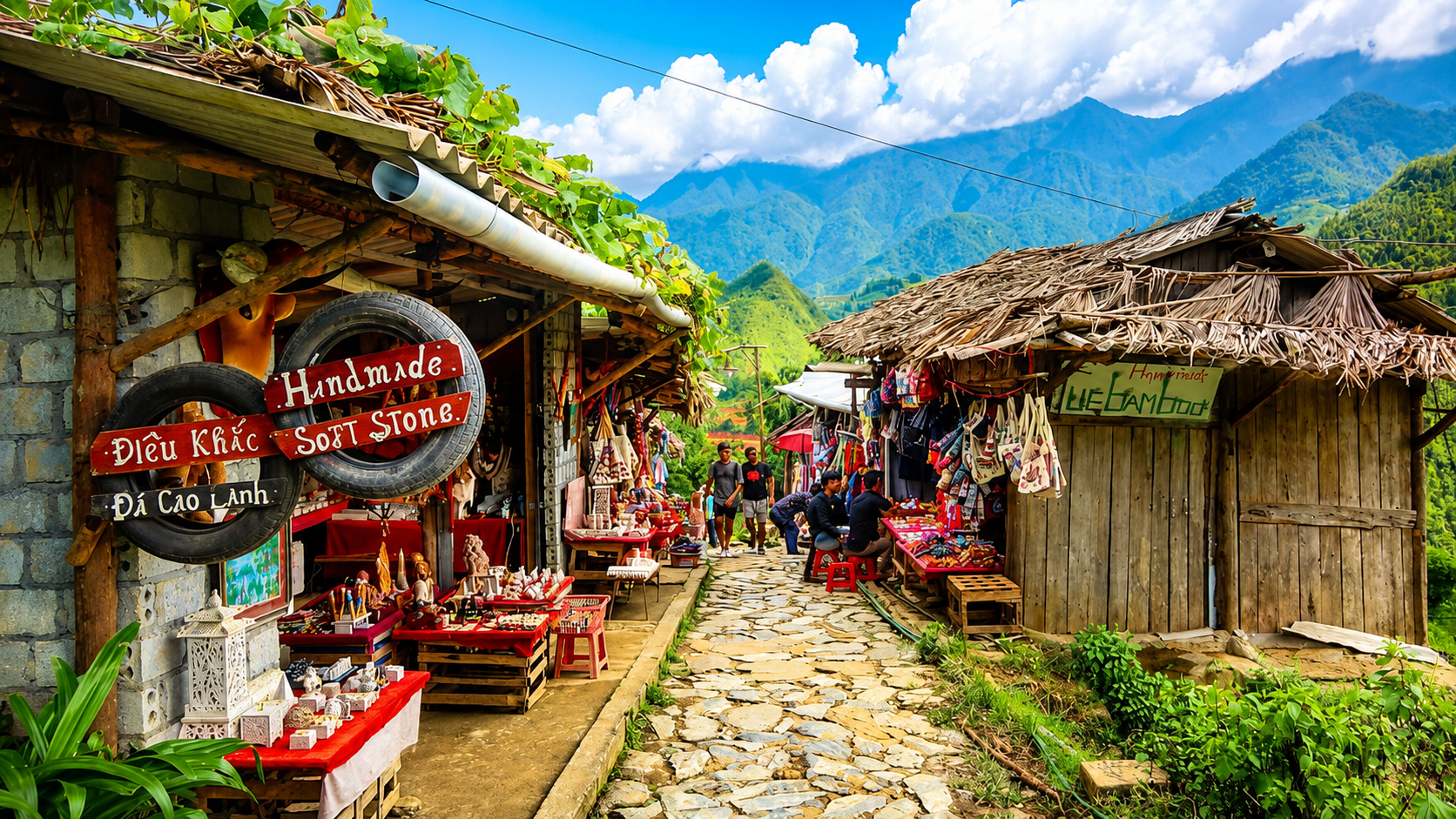 The peace of Cat Cat village (Source: Collected)
Beyond the famous landmarks, much of Sapa's charm comes from slowing down. Walking through villages such as Cat Cat, Lao Chai, or Ta Van introduces travelers to local ethnic communities while offering gentle trekking routes through valleys, streams, and rice fields.
The town itself also plays an important role in the experience. Unlike many remote mountain destinations, Sapa has developed into a lively tourism hub filled with cafés overlooking the valleys, boutique hotels, restaurants, spas, and local markets. After a day of trekking, it's easy to enjoy a comfortable evening without traveling far. For many travelers, that's exactly what makes Sapa appealingit balances nature with convenience.
Read more: 2 days Sapa trekking - sleeping hotel
Why Travelers Love Ha Giang
If Sapa is about enjoying the mountains from one comfortable base, Ha Giang is about immersing yourself in them. The region is famous for the Ha Giang Loop, a route that takes travelers through some of Vietnam's most spectacular mountain scenery over several days. Instead of visiting individual attractions, the road itself becomes the highlight.
Driving through Quan Ba Pass, Yen Minh, Dong Van, and Ma Pi Leng Pass reveals constantly changing landscapes. Towering limestone peaks rise dramatically above deep valleys, while winding roads cling to cliffsides with panoramic viewpoints appearing around almost every corner.
Unlike Sapa, where villages are relatively close to town, Ha Giang's ethnic communities feel more remote. Small settlements belonging to the Hmong, Dao, Tay, and Lo Lo people are scattered across mountain valleys, creating opportunities to experience local life beyond Vietnam's more established tourist destinations.
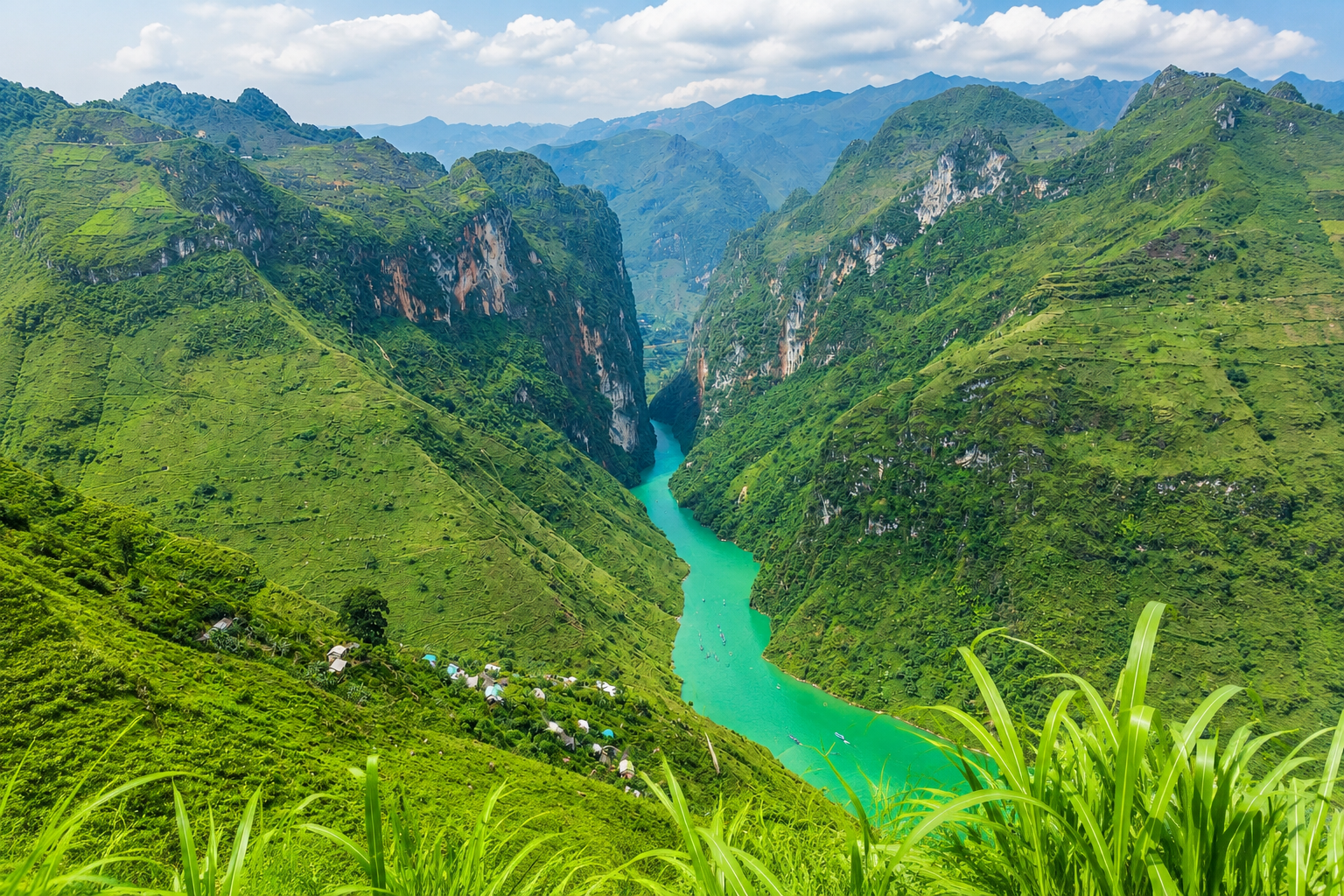 Nho Que River (Source: Nature and Environment Electronic Magazine)
Another memorable stop is the Nho Que River. Flowing through the Tu San Canyon beneath Ma Pi Leng Pass, its striking emerald waters create one of northern Vietnam's most iconic landscapes. A short boat trip here offers an entirely different perspective of the surrounding cliffs.
Perhaps the greatest difference between Ha Giang and Sapa is that the journey never feels repetitive. Every day's drive introduces new mountain passes, valleys, villages, and viewpoints, making the experience feel like an unfolding adventure rather than a series of individual attractions.
Which Destination Offers Better Scenery?
Choosing between Sapa and Ha Giang isn't simply a matter of deciding which destination is prettier; they showcase different sides of northern Vietnam.
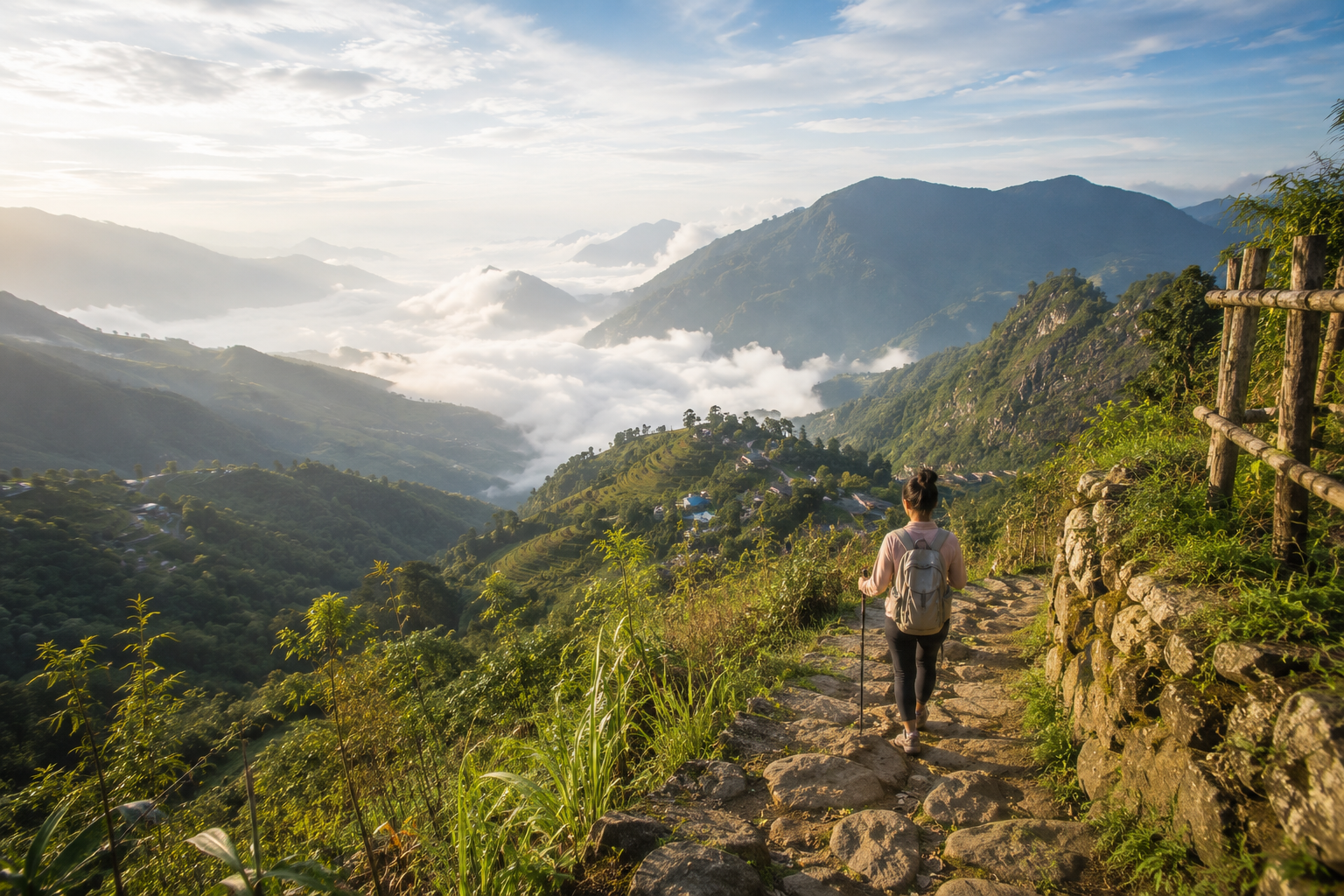 Trek through Sapa's breathtaking rice terraces and discover authentic ethnic villages along the way (Source: Collected)
If your dream is walking through rice terraces, enjoying mountain cafés, taking gentle treks, and staying in comfortable accommodation with panoramic views, Sapa is likely to exceed your expectations. Its landscapes are softer, greener, and easier to explore without spending long hours on the road.
If you're searching for dramatic mountain passes, towering limestone cliffs, and unforgettable road-trip scenery, Ha Giang delivers a far more adventurous experience. Many travelers describe the landscapes here as some of the most spectacular in Southeast Asia, not because of a single attraction, but because the scenery continues to evolve throughout the entire journey.
Neither destination is objectively more beautiful. Instead, Sapa rewards travelers who enjoy immersing themselves in one breathtaking mountain region, while Ha Giang rewards those who believe the journey itself is the destination.
Culture and Local Experiences
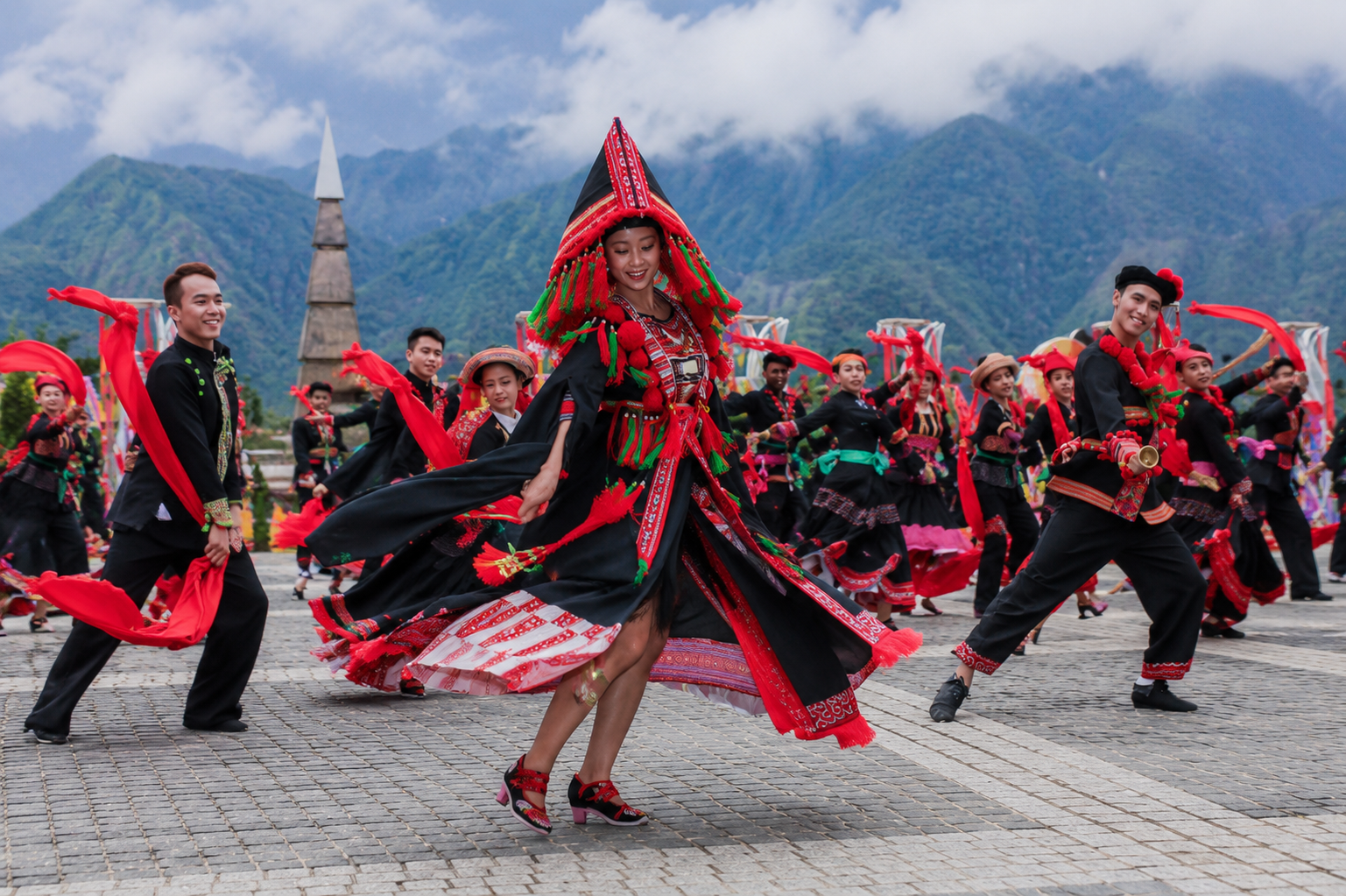 Discover Sapa's vibrant festivals, where colorful traditions, music, and ethnic cultures come to life (Source: Collected)
The landscapes may draw travelers to northern Vietnam, but it's often the people and local traditions that leave the strongest impression. While both Sapa and Ha Giang are home to diverse ethnic minority communities, the way you'll experience their culture is noticeably different.
Cultural Experiences in Sapa
Sapa offers an easy introduction to northern Vietnam's ethnic cultures. Many trekking routes pass through villages inhabited by the Hmong, Dao, Giay, and Tay people, where visitors can see traditional stilt houses, terraced farms, and local handicrafts.
Because these villages are located close to Sapa Town, it's possible to combine trekking, sightseeing, and cultural experiences in a single day. Travelers who want a deeper connection can also spend a night in a local homestay, sharing home-cooked meals and learning about everyday life from their hosts.
Cultural Experiences in Ha Giang
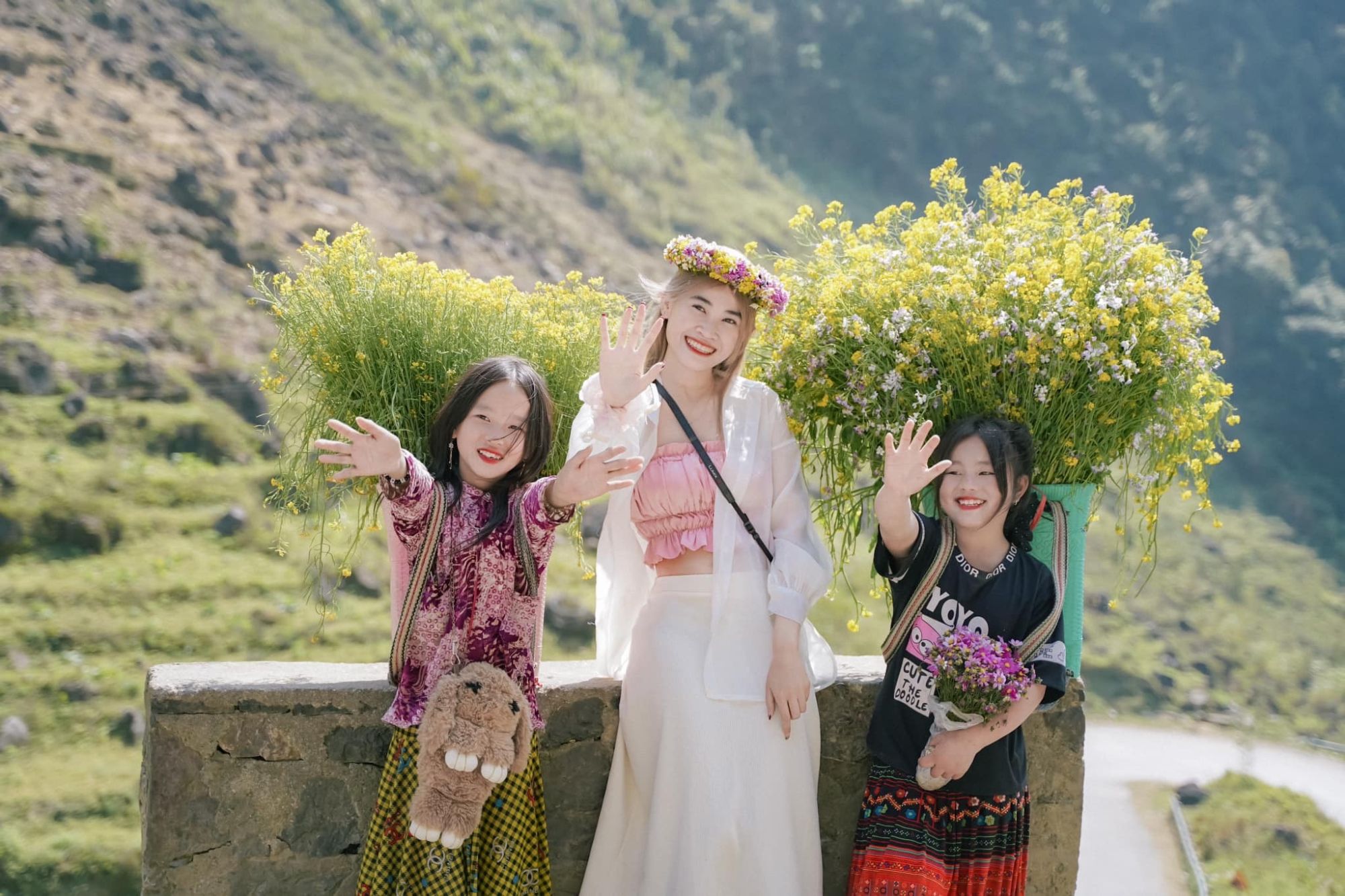 Meet local children who lovingly braid visitors' hair, offering a heartwarming glimpse into Ha Giang's welcoming culture (Source: Ho Chi Minh City Tourism Magazine)
Culture in Ha Giang isn't limited to a few villages, it unfolds naturally throughout the journey. As you travel along the Ha Giang Loop, you'll pass remote communities where daily life continues much as it has for generations. Weekly mountain markets, earthen houses, terraced corn fields, and evenings spent in family-run homestays create experiences that feel less like organized tourism and more like genuine encounters.
Rather than visiting culture as an attraction, you'll simply become part of the rhythm of life as you travel through the mountains.
Which Destination Offers a More Authentic Cultural Experience?
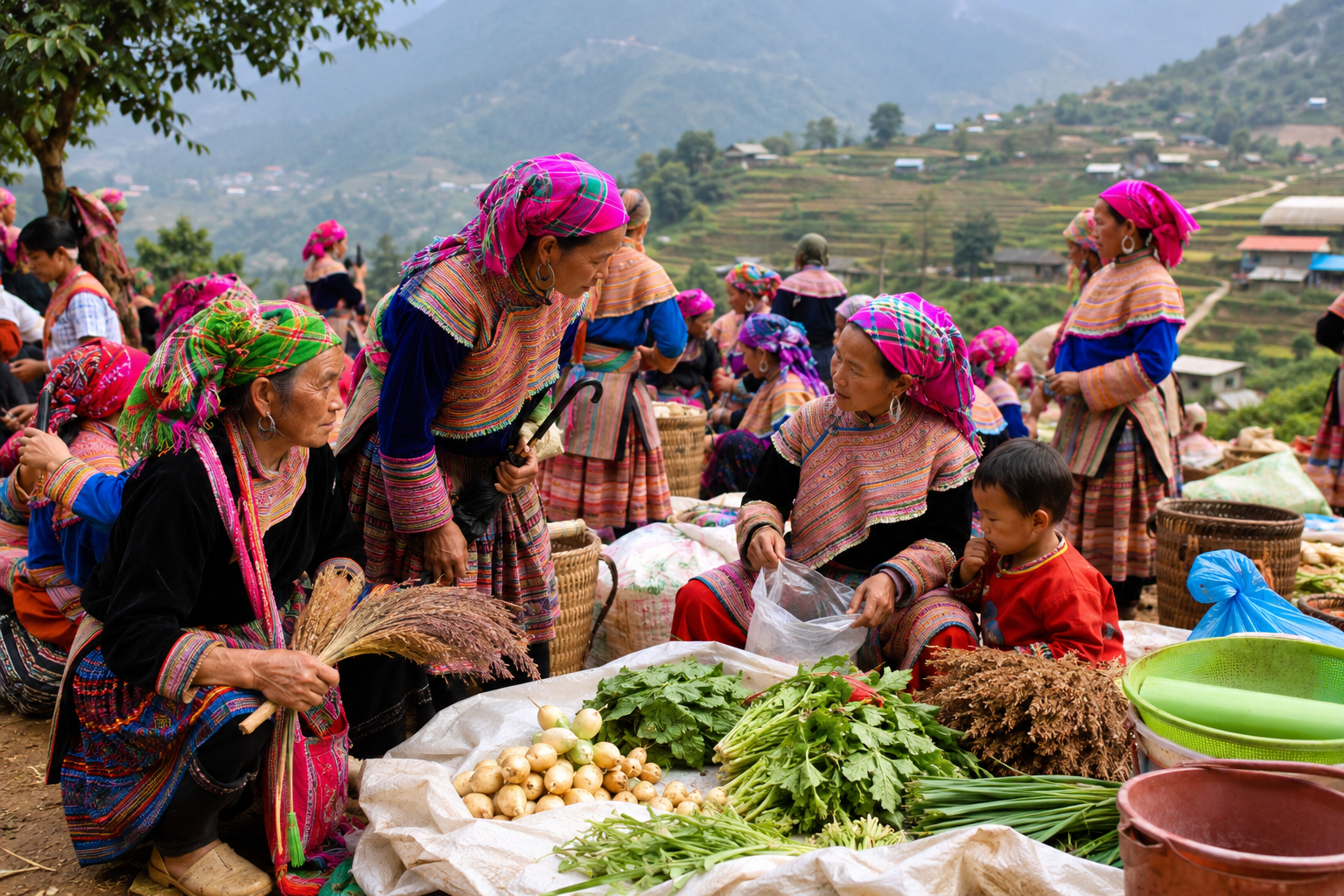 Sapa Market is the perfect place to shop for handmade souvenirs, taste local specialties (Source: Collected)
Both destinations provide meaningful opportunities to learn about Vietnam's ethnic diversity, but they do so in different ways. Sapa makes local culture more accessible through organized trekking routes, guided village visits, and established tourism services. It's an excellent choice for travelers who want to experience ethnic communities without sacrificing comfort or convenience.
Ha Giang, by contrast, feels more immersive. The culture isn't concentrated in a few attractions, it unfolds naturally along the journey, from roadside markets and mountain villages to evenings spent in local homestays. If convenience matters most, Sapa is easier to explore. If authenticity and a stronger sense of discovery are your priorities, Ha Giang often leaves a deeper impression.
Can You Visit Ha Giang Without Riding a Motorbike?
One of the biggest misconceptions about Ha Giang is that you must ride a motorbike to experience the famous Ha Giang Loop. In reality, many international visitors complete the journey without ever driving themselves.
The most popular option is an Easy Rider Tour, where an experienced local driver takes you around the loop while you simply enjoy the scenery. It's ideal for solo travelers, couples, and anyone who isn't confident riding on mountain roads. Families and older travelers often prefer traveling by private car or Jeep, which offers greater comfort while still covering the route's major highlights.
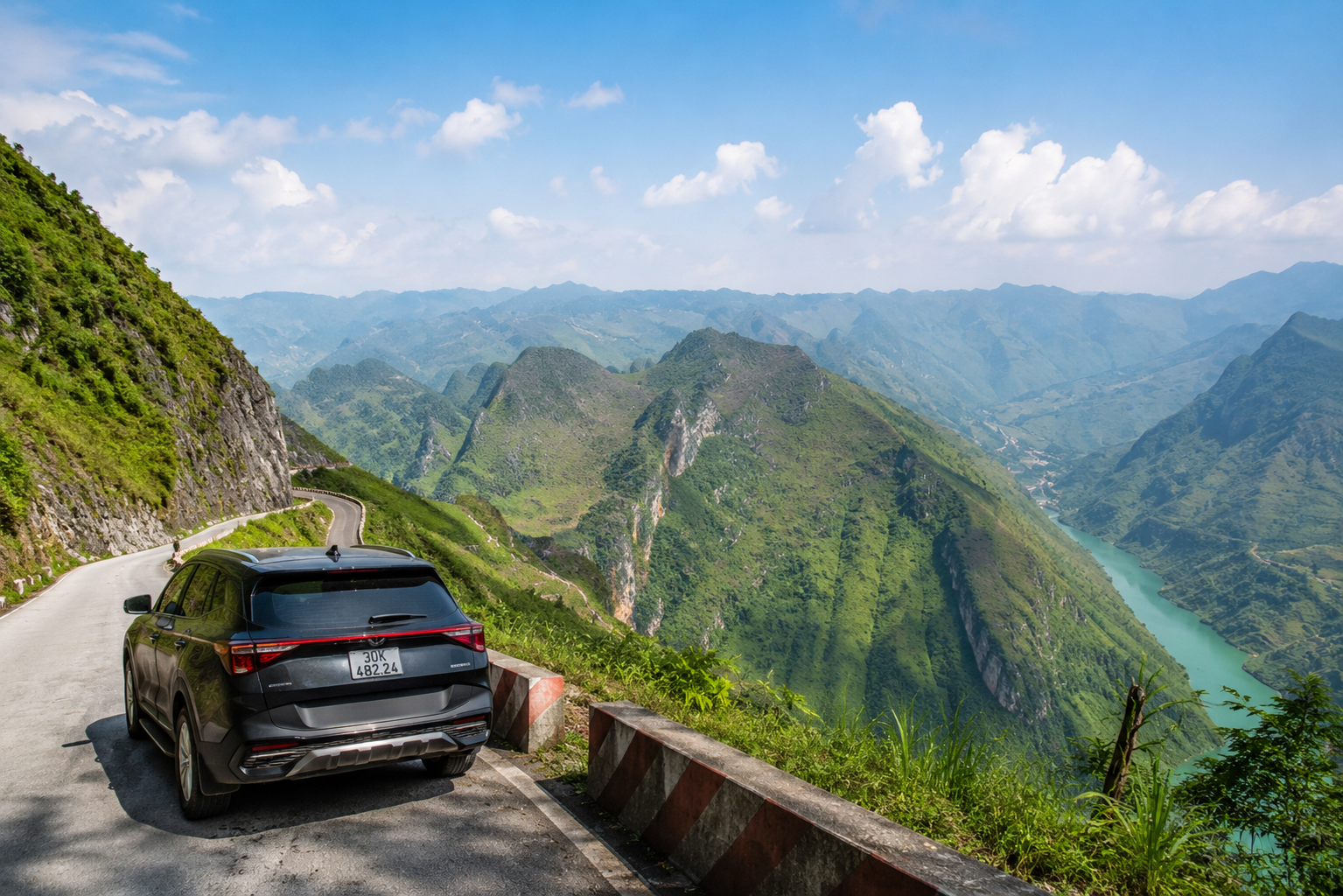 A road trip through Ha Giang by car is a comfortable and unforgettable way for families to experience northern Vietnam's breathtaking landscape (Source: Collected)
Renting your own motorbike is best reserved for experienced riders. Although the roads are paved, the route includes steep climbs, sharp bends, and changing weather conditions, making it unsuitable for beginners. For most visitors, joining a guided Easy Rider tour provides the safest and most enjoyable way to experience Ha Giang.
Budget Comparison: Which Destination Offers Better Value?
Northern Vietnam is generally affordable compared with many popular mountain destinations across Asia, and both Sapa and Ha Giang provide excellent value for money. However, the way you'll spend your budget differs between the two.
|
Expense |
Sapa |
Ha Giang |
|
Accommodation |
10 - 80 USD per night |
8 - 40 USD per night |
|
Local Meals |
2 - 6 USD per meal |
2 - 5 USD per meal |
|
Transportation |
12 - 30 USD each way |
160 - 300 USD (Easy Rider tour) 10 - 20 USD/day (Motorbike rental) |
|
Major Attractions |
30 - 40 USD Fansipan cable car |
Free (Most viewpoints) 1- 5 USD (Some attractions charge) |
|
Overall Budget (3 Days) |
150 - 350 USD |
220 - 450 USD |
Accommodation in Sapa ranges from budget hostels to luxury mountain resorts with valley views, giving travelers plenty of flexibility regardless of budget. Since most attractions are located relatively close to town, transportation costs also tend to remain low.
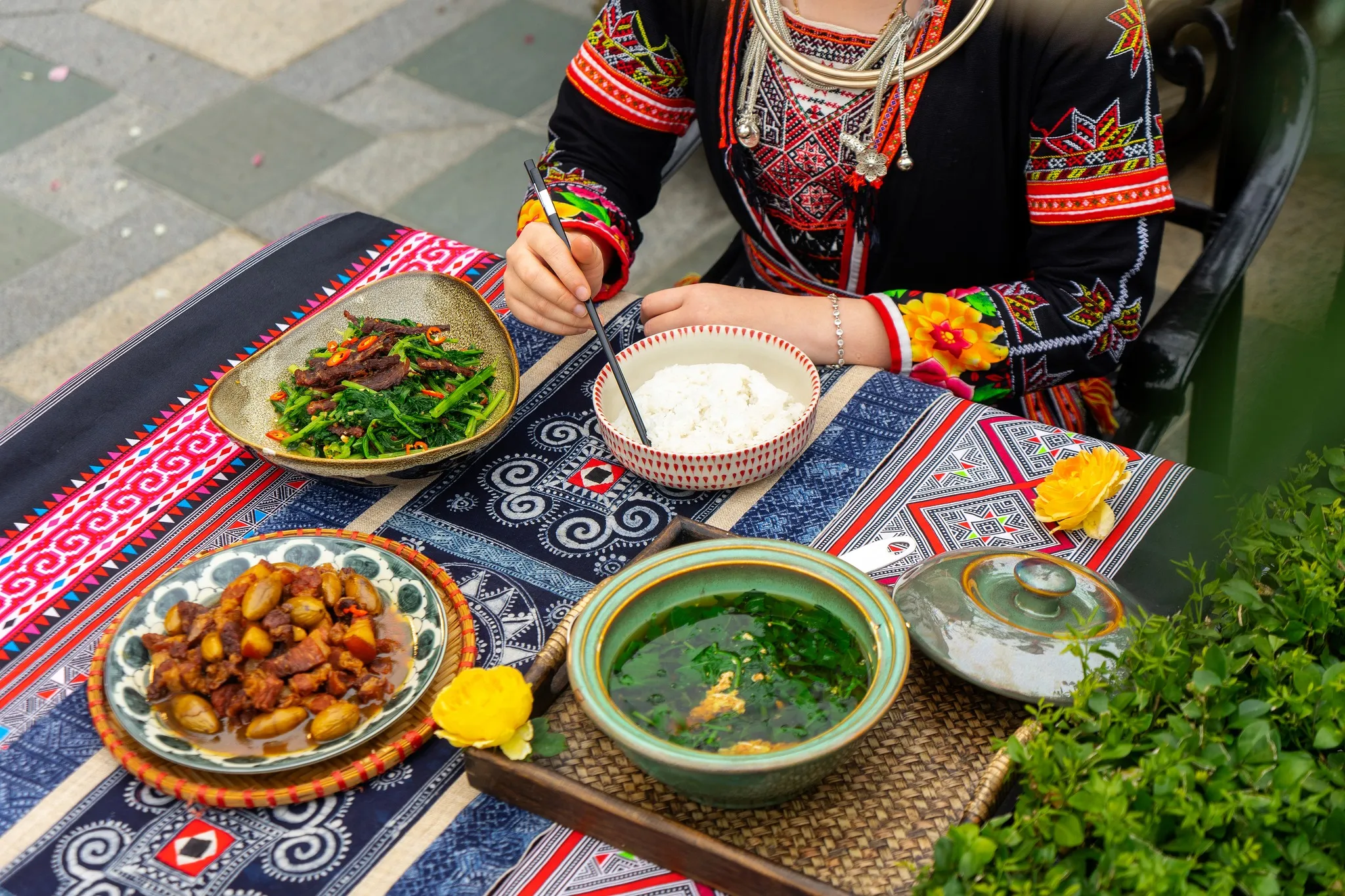 Enjoy delicious home-cooked local dishes at a traditional Sapa homestay (Source: Collected)
In Ha Giang, accommodation is generally inexpensive, especially in local homestays and small guesthouses. However, transportation often becomes the largest expense. Whether you join an Easy Rider tour, rent a motorbike, or hire a private vehicle, exploring the region involves covering long distances over several days.
Instead of asking which destination is cheaper, it's more useful to consider what your budget is paying for. In Sapa, you're investing in convenience, comfortable accommodation, and easy access to famous mountain landscapes. In Ha Giang, more of your budget goes toward the journey itself - multi-day transportation, experienced local guides, and access to some of Vietnam's most remote and spectacular scenery.
For travelers seeking comfort and flexibility, Sapa often offers better overall value. For those looking for an unforgettable road-trip experience, many visitors feel Ha Giang is worth every extra kilometer.
Which Destination Is Better by Season?
Choosing the right season can completely change your experience. Although Sapa and Ha Giang are geographically close, weather conditions and scenery vary enough that one destination may suit your travel dates better than the other.
|
Season |
Sapa |
Ha Giang |
Better Choice |
|
Spring (Mar - May) |
Cool weather, green valleys |
Clear skies, wildflowers |
Both |
|
Summer (Jun - Aug) |
Lush rice terraces |
Rainy roads, occasional fog |
Sapa |
|
Autumn (Sep - Nov) |
Golden rice terraces |
Buckwheat flowers, clear mountain views |
Depends on scenery |
|
Winter (Dec - Feb) |
Cold, misty, occasional frost |
Dry, crisp mountain landscapes |
Depends on experience |
Spring (March to May)
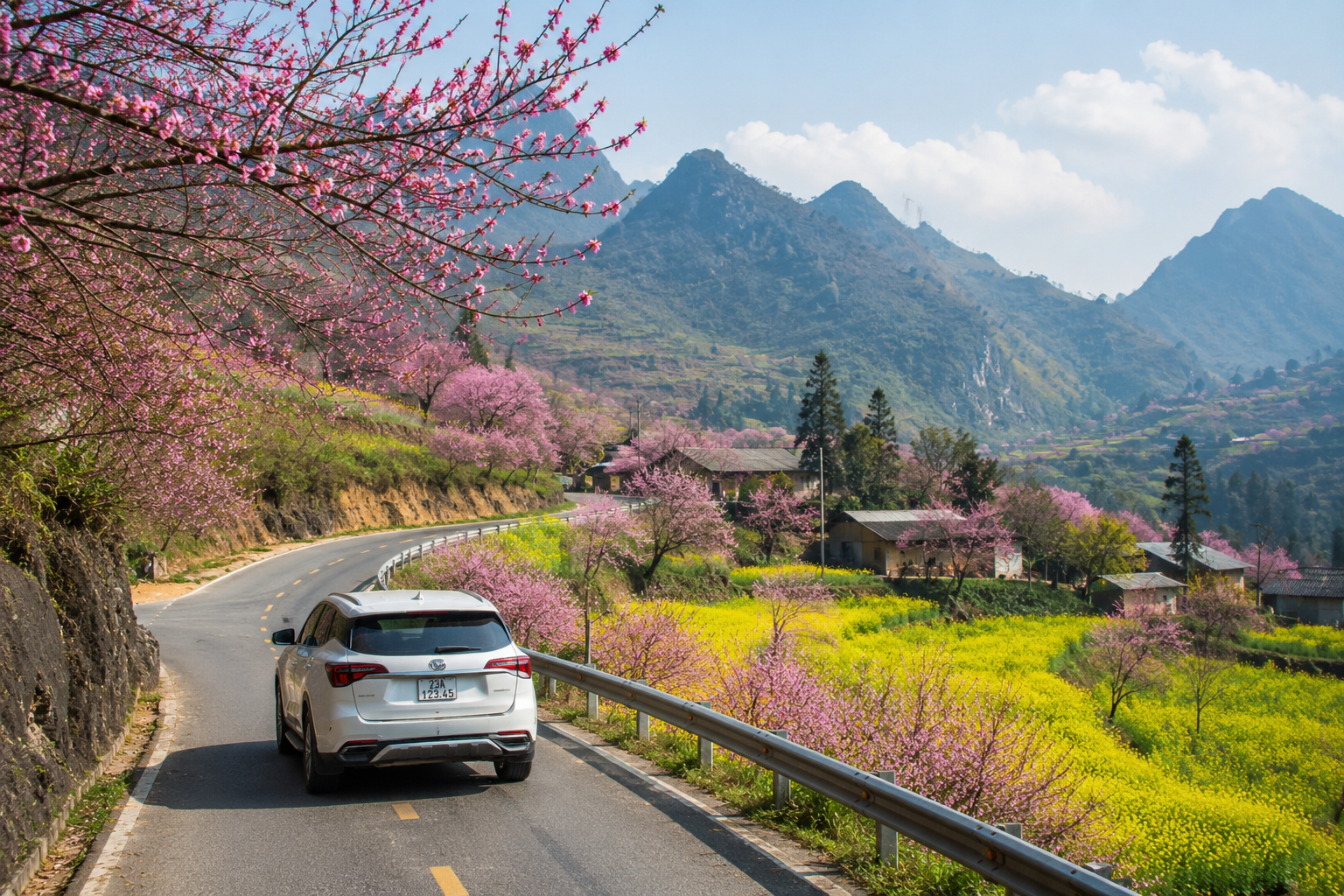 Hà Giang in spring is a breathtaking painting of peach and plum blossoms blooming along winding roads (Source: Collected)
Spring is one of the best seasons for both destinations. Sapa enjoys cool temperatures that are perfect for trekking, while the terraces begin filling with water in preparation for the planting season. Meanwhile, Ha Giang's mountains become greener, wildflowers bloom, and clear skies provide excellent visibility from iconic viewpoints like Ma Pi Leng Pass.
Best for: Either destination.
Summer (June to August)
Summer transforms Sapa into a sea of vibrant green rice terraces. Afternoon showers are common, but mornings are often ideal for sightseeing and trekking. Ha Giang is also lush during this period, though heavy rain can make mountain roads slippery and reduce visibility. Travelers planning to complete the Ha Giang Loop should allow some flexibility in case of changing weather.
Best for: Sapa.
Autumn (September to November)
Autumn is widely considered the most beautiful time of year in northern Vietnam. September is harvest season in Sapa, when the rice terraces turn brilliant shades of gold before being harvested.
A few weeks later, Ha Giang became famous for its buckwheat flower season. Pink and purple flowers spread across the limestone plateau, creating one of the region's most iconic landscapes. If your priority is rice terraces, choose Sapa. If you're drawn to dramatic mountains and seasonal flowers, choose Ha Giang.
Winter (December to February)
Winter offers a completely different atmosphere. Sapa becomes cold, misty, and occasionally experiences frost or even light snowfall. The cooler temperatures create a cozy mountain-town atmosphere unlike anywhere else in Vietnam. Ha Giang is also cold but generally drier, with crisp air and excellent visibility across the mountains. The scenery feels rugged and dramatic rather than misty.
Best for: Sapa if you love cozy mountain towns; Ha Giang if you prefer clear mountain landscapes.
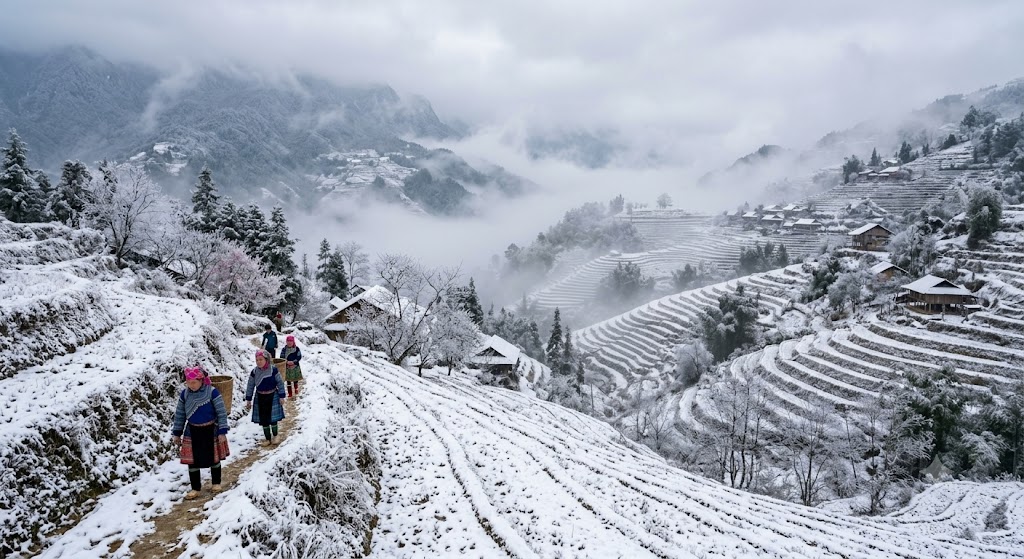 Sapa in Winter (Source: Collected)
What Does a Typical 3-Day Trip Look Like?
Still unsure which destination suits your travel style? These sample itineraries show how a typical three-day trip unfolds in each destination, giving you a better idea of the pace, experiences, and overall atmosphere.
A Typical 3 Days in Sapa
If you're looking for a balance of sightseeing, light trekking, local culture, and comfortable evenings, Sapa is easy to explore in three days without feeling rushed.
Day 1: Arrival, Local Culture & Sapa Town
Most travelers arrive in Sapa around late morning after taking an overnight sleeper bus or train from Hanoi. After checking into your hotel and enjoying lunch with mountain views, spend the afternoon exploring Cat Cat Village, one of the closest Hmong villages to Sapa Town. It's an easy introduction to the region's ethnic culture, traditional wooden houses, waterfalls, and terraced landscapes without requiring a long trek.
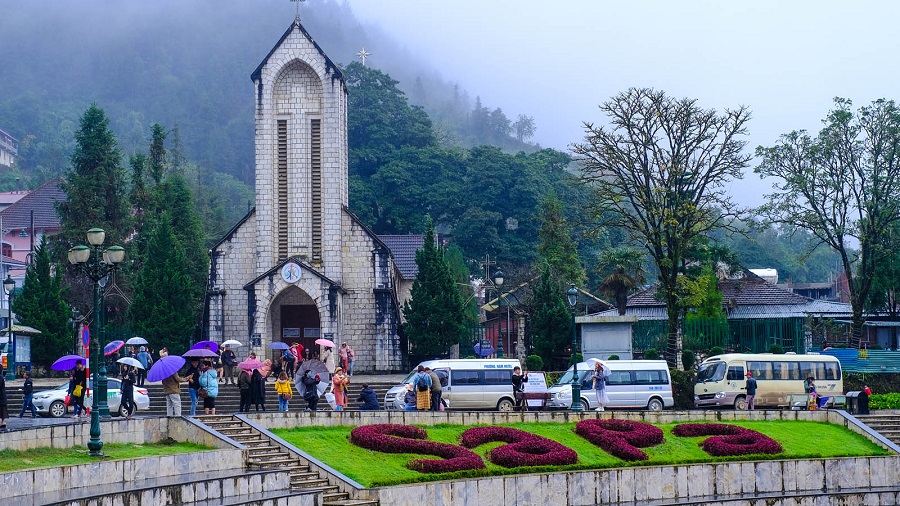 Sa Pa Stone Church is a timeless Gothic landmark in the heart of Sa Pa, captivating visitors with its historic charm (Source: Collected)
Return to Sapa Town in the late afternoon to stroll around Sapa Stone Church, browse local souvenir shops, or relax at one of the cafés overlooking the mountains. As evening falls, the cool mountain air makes it a great time to enjoy local specialties such as grilled salmon, hotpot, or barbecue at the town's lively night market.
Day 2: Fansipan & Muong Hoa Valley
Start early with a ride on the Fansipan Cable Car, which takes you close to the summit of Vietnam's highest mountain. On clear days, you'll enjoy panoramic views stretching across the Hoang Lien Son mountain range.
After returning from Fansipan, continue to Muong Hoa Valley, home to some of Vietnam's most iconic rice terraces. Depending on your fitness level, you can either take a guided trek or explore by car. Popular stops include Lao Chai and Ta Van, where you'll walk through rice fields, cross small streams, and visit villages inhabited by the Black Hmong and Giay communities.
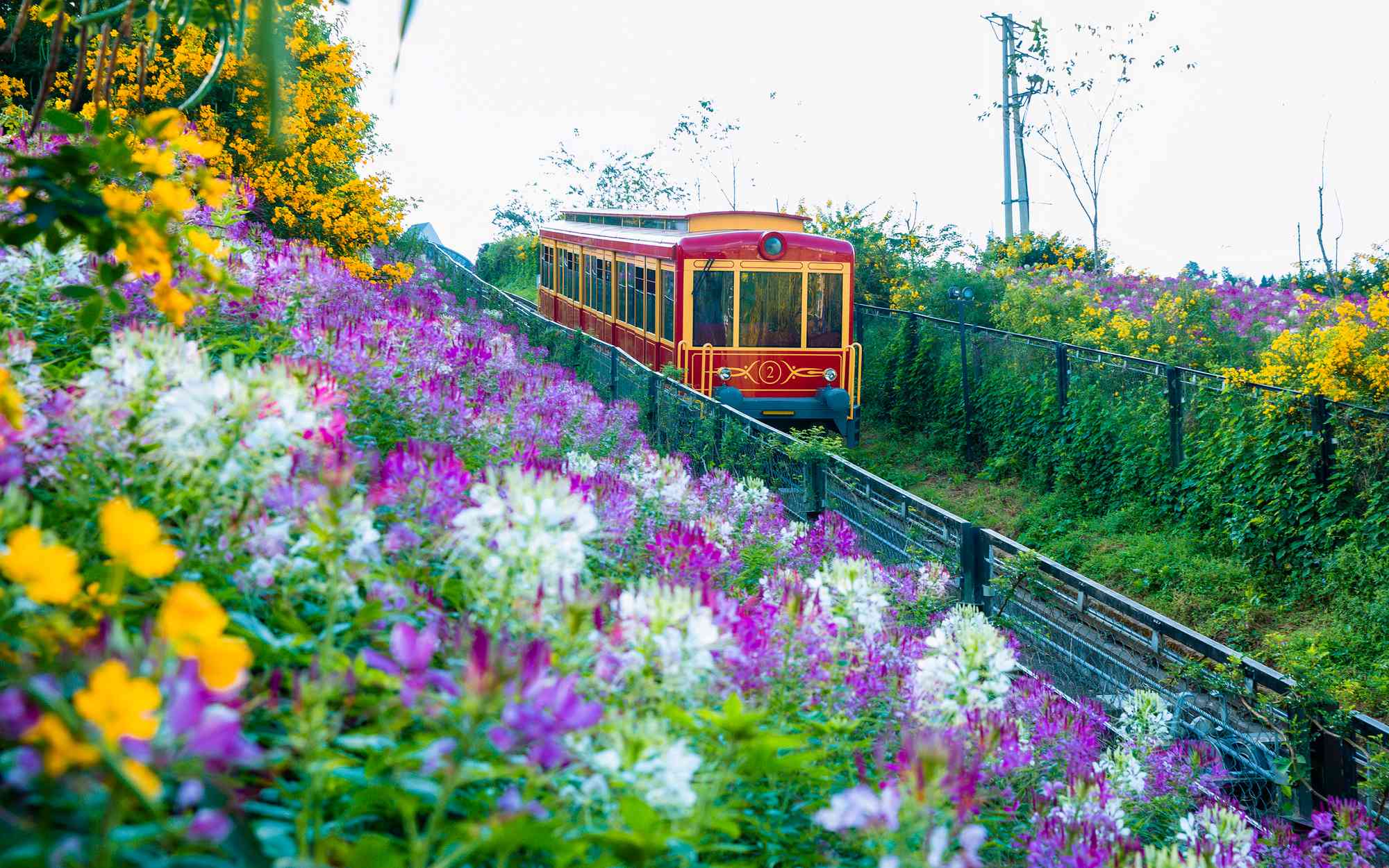 Mường Hoa Valley is a breathtaking landscape where terraced rice fields cascade down the hillsides (Source: Collected)
Instead of rushing back, consider spending the evening at a countryside homestay or eco-lodge. Watching the sunset over the rice terraces offers a completely different perspective from staying in town.
Day 3: Slow Morning & Return to Hanoi
Enjoy a slower start before heading home. If your visit falls on the weekend, consider visiting Bac Ha Market (Sunday) or Can Cau Market (Saturday), where ethnic communities gather to trade livestock, handicrafts, and fresh produce. On weekdays, Sapa Market or a morning coffee overlooking Muong Hoa Valley is a relaxing alternative.
Most travelers return to Hanoi by limousine bus or sleeper bus in the afternoon, arriving in the evening. This itinerary is best for First-time visitors, families, couples, and anyone who prefers a comfortable mountain escape with plenty of time to enjoy the scenery rather than spending hours on the road.
A Typical 3 Days in Ha Giang
A three-day Ha Giang itinerary is faster paced than Sapa, but it's enough to experience the region's most spectacular mountain scenery. Expect several hours on the road each day, with frequent stops at viewpoints and small ethnic villages.
Day 1: Ha Giang City - Quan Ba - Yen Minh
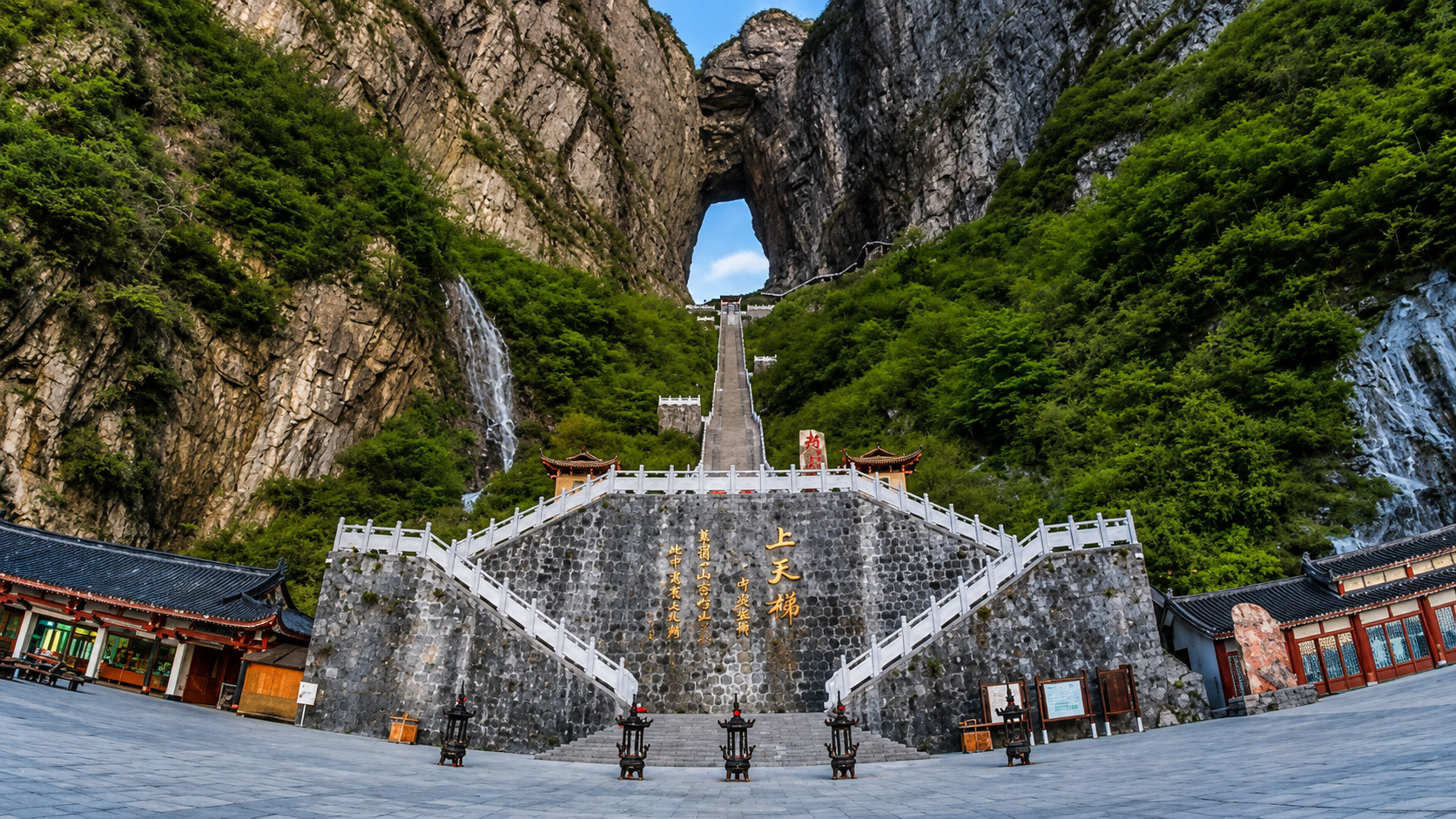 Quan Ba Heaven Gate (Source: Collected)
Leave Ha Giang City early in the morning and begin the famous Ha Giang Loop. Your first major stop is Quan Ba Heaven Gate, where you'll enjoy panoramic views over the Twin Mountains and the surrounding valleys. As the road climbs higher into the mountains, you'll pass pine forests, limestone cliffs, and small Hmong villages that showcase a quieter side of northern Vietnam.
While the scenery is spectacular, this section of the loop also introduces travelers to the winding mountain roads that Ha Giang is known for. Expect steep climbs, sharp bends, occasional fog, and changing weather conditions, especially during the rainy season. Riders should travel at a comfortable pace, wear proper safety gear, and ensure they hold the appropriate motorcycle licence if riding independently.
By late afternoon, arrive in Yen Minh, a peaceful mountain town surrounded by forests. Many travelers stay in a local homestay, where dinner is often shared with the host family, offering a chance to sample traditional northern Vietnamese dishes and learn more about local life.
Day 2: Dong Van, Ma Pi Leng Pass & Meo Vac
This is widely considered the highlight of the entire Ha Giang Loop. After breakfast, continue to Dong Van Old Quarter, where centuries-old stone houses and local cafés provide a glimpse into the region's history. From there, drive across the legendary Ma Pi Leng Pass, one of the most breathtaking mountain roads in Southeast Asia. Along the way, stop at several viewpoints to admire the towering limestone cliffs and deep valleys.
If time permits, take a boat trip on the Nho Que River, where emerald-green water flows through the dramatic Tu San Canyon. End the day in Meo Vac, another small mountain town known for its relaxed atmosphere and local restaurants.
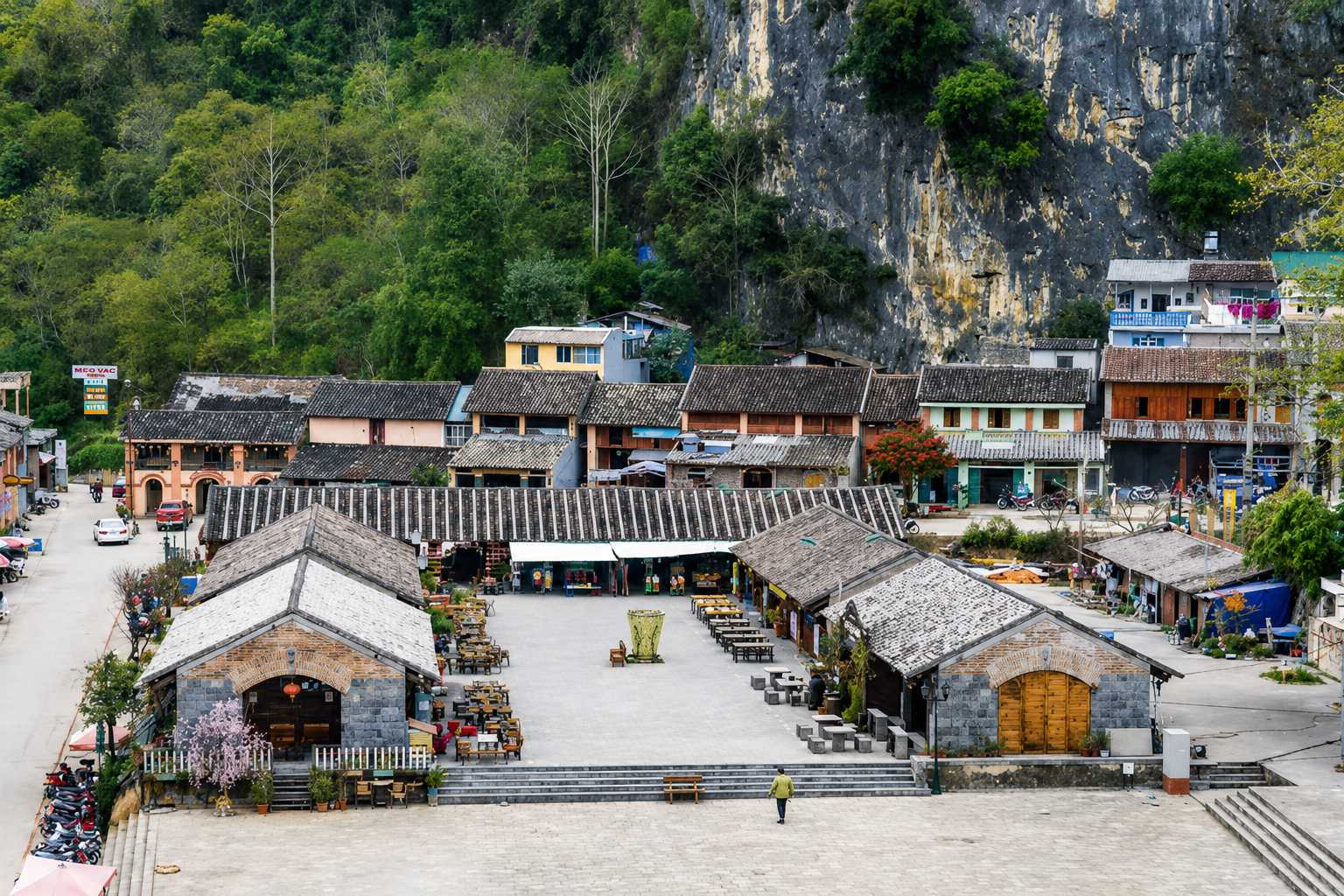 Dong Van Old Quarter is a charming ancient town nestled in the rocky mountains of northern Vietnam (Source: Collected)
Day 3: Meo Vac - Ha Giang City
On your final day, leave Meo Vac and drive back to Ha Giang City. Along the way, enjoy the changing mountain scenery, stop at scenic viewpoints, and take short breaks in small ethnic villages. The return journey offers one last chance to appreciate the spectacular landscapes of the Ha Giang Loop before arriving back in the city.
Reach Ha Giang City in the late afternoon, then board an evening sleeper bus back to Hanoi. This itinerary is ideal for adventure seekers, photographers, and travelers who want to experience the highlights of the Ha Giang Loop within three days.
Can You Visit Both in One Trip?
Absolutely and many experienced travelers do. Although Sapa and Ha Giang offer different experiences, they complement each other remarkably well.
A popular route is: Hanoi → Sapa → Ha Giang → Hanoi
Starting in Sapa allows you to ease into the trip with comfortable accommodation, gentle trekking, and iconic rice terrace scenery before continuing to Ha Giang for a more adventurous road-trip experience. Some travelers choose the opposite direction, beginning with the Ha Giang Loop before relaxing in Sapa. Either route works, but finishing in Sapa often feels less physically demanding after several days on mountain roads.
If you have at least seven days, combining both destinations provides one of the most rewarding itineraries in northern Vietnam.
Common Mistakes When Choosing Between Sapa and Ha Giang
Choosing the wrong destination doesn't usually happen because one place is better than the other, it happens because travelers expect the wrong experience. Here are some of the most common mistakes.
- Choosing Ha Giang for a Relaxing Holiday: Ha Giang is breathtaking, but it isn't a destination where you'll spend long afternoons beside a hotel balcony overlooking the mountains. Most days involve several hours of driving, frequent stops, and constantly changing accommodation. If your idea of a holiday is slowing down and relaxing, Sapa is often the better fit.
- Thinking Sapa Is Completely Untouched: Many travelers arrive expecting an isolated mountain village. In reality, Sapa has developed into one of Vietnam's most established mountain tourism destinations. While the surrounding valleys remain beautiful, the town itself is lively, with hotels, cafés, restaurants, and busy streets. For some travelers this is a major advantage. Others looking for a more remote atmosphere may prefer Ha Giang.
- Underestimating Travel Time in Ha Giang: Looking at a map, the distances don't appear particularly long. However, mountain roads mean average speeds are much lower than expected. Even relatively short distances can take several hours, so trying to rush through the Ha Giang Loop often leads to unnecessary fatigue.
- Choosing Sapa Only for Fansipan: Fansipan is undoubtedly one of Sapa's biggest attractions, but limiting your visit to the cable car means missing much of what makes the region special. The rice terraces, ethnic villages, local markets, and trekking routes are equally important parts of the experience.
Frequently Asked Questions
Is Sapa or Ha Giang better for first-time visitors?
→ For most first-time visitors to Vietnam, Sapa is the easier choice thanks to its convenient transportation, well-developed tourism infrastructure, and variety of accommodation options. Ha Giang is better suited to travelers looking for a more adventurous and less conventional experience.
Which destination has better mountain scenery?
→ Both are spectacular, but in different ways. Sapa is famous for its rice terraces and lush valleys, while Ha Giang is known for dramatic limestone mountains, winding mountain passes, and panoramic viewpoints.
Is Ha Giang worth visiting if I don't ride a motorbike?
→ Yes. Easy Rider tours, private cars, and Jeep tours allow visitors to experience the Ha Giang Loop without riding themselves.
Which destination is more affordable?
→ Both offer excellent value, although Ha Giang is generally slightly cheaper for accommodation and local food. Transportation costs, however, are usually higher because of the longer distances involved.
Sapa and Ha Giang each showcase a different side of northern Vietnam. Sapa is perfect for travelers seeking iconic rice terraces, scenic trekking routes, and a comfortable mountain retreat, while Ha Giang promises dramatic mountain passes, authentic ethnic culture, and one of the most unforgettable road trips in Southeast Asia.
If your itinerary allows, combining both destinations offers the most rewarding way to experience the diverse landscapes of northern Vietnam. Whether you're planning a short escape to Sapa, an adventurous Ha Giang Loop, or a journey that includes both, Sinh Cafe Travel can help you arrange reliable transportation, guided tours, and practical travel advice to make your trip smoother from start to finish. With the right itinerary, you'll be able to enjoy the very best of Vietnam's spectacular northern mountains with confidence.
Share via




Related articles
Top 10 must-try things to do in Sapa for an unforgettable adventure
Blog | 02/10/2025
Sa Pa or Ha Giang in July and August? Where to Go for the Best Weather and Experiences in Northern Vietnam
Posts | 02/07/2026

Travel to Vietnam with Kids: The Complete Family Travel Guide
Posts | 26/06/2026

How to get to Sapa: Complete travel guide from Hanoi and beyond
Blog | 03/10/2025









There are no reviews yet