


Vietnam Military History Museum: Top Historical Attraction in Hanoi
Located in Hanoi, the Vietnam Military History Museum is a must-visit destination for anyone interested in Vietnam’s heroic struggles throughout history against invaders. In this article, Sinh Cafe provides essential information to help you prepare for your visit to this historic site.
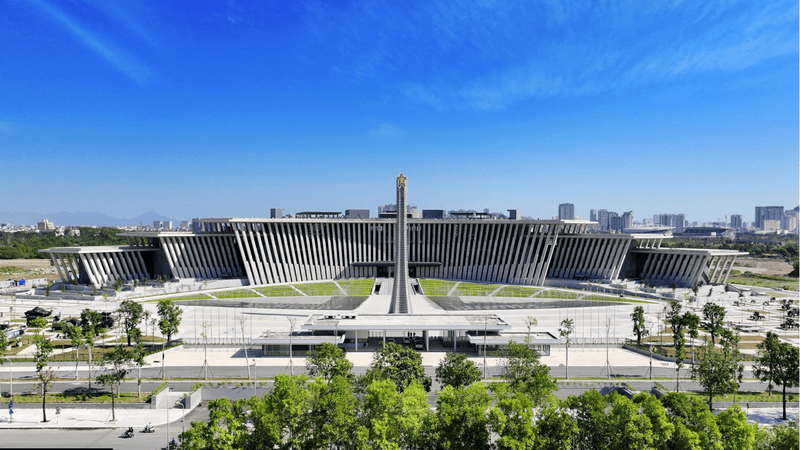
Overall about Vietnam Military history museum
Founded on 17 July 1956, the Vietnam Military History Museum (also known as Vietnam Museum of military history), is one of seven Vietnam national museums of history. Originally located at 28A Dien Bien Phu Street in Ba Dinh District, it has recently moved to a new site on Km 6+500, Thang Long Boulevard, Dai Mo Wards, Nam Tu Liem District, Hanoi. The modern complex includes four floors and a basement, covering 386,600 square meters, and displays more than 150,000 artifacts and documents, including four recognized National Treasures.
Vietnam Military history museum (Source: People’s Army newspaper)
Visitor guidelines at Vietnam Military history museum
Being one of the biggest national museums of Vietnamese history, Vietnam military history museum Hanoi also has some rules that visitor should pay attentions:
- Vietnam Military history museum opening hours are from 8:00 A.M. to 11:30 A.M in the morning and from 1:00 P.M. to 4:30 P.M in the afternoon. However, on special days such as Viet Nam Independence day (30 April) or Viet Nam national day (2 September), the museum may extend the opening time for workshops. The museum is closed on Mondays and Fridays.
- The Vietnam Military history museum entrance fee is 40.000 VND (2 USD) for international tourists
- Visitors are advised to wear respectful and appropriate clothing.
- Eating, drinking, and smoking are strictly prohibited in the exhibition areas.
- Photography is allowed only in designated areas
Ways to travel to Vietnam Military history museum
There are many ways for visitors to travel to the Vietnam Military History Museum in Hanoi. Here are some suggestions:
- Travelling by motorbike: Renting a motorbike in Hanoi typically costs between 150,000 and 250,000 VND (approximately 6.25–11.25 USD). Alternatively, you can book a motorbike ride through ride-hailing apps, with fares ranging from 75,000 to 95,000 VND (about 3.5–4.5 USD).
- Travelling by taxi: Another way for visitors to choose is travelling by taxi. The price for this transportation fluctuates from 70.000 VND to 200.000 VND (about 3.2 USD to 9.2 USD) depending on the distance.
- Travelling by bus: This is the cheapest travelling method for visitors. It costs only 8.000 VND (about 0.3 USD). Some buses that have the bus stop near the Vietnam Military history museum are 71B, 74, 87, 88, 107, 157, E05, E07 and E09
Read more: Bat Trang pottery village: workshop, museum & suitable time to visit
Indoor zones at Vietnam Military history museum
Inside the Vietnam Military History Museum, visitors can explore several exhibition zones that showcase a wide range of artifacts, photographs. Below each artifact, there is also a QR code that visitors can scan to get detailed information about it. Each zone is dedicated to a specific period of Vietnam’s military history, helping visitors gain a deeper understanding of the country’s heroic struggles and achievements.
Display zone 1: Early National Defense Period
This zone displays the restored weapons from the first days of the country (about 7th to 3rd century BC). The most special artifact in this room is the "legendary crossbow”. According to history, this weapon created a “rain of arrows” that could easily remove numbers of enemies in one shot.
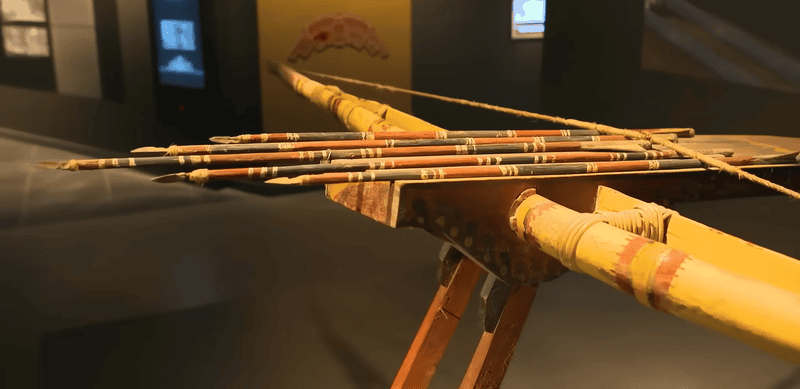
The “legendary crossbow” (Source: People’s Army newspaper)
Besides the unearthed weapons and bronze tools, there is one highlight that visitors should not miss: the diorama of the Bach Dang River battle. This was one of the largest and most significant battles in Vietnamese history. It marked the end of 1,000 years of Chinese domination, liberated the country, and ushered in a new era - the Vietnamese feudal period.
Display zone 2: National Defense of Feudal Period
Display Zone 2 represents the period of protecting and defending the nation during the Vietnamese feudal era. In this zone, visitors can explore a wide range of historical weapons and military tools, many of which were unearthed from ancient battlefields and archaeological sites. The most outstanding artifact is the Vietnamese cannon.
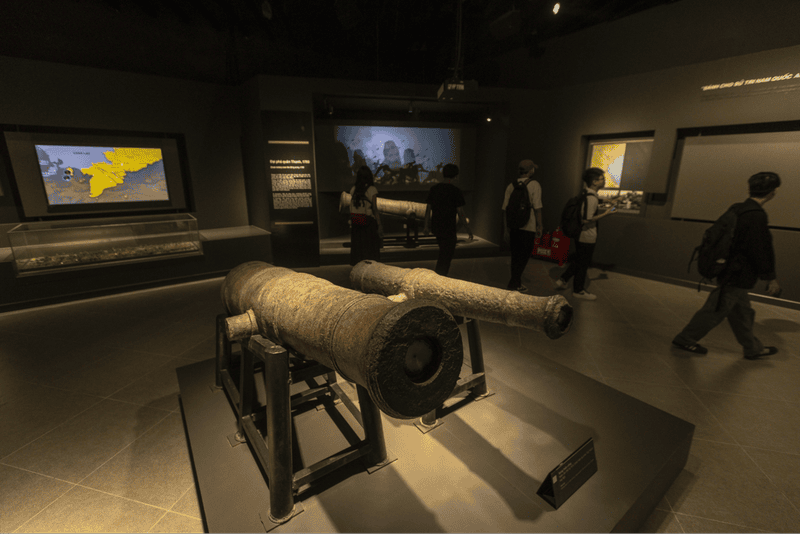
The Vietnamese Canon (Source: Thanh nien newspaper)
This weapon demonstrates the technical intelligence and strong defensive spirit of the Vietnamese army. In addition, the zone features several military dioramas of famous battles, helping visitors better visualize the strategies and scale of the wars fought during this period.
Display zone 3: Resistance Against French Colonial Rule (1858–1945)
In the next display zone, visitors can learn about the struggle to resist and liberate the country from French colonial rule between 1858 and 1945. This room is painted red, symbolizing the flag of the Communist Party. Besides the artifacts, this zone also recreates the settings of many important historical events, such as the founding of the Communist Party of Vietnam, the August Revolution in 1945, and the establishment of the Democratic Republic of Vietnam.
The highlight of the room is a 3D restoration depicting the establishment of the Vietnam Propaganda Liberation Army, the predecessor of the Vietnam People’s Army.
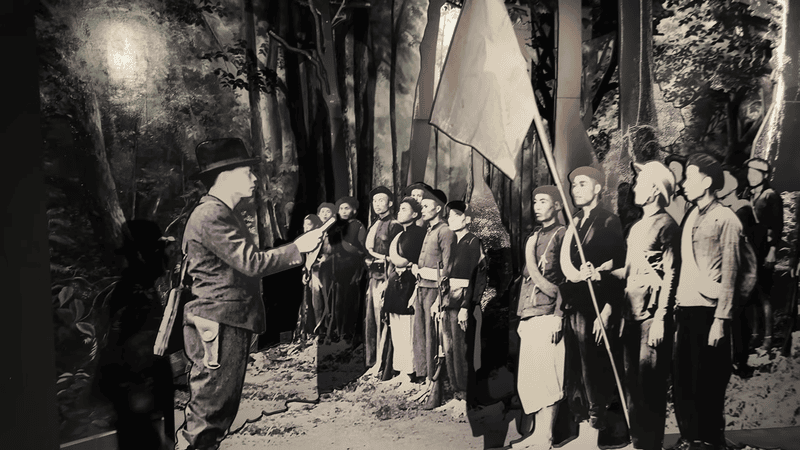
3D restoration of the founding of the Vietnam armed propaganda unit (Source: Collected).
This organization played a vital role in the struggle for national liberation. It also contributed significantly to the defense and protection of Vietnam, laying the foundation for the modern Vietnam People’s Army.
Display zone 4: Resistance War Against France (1945–1954)
Display Zone 4 represents the period of the modern war between Vietnam and France from 1945 to 1954. In this zone, visitors should not miss the section dedicated to the Dien Bien Phu battle. This was one of the most significant events in Vietnamese history, marking the defeat of a powerful colonial force and bringing an end to French colonialism in Vietnam.
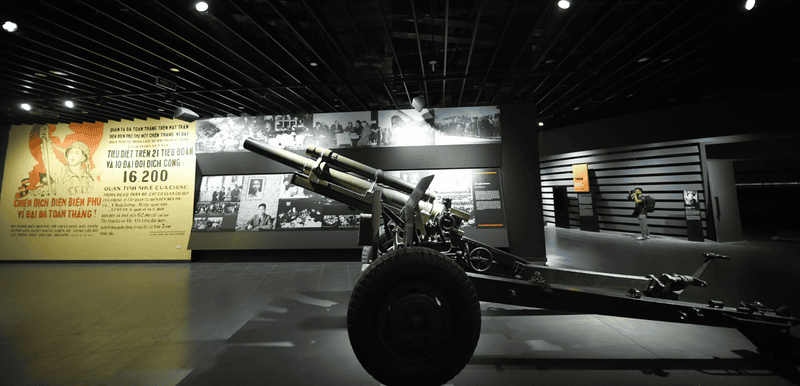
A canon used in Dien Bien Phu battle (Source: Viet Nam people’s army newspaper)
One special feature of this zone is a small theatre with available seating for visitors. Here, a documentary about the Dien Bien Phu battle is shown. Alongside the screen, there is also a 3D diorama of the battlefield. The film is presented in synchronization with the diorama, helping viewers better understand the course of the battle.
Display zone 5: Resistance War Against the United States (1954–1975)
This zone displays the artifacts in the battle between Viet Nam and the USA in the period from 1954 to 1975. This is the area that showcases a wide range of wartime vehicles and military equipment.
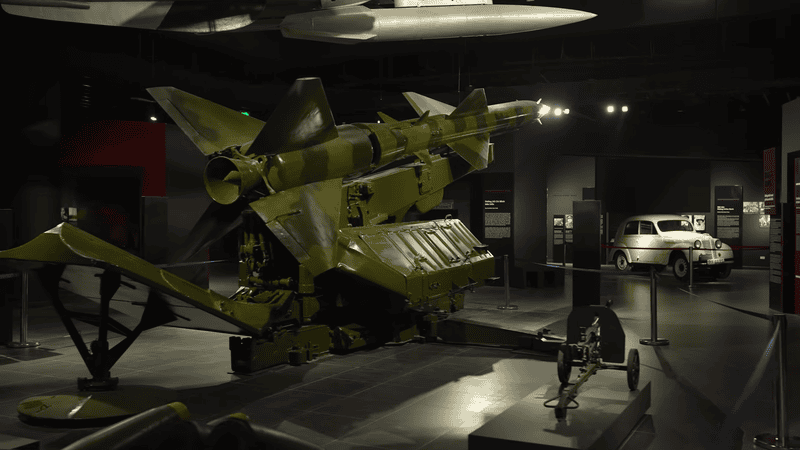
A SAM 2 missile in display zone 5 (Source: collected)
Notably, this zone preserves three of Vietnam’s national treasures, highlighting the historical and cultural significance of this period in the nation’s struggle for independence and reunification.
Display zone 6: National Construction and Defense (1975–Present)
Display Zone 6 represents the period of national construction and defense from 1975 to the present day. The overall color theme is mainly green, symbolizing peace and stability. One section of this zone presents the border wars with China and the Khmer Rouge. The remaining part of the gallery focuses on Vietnam’s efforts to protect national sovereignty, as well as the armed forces’ participation in international peacekeeping and humanitarian missions abroad.
If there are too many zones with numbers of information about artifacts and events that make you feel dizzy, don’t hesitate to contact Sinh Cafe. With many years of experience in booking and arranging tours for foreign visitors, we are sure to provide you with the best experience. We have skillful tour guides who will introduce to you about the artifacts and events in every zone in a logical and time-saving way, which makes your trip become interesting and meaningful without any tiredness.
Four “national treasures” at Vietnam Military history museum
A visit to the Vietnam Military History Museum would not be complete without checking out the four Vietnamese National Treasures preserved here. Below are the most remarkable artifacts that every visitor should see.
MiG 21 fighter jet No 4324
The first national treasure is the MiG-21 fighter jet No. 4324, which is displayed right at the entrance of the museum. This aircraft was used by the Vietnam People’s Air Force during the resistance war against the United States.
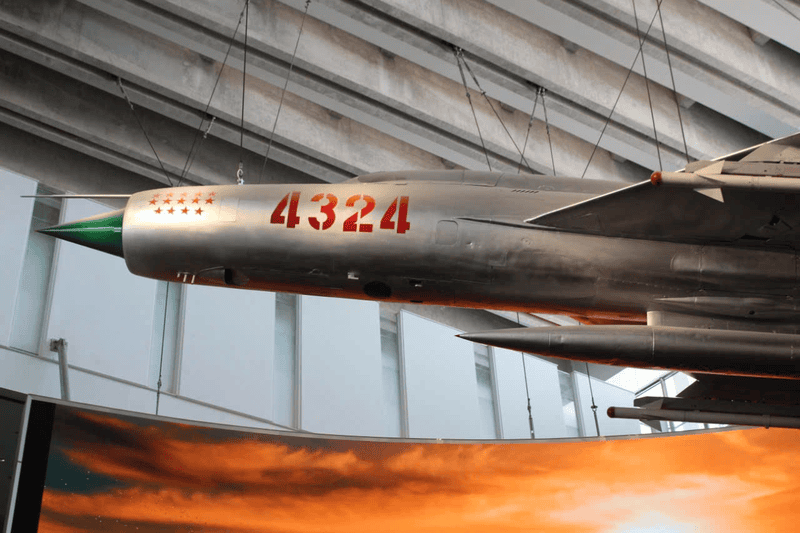
MiG 21 fighter jet No 4324 (Source: Lao Dong Newspaper)
On the nose of the jet, there are 14 red stars, each representing an enemy aircraft that was shot down. These stars highlight the remarkable achievements and bravery of Vietnamese pilots in aerial combat.
MiG 21 fighter jet No 5121
Another MiG-21 recognized as a national treasure is the MiG-21 fighter jet No. 5121, which is displayed in Zone 5 of the museum. Although it has only five red stars on its nose, this aircraft achieved a remarkable feat by shooting down a B-52 Stratofortress during the war.
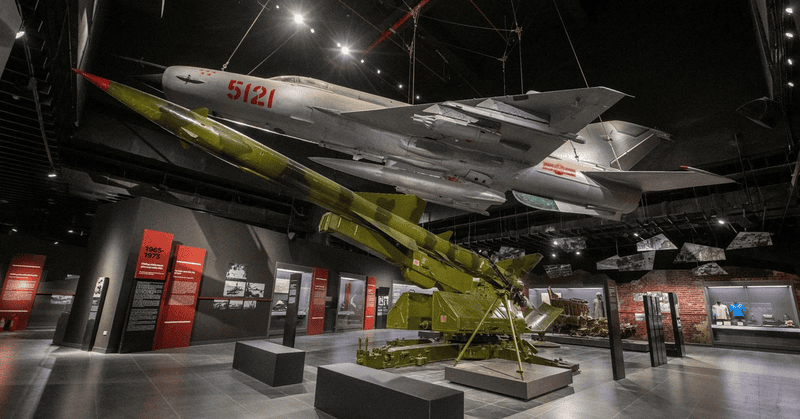
Mig 21 fighter jet No 5121 ( Source: Tuoi tre news)
To this day, it remains the only fighter jet known to have successfully destroyed one of the most advanced strategic bombers of the U.S. Air Force.
Tank No 843
The next national treasure displayed at the Vietnam Military History Museum is Tank No. 843, also exhibited in Zone 5 near the MiG-21 No. 5121.

The 843 tank (Source: Collected)
This tank is a powerful symbol of the Ho Chi Minh Campaign, as it was the first armored vehicle to break through the gates of the Independence Palace on April 30, 1975.
Ho Chi Minh campaign tactical map
The last national treasure displayed at Vietnam Military history museum is the Ho Chi Minh campaign tactical map. This map is also displayed at zone 5 in the museum.
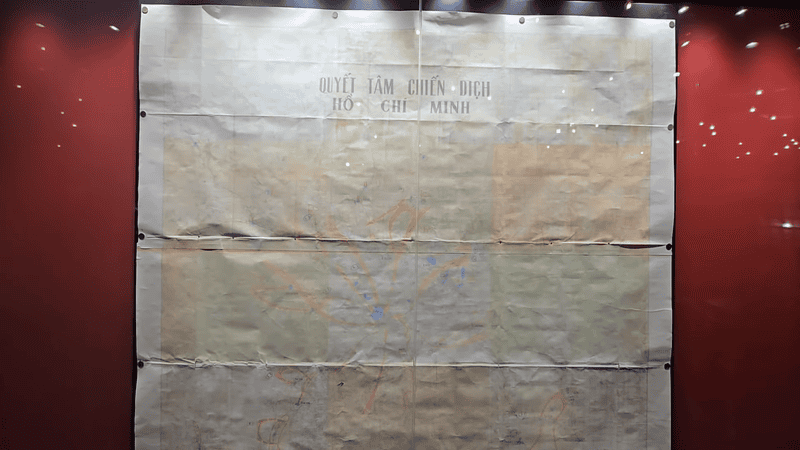 Ho Chi Minh campaign tactical map (Source: Collected)
This map illustrates the overall strategic plan and troop movements during the final campaign in April 1975. It reflects the high level of military intelligence, coordination, and decisive leadership of the Vietnam People’s Army, contributing directly to the liberation of Saigon and the reunification of Vietnam.
Outdoor points for taking Vietnam Military history museum photos
Besides the artifacts displayed indoor at Vietnam Military history museum, the outdoor zone of Vietnam Military history museum also has many beautiful check-in points for visitors that love photographing
Winning tower
The first check-in spot that visitors shouldn’t miss is the Winning Tower. Located right at the entrance of the museum, it is an ideal place for taking photos thanks to its impressive and distinctive architectural design.
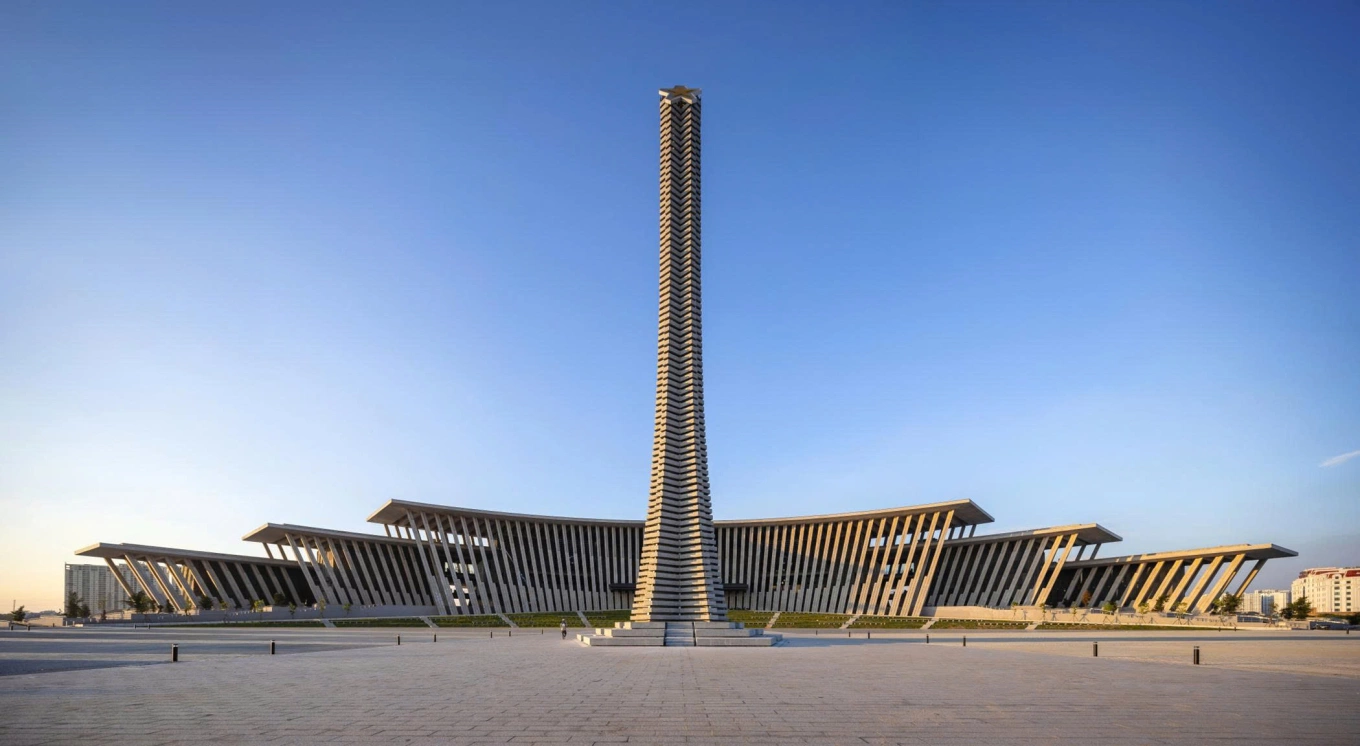
The winning tower (Source: VnExpress)
The tower is 45 meters high, representing the year 1945, when Vietnam was founded. Its structure is designed in the shape of a star, symbolizing the star on the Vietnamese national flag. The pentagonal base of the tower represents the five social groups in a socialist society—intellectuals, farmers, workers, entrepreneurs, and soldiers—united in the cause of protecting and developing the nation.
B-52 wreckage monument
Another check-in point for visitors at the Vietnam Military History Museum is the B-52 wreckage monument. This is an artistic masterpiece created by Vietnamese artists. Beneath the statue are the remains of a B-52 bomber shot down during the war. Above the structure, numerous doves are suspended, symbolizing peace
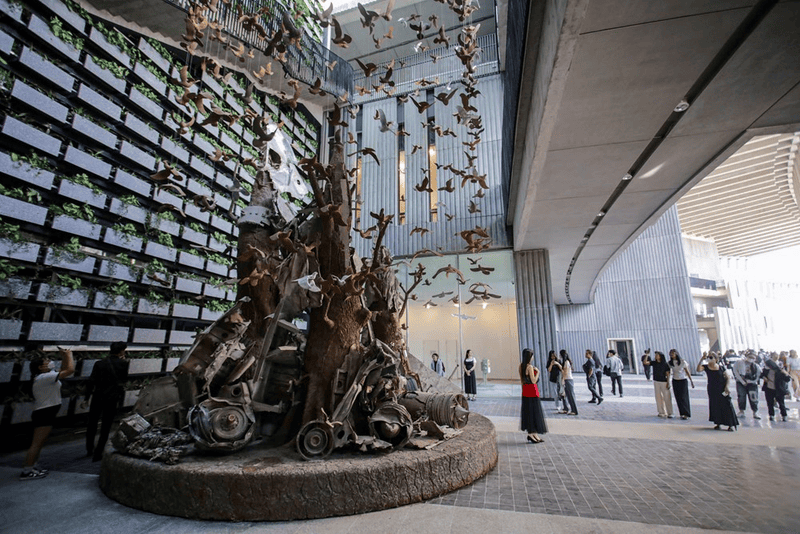
B-52 wreckage monument (Source: Van Hoa newspaper)
The contrast between the war debris and the image of doves conveys a powerful message about the desire for peace after years of conflict. This monument has become one of the most impressive and meaningful outdoor displays at the museum.
Vehicles used in Vietnam War
The Vietnam Military history museum is also well-known for the war vehicles display. Right at the front yard of the museum, visitors can see numbers of vehicles used by both sides.
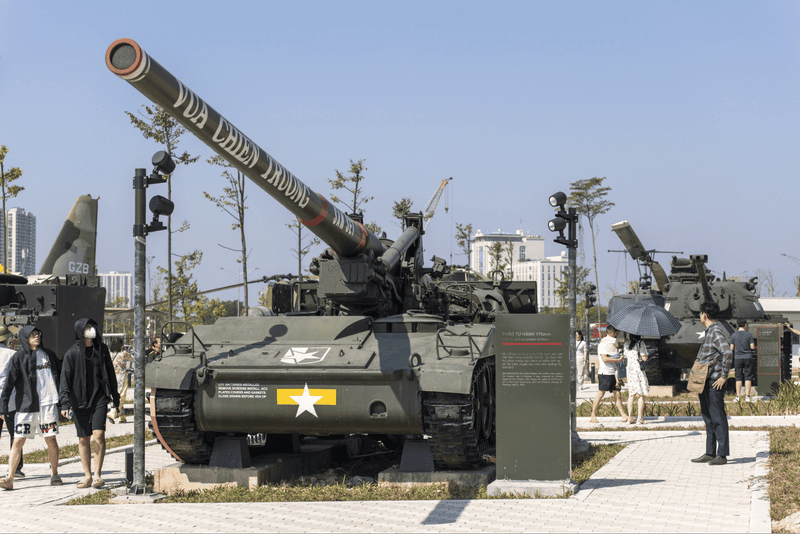
A vehicle displayed outdoor (Source: Thanh Nien newspaper)
These exhibits help visitors gain a clearer understanding of the scale and intensity of the conflict, as well as the technological differences between the opposing forces. Many of the vehicles are preserved in their original condition, creating a vivid and realistic experience for visitors.
Read more: Trang Tien Plaza Hanoi Vietnam – Luxury shopping center in the capital
Vietnam Military History Museum Reviews
Although it has just been founded for over a year, the Vietnam Military History Museum reviews by visitors are really positive. They praised its large-scale exhibitions, well-organized display zones, and meaningful historical narratives.
One visitor particularly appreciates the museum’s large-scale structure, extensive collections, and powerful storytelling, which help convey Vietnam’s struggles and resilience through different periods of war.
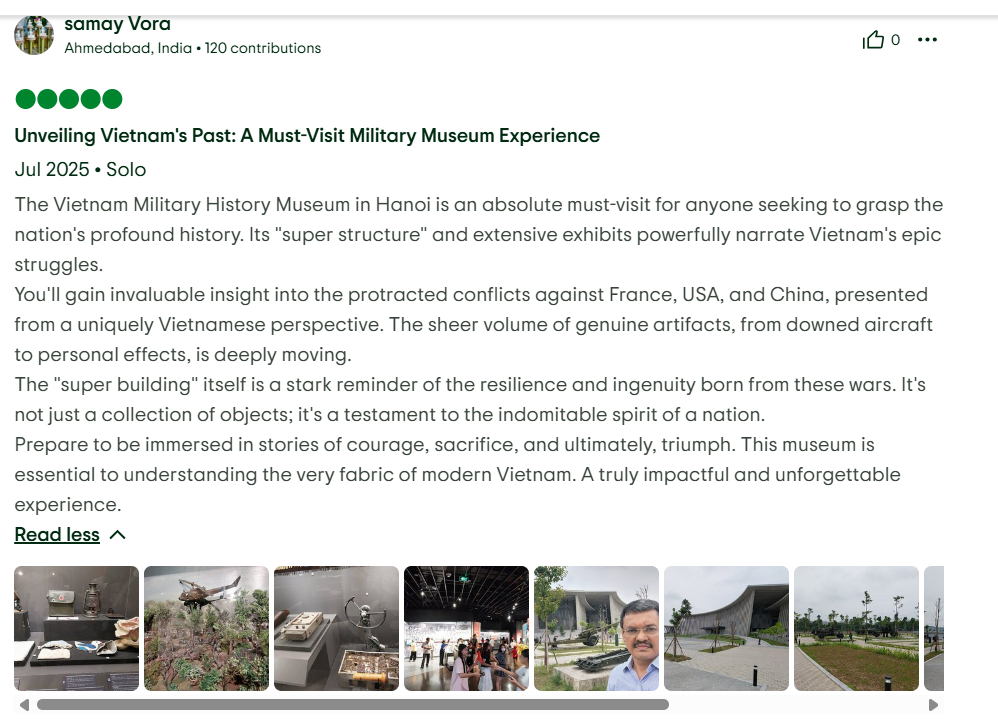
Vietnam Military History Museum review by a foreign visitor (Source: Tripadvisor)
Other reviews express their satisfaction for the experience they got with a very cheap price. With all the experience with exhibition of artifacts in different zones, 40.000 VND is well worth
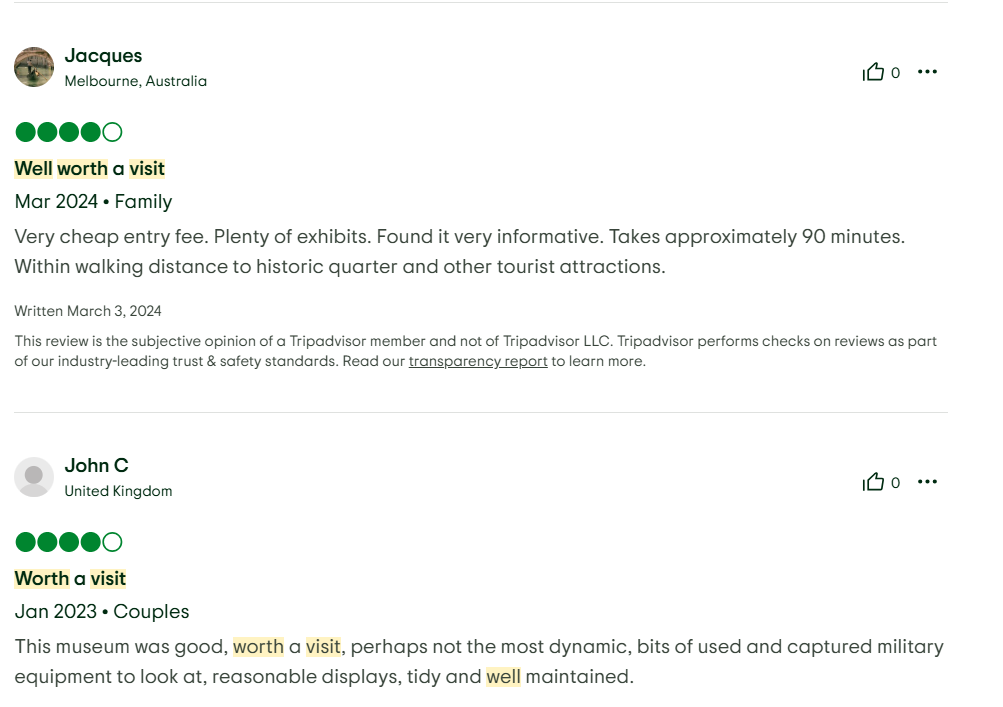
Visitors satisfied with the entrance fee (Source: Tripadvisor)
Tips for travelling to Vietnam Military history museum
To have the best visit to Vietnam Military history museum, here are some tips for the visitors:
- Arrive early to have enough time to explore all six display zones, as the museum is quite large.
- Wear comfortable yet respectful clothing, as the museum is a historical and cultural site, and choose suitable shoes if you plan to explore the outdoor exhibition areas.
- Read the information panels or scan QR codes carefully to better understand the historical background of each artifact.
- Bring sunscreen and sunglasses on sunny days, especially if you plan to explore the outdoor exhibition areas.
- Follow photography rules, as some indoor zones may restrict flash or filming.
- Have some cash ready for Vietnam Military history museum tickets and nearby food stalls. About 150.000 VND (about 7.5 USD) is enough.
Above is the basic information about the Vietnam History Military Museum that we offer. We hope that this article will help you to have the best preparation before paying a visit to it.
If you would like to explore more historical and cultural highlights of Hanoi, a full-day city tour in Ha Noi with Sinh Cafe is an excellent choice. This well-planned tour takes you to iconic landmarks such as the Ho Chi Minh Mausoleum, the Vietnam Museum of Ethnology, and other must-see attractions, offering a deeper insight into the capital’s rich history and culture. You can easily book the tour through our Sinh Cafe website or contact our hotline at +84 904 488 850 for personalized assistance.
Share via




Related articles
Visit Quan Thanh Temple Hanoi to uncover its legends and historical treasures
Posts | 03/12/2025

Hanoi, Ninh Binh or Ha Long Bay: How to Prioritize Your Time on a Short Vietnam Trip
Posts | 02/07/2026
5 Days in Vietnam for First Time Couples: Beyond the Tourist Trail
Posts | 08/06/2026
Hanoi or Ho Chi Minh City: Which Vietnamese Experience Fits Your Travel Style?
Posts | 11/06/2026









There are no reviews yet