


Visit Quan Thanh Temple Hanoi to uncover its legends and historical treasures
Nestled in the heart of Hanoi, Quan Thanh Temple stands as a testament to the city’s rich history and spiritual life. With its centuries-old architecture, sacred statues, and intricate details, the temple offers visitors a unique glimpse into Vietnam’s cultural and religious traditions. From vibrant festivals to serene rituals, this historic site invites travelers to explore its legends and immerse themselves in the stories that have shaped Hanoi’s heritage.
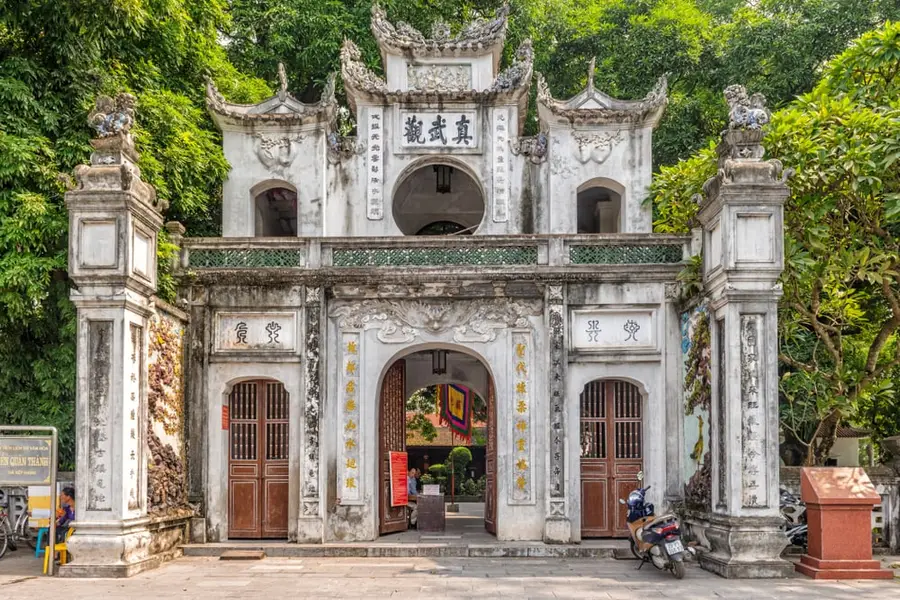
Nestled in the heart of Hanoi, Quan Thanh Temple stands as a testament to the city’s rich history and spiritual life. With its centuries-old architecture, sacred statues, and intricate details, the temple offers visitors a unique glimpse into Vietnam’s cultural and religious traditions. From vibrant festivals to serene rituals, this historic site invites travelers to explore its legends and immerse themselves in the stories that have shaped Hanoi’s heritage.
Why you should visit Quan Thanh temple
Under the shade of ancient trees by West Lake, Quan Thanh Temple stands as a serene sanctuary amidst the bustling rhythm of Hanoi. This sacred site is not only a place of worship but also a symbol of the capital’s thousand-year-old spiritual and cultural heritage.
As one of the “Four Sacred Temples of Thang Long”, Quan Thanh Temple represents the northern guardian of the ancient capital. It is dedicated to Huyen Thien Tran Vu, the God of the North, who symbolizes power, purity, and protection against evil. Visiting the temple, travelers can feel a sense of calm and sacredness that contrasts beautifully with the city’s modern energy.
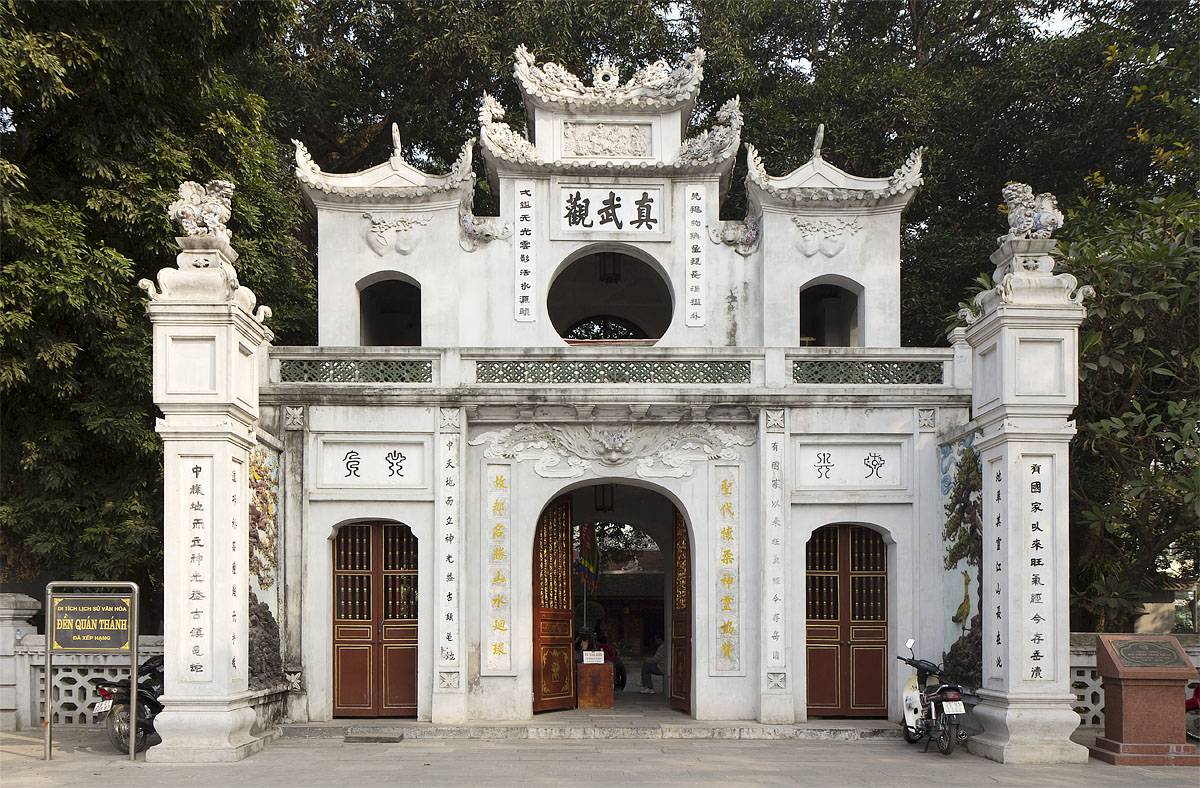
Why you should visit Quan Thanh temple? (source: Wikipedia)
Beyond its spiritual value, Quan Thanh Temple is also a remarkable architectural treasure with a history spanning over a millennium. The moss-covered walls, imposing triple gate, and the massive bronze statue of Tran Vu weighing more than three tons all tell stories of Hanoi’s glorious past. Every carving, inscription, and wooden detail reflects the artistic craftsmanship and religious beliefs deeply rooted in Vietnamese culture.
What makes the temple even more captivating is its prime location beside West Lake, offering a tranquil atmosphere with gentle breezes and the distant sound of temple bells from Tran Quoc Pagoda nearby. It’s the perfect stop for those seeking peace, reflection, and a glimpse of Hanoi’s timeless soul - a rare harmony of spirituality, history, and nature in one place.
Read more: Hoan Kiem Lake Hanoi - Legend, attractions & travel guide
How to get to Quan Thanh Temple?
- Address: 109 Quan Thanh street, Quan Thanh ward, Ba Dinh district, Hanoi.
- Opening hours: 8AM - 5PM daily.
Located at the corner of Quan Thanh Street and Thanh Nien Street, near the intersection leading to West Lake, Quan Thanh Temple belongs to Quan Thanh Ward, Ba Dinh District, Hanoi. This is a central and easily accessible area, just a few minutes away from the Old Quarter. Therefore, visitors can conveniently combine their trip with other famous attractions such as Tran Quoc Pagoda, Phu Tay Ho, or the Ho Chi Minh Mausoleum in the same itinerary.
From Hanoi’s Old Quarter, you only need to follow the route Hang Dau - Quan Thanh for about 2 kilometers to reach the temple gate. Visitors can walk, cycle, or take a taxi, all are convenient options, as the road is spacious, shaded by trees, and close to many beautiful check-in spots around Truc Bach Lake. If traveling by motorbike or car, you can park at the lot opposite the temple or along Thanh Nien Street, which is very convenient for a short visit.
For travelers coming from afar or from Noi Bai International Airport, it’s best to take a taxi or ride-hailing service, which takes around 35–40 minutes. In addition, the public bus system has several routes that stop near the temple, such as 50, 18, 22A, and 45, helping you save money while enjoying the sights of Hanoi’s bustling streets along the way.
Ideal visiting times
Quan Thanh Temple is open year-round, but to have the best experience, visitors should choose the most suitable time. Early morning is ideal for those who want to avoid crowds and enjoy a peaceful atmosphere. The morning light illuminates the tiled roofs, the temple courtyard, and the ancient trees, creating a beautiful and serene scene. This time is perfect for photography or quiet reflection before entering the main hall.
In the late afternoon, as the sun begins to set, the soft golden light combined with the breeze from West Lake provides a cool and pleasant atmosphere. This is also when many worshippers come to offer incense, creating a lively yet tranquil scene, allowing visitors to fully appreciate the temple’s calm and peaceful beauty.
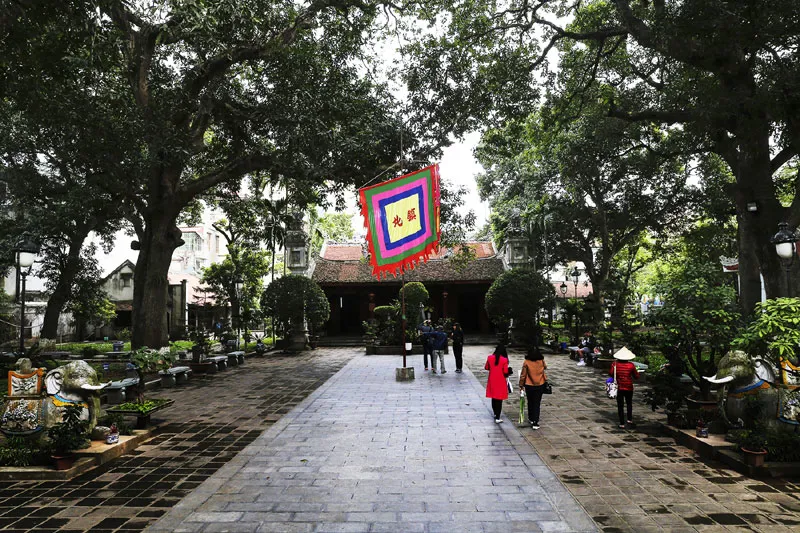
Ideal visiting times (source: Hanoi times)
For those interested in observing traditional rituals and learning about local spiritual culture, the 1st and 15th days of the lunar month are particularly suitable. The temple becomes busier with people offering incense, fruits, and other ritual items, giving visitors a direct experience of Hanoi residents’ spiritual life.
During major temple festivals, such as the 3rd day of the 3rd lunar month and the 9th day of the 9th lunar month, the Quan Thanh Temple Festival takes place. Visitors can witness the incense offering ceremonies, the procession of ritual trays, and other traditional cultural activities, while gaining a deeper understanding of the role of Huyen Thien Tran Vu in the local spiritual life.
In summary, the ideal visiting times are early morning or late afternoon on regular days, or during important festival days for those who want to experience the full atmosphere of rituals and temple celebrations.
History and spiritual significance of Quan Thanh temple
Quan Thanh Temple was built in the early 11th century during the reign of King Ly Thai To, around the same time as the capital was relocated to Thang Long. It is one of the “Four Sacred Temples of Thang Long”, four temples that historically guarded the four directions of the ancient capital. Quan Thanh Temple is located in the northern direction and is dedicated to Huyen Thien Tran Vu, the deity who protects the North, symbolizing the power to ward off evil and bringing peace to the people.
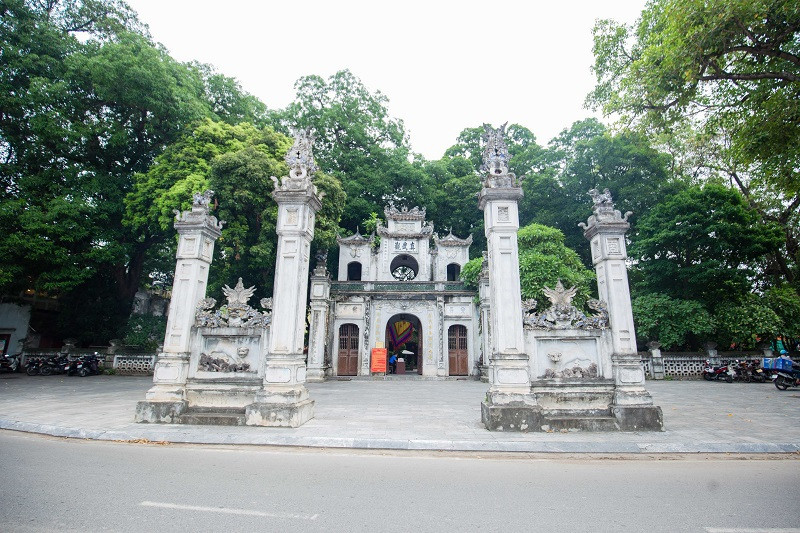
Quan Thanh temple (source: Tien Phong news)
Over more than a thousand years of history, the temple has been renovated several times but has retained its original ancient and sacred character. The massive black bronze statue, weighing nearly 4 tons, along with the intricate carvings throughout the temple, reflect the deep reverence of past generations for this guardian deity. For the people of Hanoi, Quan Thanh Temple is not only a place for worship, prayers for blessings and safety, but also a symbol of enduring peace and the lasting spirit of Thang Long.
Architecture and notable Features
Quan Thanh Temple stands as a living testament to Vietnam's traditional architecture, blending spiritual significance, cultural heritage, and natural beauty. The temple grounds are spacious with towering ancient trees, gently sloping tiled roofs, large wooden pillars, and intricate carvings. The combination of open courtyards, the main hall, and surrounding gardens creates a serene atmosphere that offers visitors both aesthetic pleasure and a sense of sacredness.
Tam Quan gate
The main gate of Quan Thanh Temple is called Tam Quan and serves as the most solemn and majestic entrance. It is built in the traditional Vietnamese temple and communal house style, featuring three doorways that symbolize the balance of yin and yang and represent three paths leading to the spiritual realm.
Tam Quan gate at Quan Thanh temple (Source: Traveloka)
- The central gate, called Thien Mon, is the largest and most important. It is primarily used for major ceremonies and special guests. The roof curves gracefully, adorned with dragon and phoenix motifs painted in traditional red and gold, symbolizing authority and sacredness. This central passage leads directly to the main courtyard and hall, representing the path into the temple’s sacred space.
- The left gate, known as Huu Mon, is generally used by regular visitors and worshippers. Slightly smaller than the central gate, it retains the traditional curved roof and intricate carvings of dragons and folk patterns, creating a welcoming yet solemn entrance.
- The right gate, called Ta Mon, mirrors the Huu Mon in size and design and is typically used for auxiliary ceremonial access or for minor guests. Its architecture and decorative motifs maintain balance and harmony across the entire Tam Quan.
Together, the three gates form a balanced Tam Quan structure, fulfilling both feng shui principles and aesthetic requirements while preserving the temple’s sacred aura. Standing before the Tam Quan, visitors can immediately sense the division of yin and yang, the presence of authority, and the calm that prepares one to enter the temple’s spiritual space.
Bronze statue of Huyen Thien Tran Vu
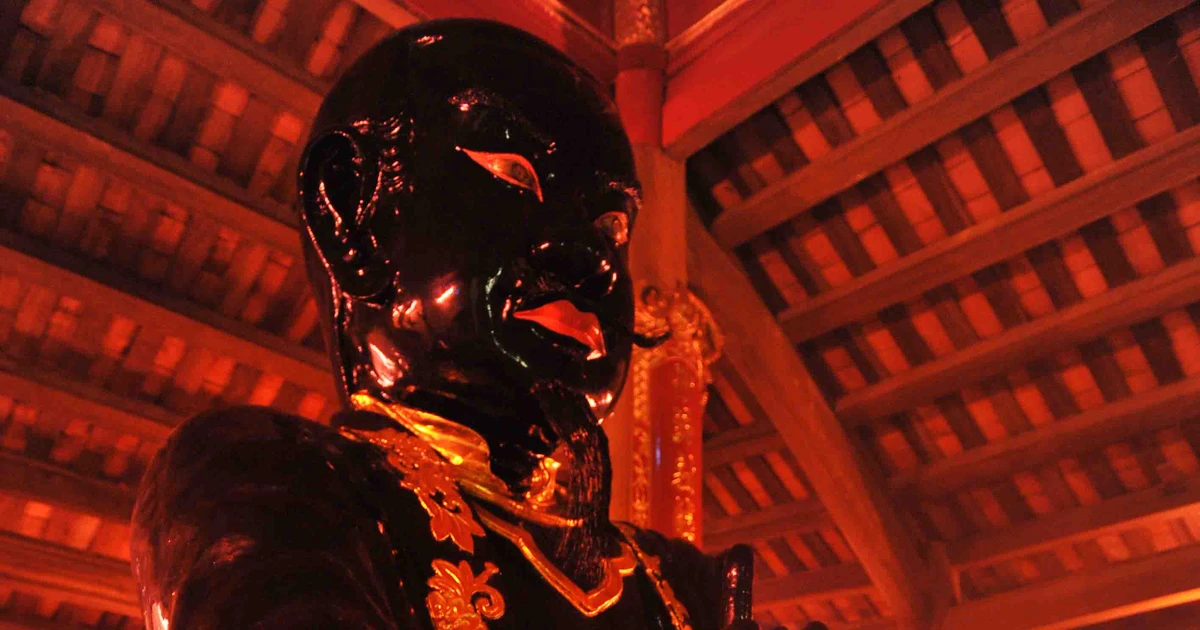
Bronze statue of Huyen Thien Tran Vu (source: Vietnam plus)
The most prominent feature inside the temple is the massive black bronze statue of Huyen Thien Tran Vu. Standing nearly four meters tall and weighing about 3.6 tons, it was cast in 1677 by artisans from the historic village of Ngu Xa. The statue depicts the deity seated on a turtle, holding a sword with a coiled serpent, symbolizing power, protection, and guardianship of the North. This statue is not only a remarkable work of bronze craftsmanship but also a profound spiritual symbol that attracts both worshippers and tourists alike.
Stella Pavilion
Within the grounds of Quan Thanh Temple, there is a small but important structure called the Stella Pavilion, or Nha Bia in Vietnamese. This pavilion houses a stone tablet engraved with Chinese and Nom characters, recording the temple’s restoration history and major events over the centuries.
The Stella Pavilion is slightly elevated from the courtyard, featuring a curved tiled roof, sturdy wooden columns, and a brick floor, creating a solemn and respectful space. The stone tablet inside serves as an important historical record, documenting restorations, the casting of the bronze statue, and architectural additions from the 17th to the 19th centuries. Visitors can pause at the Stella Pavilion to read the ancient inscriptions, appreciate the historical and cultural value, and find a moment of calm before entering the main hall of the temple.
Festivals at Quan Thanh Temple
Quan Thanh Temple is one of Hanoi’s most famous spiritual sites, closely associated with numerous traditional festivals and rituals. The most prominent is the Quan Thanh Temple Festival, held annually to honor Huyen Thien Tran Vu, the god who guards the North, protects ancient Thang Long, and plays an important role in the spiritual life of Hanoi’s people.
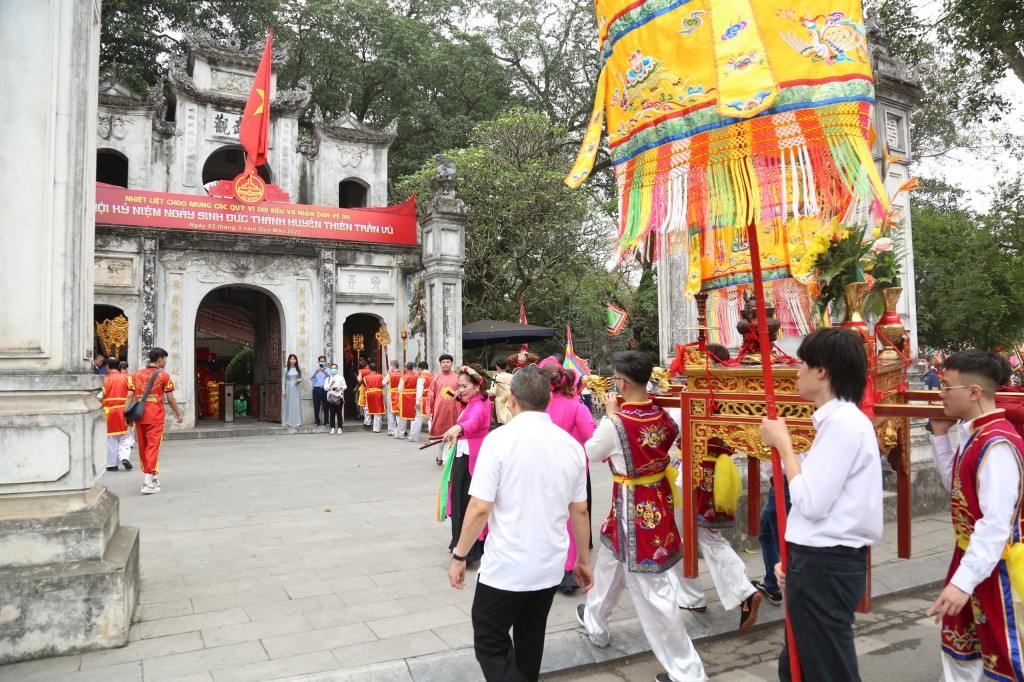
Festivals at Quan Thanh Temple (source: Bao Tuoi tre thu do)
The festival usually takes place on the 3rd day of the 3rd lunar month and the 9th day of the 9th lunar month, featuring key activities such as incense offerings, ceremonial tray processions, Taoist rituals, and folk ceremonies. Local residents actively participate, creating an atmosphere that is both solemn and lively.
In addition to the main festival, the temple also holds regular monthly rituals on the 1st and 15th days of the lunar month. During these rituals, worshippers offer incense, fruits, and other ritual items to pray for peace, health, luck, and prosperity. The temple caretakers (giám tự) perform Taoist chanting rituals to maintain the sanctity and calm of the temple space.
Other minor festivals and cultural activities associated with Quan Thanh Temple include processions around West Lake, calligraphy exhibitions, and traditional experiences such as wearing historical costumes and enjoying tea ceremonies. These events not only help preserve cultural values but also provide visitors with a unique and immersive experience when visiting the temple.
“Tran Vu Bell Sound” night tour at Quan Thanh Temple
The “Tran Vu Bell Sound” night tour at Quan Thanh Temple offers visitors a unique chance to explore Hanoi’s spiritual heritage after dark. During this 90-minute experience, guests are guided through the temple grounds as the soft light of lanterns illuminates ancient roofs and courtyards. The atmosphere is peaceful yet captivating, with the deep, resonant toll of the temple bell creating a magical sense of connection to centuries of history.
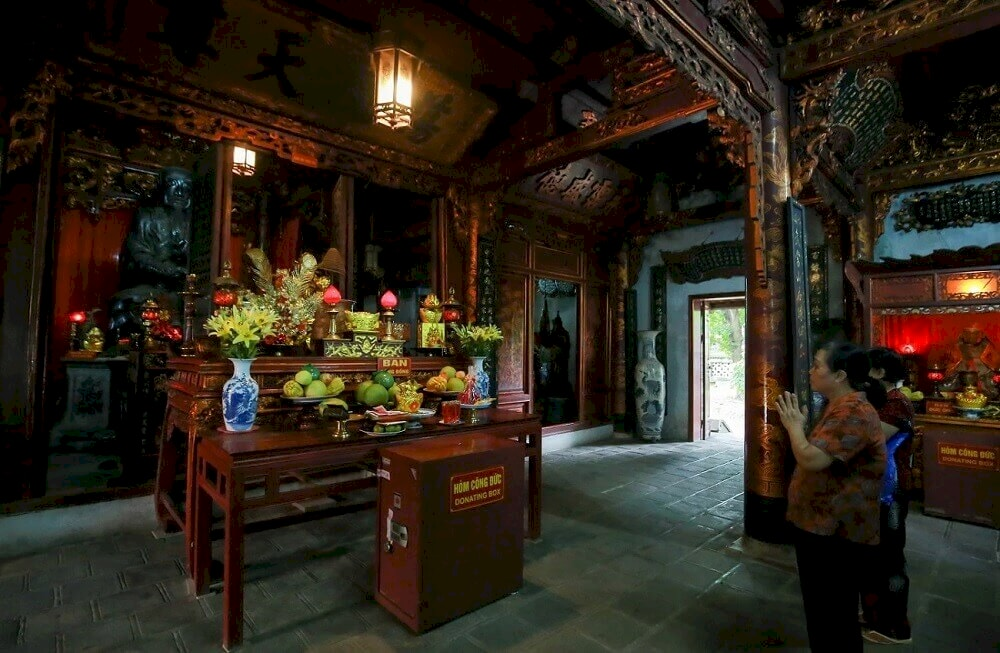
The “Tran Vu Bell Sound” night tour at Quan Thanh Temple offers visitors a unique chance to explore Hanoi’s spiritual heritage after dark (source: Vietnam Airlines)
Throughout the tour, visitors hear stories and legends about Huyen Thien Tran Vu, the sacred god who guards the North, and witness live performances inspired by traditional rituals. The experience blends cultural storytelling with ritual reenactments, allowing guests to see the temple in a completely different light, serene, sacred, and full of life at the same time.
Beyond the temple itself, the tour introduces participants to the surrounding traditional craft villages, where ancient arts like silk weaving and bronze casting are still practiced today. Guests can try on historical costumes, enjoy tea ceremonies, and even practice calligraphy, making the night tour an immersive cultural journey that combines history, spirituality, and hands-on experiences in one memorable outing.
Discover the ancient charm and spiritual heritage of Hanoi with Sinhcafe tours! Our tour programs not only take you to the city’s most famous attractions but also include a visit to Quan Thanh Temple, a site rich in history and unique cultural traditions. Let Sinhcafe be your companion, providing a complete and memorable experience as you explore the capital.
Read more: Trang Tien Plaza Hanoi Vietnam – Luxury shopping center in the capital
Quan Thanh Temple surely promises an unforgettable experience. Its timeless architecture, sacred rituals, and rich history make it a must-see destination for anyone seeking to connect with Hanoi’s cultural and spiritual essence. Plan your visit and let the temple’s stories guide you through the heart of the city.
Share via




Related articles
Why Vietnam Is a Great Alternative to Bali for Australian Travelers
Posts | 11/06/2026

Best Vietnam Destination for Indian Multi-Generational Family Vacations
Posts | 11/06/2026

Travel to Vietnam with Kids: The Complete Family Travel Guide
Posts | 26/06/2026
Book Street Hanoi: A New Tourism Destination for Book Lovers
Posts | 26/01/2026









There are no reviews yet