


Thien Mu Pagoda Hue - Visiting guide, opening hours, tickets & Things to do
Thien Mu Pagoda in Hue is a sacred symbol not only of the city but also of Vietnam. This ancient temple, over 400 years old, stands gracefully along the Perfume River, showcasing serene beauty, unique architecture, and rich historical value. At Thien Mu Pagoda Hue, visitors can admire the iconic Phuoc Duyen Tower, explore valuable artifacts, experience spiritual rituals, and capture stunning photos at the surrounding scenic spots. Whether you are passionate about architecture, history, or photography, Thien Mu Pagoda in Hue is an unmissable destination.
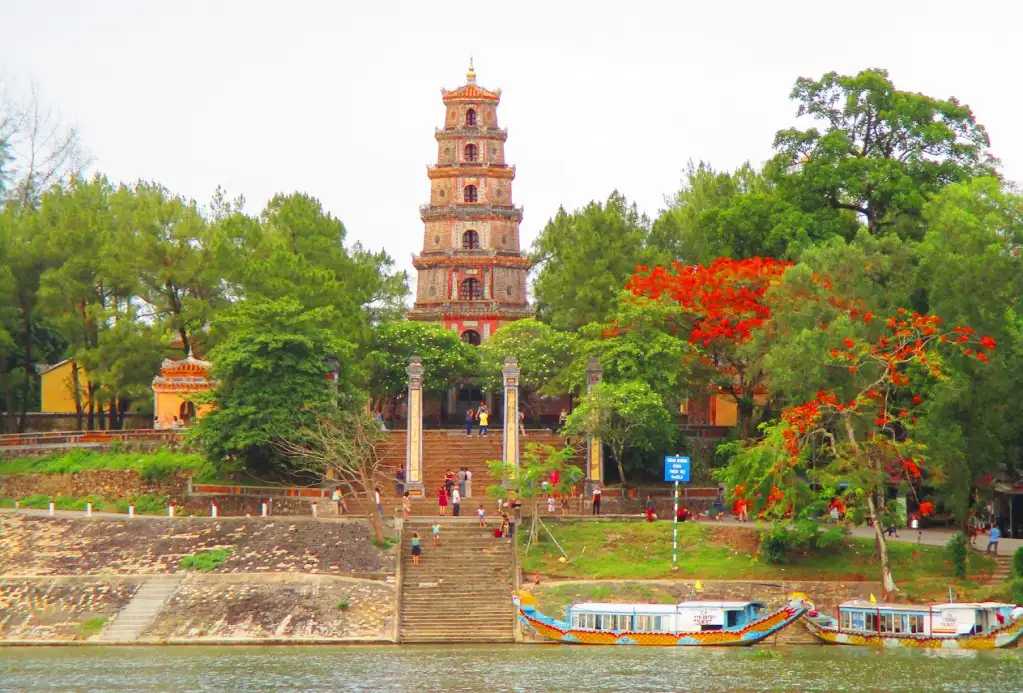
Thien Mu Pagoda in Hue is a sacred symbol not only of the city but also of Vietnam. This ancient temple, over 400 years old, stands gracefully along the Perfume River, showcasing serene beauty, unique architecture, and rich historical value. At Thien Mu Pagoda Hue, visitors can admire the iconic Phuoc Duyen Tower, explore valuable artifacts, experience spiritual rituals, and capture stunning photos at the surrounding scenic spots. Whether you are passionate about architecture, history, or photography, Thien Mu Pagoda in Hue is an unmissable destination.
Introduction to Thien Mu Pagoda
Nestled peacefully along the scenic Perfume River, Thien Mu Pagoda is not just a religious site but also an iconic cultural symbol of Hue city. With a history spanning over 400 years, this pagoda is closely associated with significant historical events and reflects the Vietnamese spirit through its unique architectural and spiritual artistry.
Introduction to Thien Mu Pagoda (Source: Traveloka)
Visiting Thien Mu, travelers can immerse themselves in a serene space filled with curved temple roofs, shaded green trees, and the picturesque riverside – a perfect setting for reflection, photography, or simply enjoying a peaceful afternoon. The pagoda is also famous for the seven-story Phuoc Duyen Tower, a sacred symbol of Hue that attracts both photography enthusiasts and those eager to explore the city’s history.
Thien Mu Pagoda offers more than just cultural sightseeing. Visitors can explore its spacious grounds, admire Buddha statues, enjoy views of the Perfume River, or participate in traditional festivals held at the pagoda. Every step inside Thien Mu provides a sense of tranquility and a glimpse into the ancient charm of Hue.
Read more: Lang Co fishing village: A hidden coastal gem near Hai Van pass
How to get to Thien Mu Pagoda
Thien Mu Pagoda is located about 5 kilometers (3 miles) northwest of Hue city center, along the scenic Perfume River. There are several convenient ways to reach this iconic pagoda, depending on your preference for comfort, adventure, or local experience.
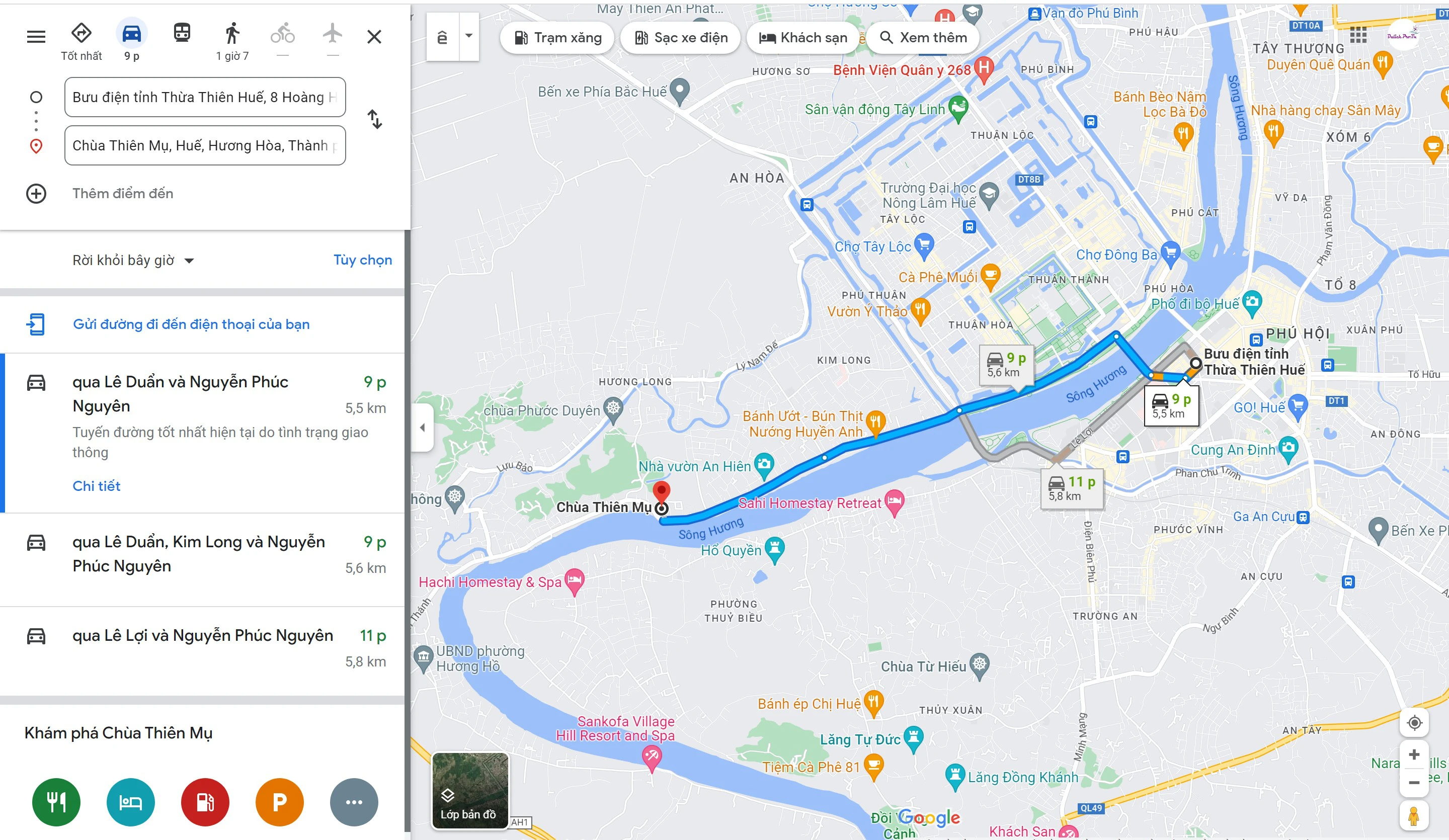
How to get to Thien Mu Pagoda
- By taxi or private car: The quickest and most comfortable option is to take a taxi or private car from Hue city. The ride takes around 15–20 minutes, offering beautiful views of the Perfume River and countryside along the way. This is ideal for families, travelers with limited time, or those carrying luggage.
- By motorbike or bicycle: For a more adventurous route, renting a motorbike or bicycle is a popular choice. The roads are well-paved and mostly flat, making it a pleasant ride along the riverbanks. Cycling gives visitors the freedom to stop at scenic viewpoints, take photos, and enjoy the lush greenery of Hue’s outskirts. The ride from the city center usually takes 20–30 minutes by motorbike and 30–45 minutes by bicycle.
- By boat: A river cruise to Thien Mu Pagoda provides a unique and memorable experience. Several boat services operate from the city’s docks, offering trips along the Perfume River directly to the pagoda. The journey can take around 20–30 minutes, giving travelers the chance to enjoy the serene river scenery and capture stunning photos. This is also a romantic or relaxed option for visitors who want a different perspective of Hue.
Thien Mu Pagoda Opening Hours & Entrance Fee
Thien Mu Pagoda Hue is one of the most iconic landmarks in Vietnam, attracting both local and international visitors. The Thien Mu Pagoda opening hours are usually from 7:00 AM to 5:30 PM, allowing travelers to visit early in the morning or enjoy the serene sunset views along the Perfume River.
Regarding the Thien Mu Pagoda entrance fee, admission is currently free, but visitors can make voluntary contributions to support the maintenance of the pagoda and its cultural activities. This ensures that everyone can experience Thien Mu Pagoda Vietnam fully while contributing to the preservation of its historical and spiritual significance.
Inside the pagoda, visitors should follow proper etiquette and dress respectfully. Thien Mu Pagoda dress code recommends modest clothing, and certain areas require extra care, especially around altars and Buddha statues. Observing these rules allows you to explore Thien Mu Pagoda inside without disturbing the sacred atmosphere.
For photography enthusiasts, Thien Mu Pagoda photos are especially stunning during sunrise or sunset, capturing the beauty of Thien Mu Pagoda in Hue. Travelers often leave reviews praising the peaceful environment, the historic architecture, and the panoramic views from the pagoda grounds (Thien Mu Pagoda reviews).
If you plan your visit, check Thien Mu Pagoda tickets if attending special events or guided tours, and review Thien Mu Pagoda hours to make the most of your trip. Exploring this site provides both cultural insights and memorable experiences in Hue Vietnam Thien Mu Pagoda.
Exploring the unique architecture of Thien Mu Pagoda
When visiting Hue, Thien Mu Pagoda is not only a spiritual destination but also a place to admire ancient architecture, learn about its long history, and experience the harmony between nature and human creation. Every structure, from the Tam Quan Gate, Phuoc Duyen Tower, to the auxiliary halls and surrounding gardens, holds historical stories and cultural values. Taking the time to explore every detail allows visitors to better understand traditional Vietnamese architectural art and enjoy the serene, peaceful atmosphere that only Thien Mu Pagoda Hue can offer.
Tam Quan Gate
Upon entering, visitors are immediately impressed by the majestic Tam Quan Gate, with its curved roof and intricate dragon, phoenix, and floral motifs. The gate not only serves as an entrance but also reflects the harmonious combination of traditional Vietnamese architecture and Northern Buddhist design, welcoming all who come to explore Thien Mu Pagoda in Vietnam.
Phuoc Duyen tower
The most iconic feature of the pagoda is Phuoc Duyen Tower, built in 1844 during Emperor Thieu Tri’s reign. Standing seven stories tall, each level houses a Buddha statue, symbolizing virtue and the connection between heaven, earth, and humanity. From the top floor, visitors can enjoy panoramic views of the pagoda grounds and the serene Perfume River, creating some of the most memorable Thien Mu Pagoda photos.
Dai Hung hall and auxiliary halls
Inside the pagoda, Dai Hung Hall serves as the main worship area, featuring large Buddha statues, altars, lanterns, and offerings. The carvings on wood, stone, murals, and horizontal panels reflect Hue’s traditional craftsmanship. Additionally, the pagoda includes Dia Tang Hall and Quan Am Hall, each with unique architectural features, forming a balanced and harmonious complex that showcases spiritual artistry.
Gardens and Pathways
The spacious pagoda grounds feature tree-lined paths, small ponds, and flower gardens, creating a tranquil environment perfect for walking, admiring the architecture, or simply relaxing. The natural surroundings enhance the serene atmosphere of Thien Mu Pagoda inside, providing a sense of calm and contemplation for all visitors.
Artifacts and carvings
Thien Mu Pagoda preserves many valuable artifacts, including the massive bronze bell, stone stele inscriptions, and intricate carvings dating back to the 17th–18th centuries. These items not only reflect historical significance but also showcase the exquisite craftsmanship and cultural heritage of Hue.
Treasures at Thien Mu Pagoda
Thien Mu Pagoda is not only famous for its ancient architecture and spiritual significance but also for preserving many valuable treasures that reflect the historical, cultural, and artistic heritage of Hue. These treasures are a testament to the skill of artisans over centuries and highlight the pagoda’s importance in the spiritual life of the local community.
The Giant Bronze Bell
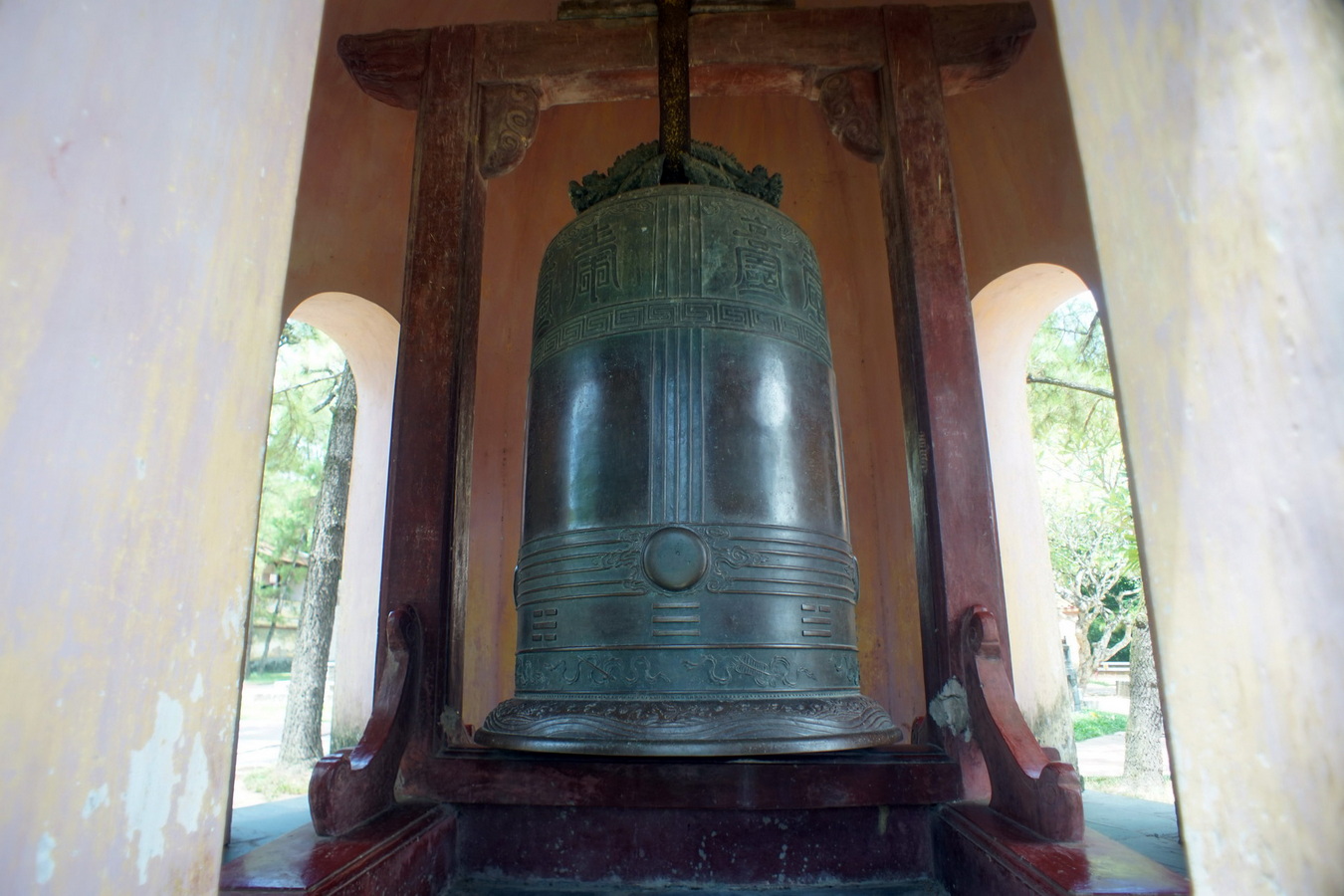
The Giant Bronze Bell (Source: Vietkings)
One of the most notable treasures is the giant bronze bell, cast in the 19th century. This large bell was traditionally used to signal prayer times and important ceremonies. Locals and visitors believe that the sound of the bell brings peace, good luck, and a spiritual connection between humans and the divine.
Stone steles and inscriptions
The pagoda also preserves numerous stone steles engraved with historical records of the construction, renovations, and significant events of Thien Mu Pagoda Hue Vietnam. These steles not only hold historical value but also serve as important documents for visitors to learn about Buddhist traditions and the cultural life of Hue in the past.
Buddha statues and carved panels
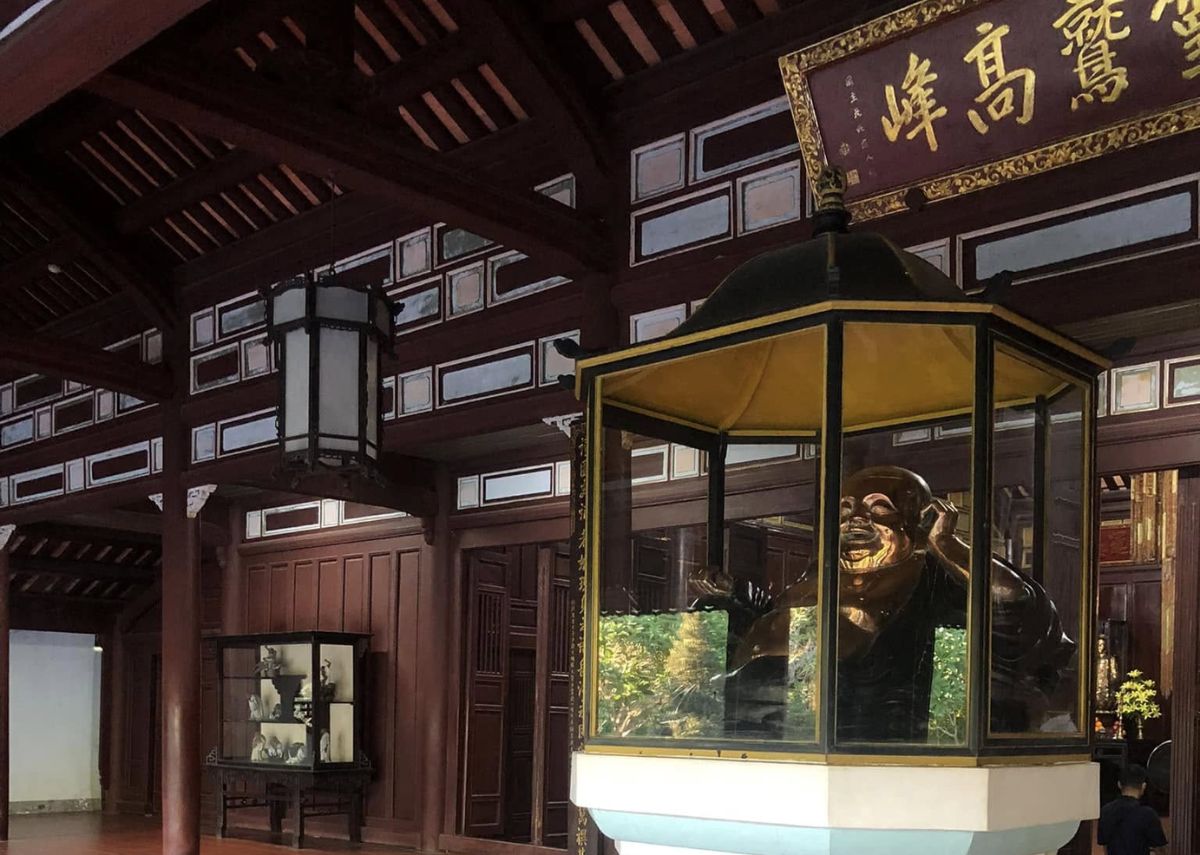
Buddha Statues
Inside Dai Hung Hall and the auxiliary halls, Buddha statues made of wood and bronze, along with intricately carved hoanh phi and lien doi panels, are remarkable works of art. Each statue and carving carries its own spiritual significance while showcasing the traditional sculpture and painting skills of Hue artisans.
Things to do at Thien Mu Pagoda
When visiting Thien Mu Pagoda, travelers can enjoy much more than just exploring an ancient temple, they can immerse themselves in a variety of engaging experiences that combine spirituality, architecture, and nature. Each activity offers a unique perspective, helping visitors better understand Hue’s culture and the spiritual life of the local people.
Observe or participate in Buddhist ceremonies
Thien Mu Pagoda is a famous Buddhist center where rituals are regularly held, especially on full moon and new moon days, or during major festivals like Vu Lan or Lunar New Year. Visitors can stand outside to watch incense offerings and chanting, or if guided, participate in simple steps like lighting incense or offering gifts. This experience not only deepens understanding of local spiritual life but also brings a sense of calm and inner peace.
Stroll around the temple grounds and enjoy the tranquility
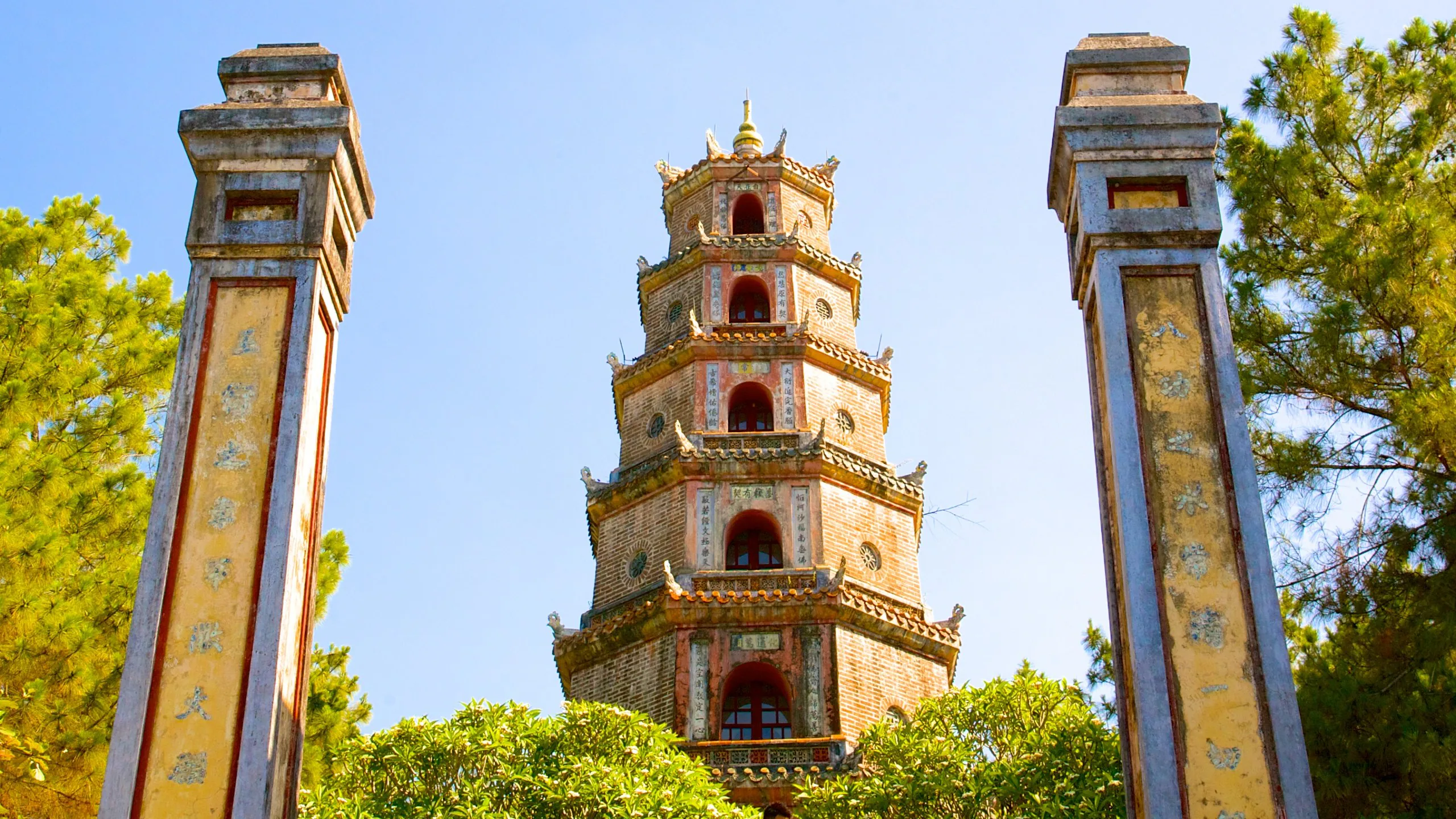
Stroll Around the Temple Grounds and Enjoy the Tranquility (Source: Expedia)
The temple grounds are spacious, featuring stone pathways, lush trees, small ponds, and auxiliary halls. Visitors can leisurely walk, admire centuries-old trees, breathe in the fresh air, and listen to the birds and rustling leaves. Carefully designed paths, wooden railings, and resting benches provide relaxing corners to enjoy both the architecture and the natural surroundings.
Admire the Perfume river and surrounding scenery
Situated along the Perfume River, Thien Mu Pagoda offers breathtaking views. Visitors can stand on the riverside walkways or the pier, watching the early morning sunlight reflecting on the water or the sunset casting warm colors over Phuoc Duyen Tower. Some even rent small boats to glide gently along the river, feeling the breeze and enjoying a full panorama of the temple and its surroundings, perfect for those seeking peace and photography opportunities.
Explore Phuoc Duyen Tower from the inside
Phuoc Duyen Tower, the iconic symbol of the pagoda, is fascinating not only externally but also inside, with multiple floors housing Buddha statues, intricate carvings, and a solemn atmosphere. Visitors can explore each level, examine the statues and detailed decorations on doors, pillars, and arches. This experience offers both historical insight and an appreciation of traditional Hue craftsmanship.
Experience traditional costumes and photography
A highly popular activity is dressing in traditional Ao Dai or Hue-style historical costumes for photos. While Thien Mu Pagoda does not offer on-site costume rentals, visitors can rent outfits from shops in central Hue and then come to the pagoda for photos. These traditional garments paired with Phuoc Duyen Tower, the Tam Quan gate, ponds, and temple halls create stunning, culturally rich photographs, a perfect way to preserve memories and immerse oneself in local culture.
To fully enjoy the experience at Thien Mu Pagoda, from exploring Phuoc Duyen Tower, admiring valuable relics, to taking photos in traditional attire, you can choose the Central Tours (5 days) Hue – My Son – Hoi An – Danang by SinhCafe. This itinerary will take you through Hue, My Son, Hoi An, and Da Nang, combining cultural, historical, and scenic experiences across Central Vietnam
Nearby attractions of Thien Mu Pagoda
When visiting Thien Mu Pagoda, travelers should not miss the chance to explore several interesting attractions nearby, making the trip more complete and diverse. These destinations are all close to central Hue and can be combined in a half-day or full-day itinerary.
Truong Tien Bridge
Located about 5 km from Thien Mu Pagoda, Truong Tien Bridge is a symbol of Hue, spanning the Perfume River. This is an ideal scenic spot for photos, especially at sunset when the light reflects on the water, creating a romantic atmosphere. Visitors can stroll across the bridge, enjoy views of the Perfume River, and soak in the city’s ambiance.
Tu Hieu Pagoda
About 7 km away, Tu Hieu Pagoda is renowned for its ancient architecture, tranquil gardens, and as the resting place of many monks. This destination is perfect for those seeking a peaceful experience and wanting to learn more about Hue’s Buddhist culture. It’s also a great spot for artistic photography with the temple and surrounding greenery.
Khai Dinh Tomb
Located around 10 km from the pagoda, Khai Dinh Tomb is one of the famous Nguyen Dynasty mausoleums, known for its unique blend of Eastern and Western architecture. This is a must-visit photo spot for travelers who love architecture and photography. Visiting it together with Thien Mu Pagoda offers a complete “cultural and historical” experience.
Dong Ba Market
As Hue’s largest traditional market, about 6 km from Thien Mu Pagoda, Dong Ba Market offers local cuisine, handicrafts, and souvenirs. It is also a lively scenic spot to experience daily life in Hue and capture vibrant, colorful photos.
Imperial City & Royal Garden (Dai Noi)
Approximately 7–8 km from Thien Mu Pagoda, the Imperial City of Hue features Ngo Mon Gate, royal palaces, gardens, and traditional architecture. This is an excellent photo spot for visitors who want to combine historical exploration with beautiful photography, especially in the early morning or at sunset.
Read more: Huong River: Hue’s iconic waterway of history, culture, and beauty
A visit to Thien Mu Pagoda offers more than just sightseeing, it provides a chance to immerse yourself in Hue’s culture, spirituality, and natural beauty. From Buddhist rituals, ancient architecture, and priceless relics to picturesque photo opportunities along the Perfume River, every moment here is memorable. Make sure to add Thien Mu Pagoda Vietnam to your Hue itinerary to experience the timeless serenity and beauty this historic pagoda offers.
Share via




Related articles

Central Vietnam Itinerary 4 Days: Hue, Da Nang & Hoi An for Families
Posts | 24/06/2026

Lang Co fishing village: A hidden coastal gem near Hai Van pass
Posts | 12/01/2026
Hue Vietnam tours: Imperial Heritage, Royal Tombs and Local Food Experiences
Posts | 01/08/2026
Why Vietnam Is a Great Alternative to Bali for Australian Travelers
Posts | 11/06/2026









There are no reviews yet