


Binh Tay Market Saigon: History, architecture, shopping & Food guide
Travelers often come to Ho Chi Minh City for the skyscrapers and French boulevards, but those who want to understand the city’s soul inevitably find their way to Binh Tay Market. Hidden in the heart of Chinatown, the market is where food traders, herbalists, tailors, and spice sellers have worked for generations. For travelers, it’s a rare chance to witness a side of Saigon that hasn’t been polished for tourism.
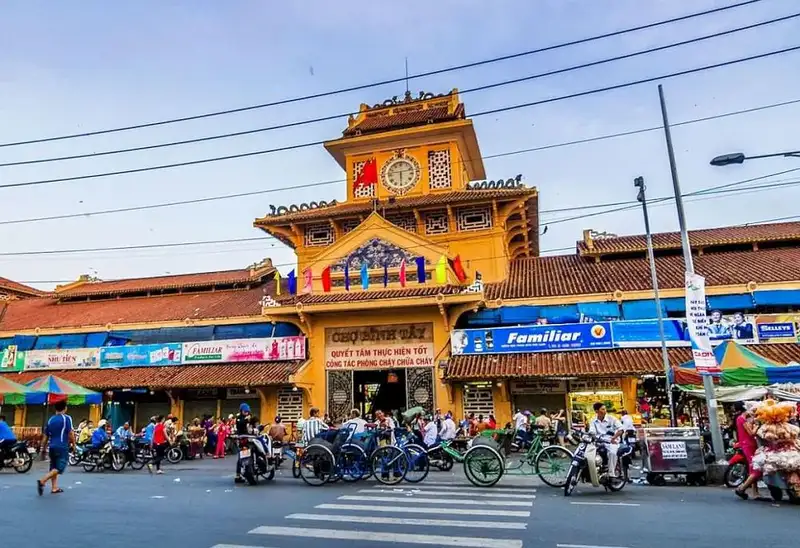
Travelers often come to Ho Chi Minh City for the skyscrapers and French boulevards, but those who want to understand the city’s soul inevitably find their way to Binh Tay Market. Hidden in the heart of Chinatown, the market is where food traders, herbalists, tailors, and spice sellers have worked for generations. For travelers, it’s a rare chance to witness a side of Saigon that hasn’t been polished for tourism.
Discovering Binh Tay Market
Nestled in the heart of District 6 in Saigon’s bustling Chinatown, Binh Tay Market is the city’s beating heart of commerce. From early morning until late afternoon, the market buzzes with energy as locals and visitors browse through endless stalls selling everything from spices and dried seafood to clothing and souvenirs.
But Binh Tay Market is more than just a shopping destination – it’s a living piece of history. For over a century, it has been a gathering place for merchants and a hub for trade, capturing the vibrant rhythm of Chinatown. Visiting the market, you can feel the lively, bustling atmosphere, a unique blend of tradition and everyday life in Saigon.
Discovering Binh Tay Market (Source: Vietnam Airlines)
While most people know it as Binh Tay Market, locals also call it the New Cho Lon Market or Cho Binh Tay, each name echoing a slice of history and culture. Its charm goes beyond the variety of goods; it’s about the experience. Wander through aisles lined with colorful stalls, admire the mix of Asian and French-inspired architecture with its soaring arches and ornate pillars, and enjoy traditional street foods at every corner.
The lively spaces, vibrant displays, and melodic calls of vendors create a living snapshot of Saigon, past and present. For travelers, Binh Tay Market is not just a place to shop, it’s a journey through local culture, history, and cuisine, where every step brings a new discovery.
Read more: Cu Chi Tunnels and Mekong Delta – A Complete Travel Guide
Visitor guide to Binh Tay market
Binh Tay Market is the largest traditional market in Ho Chi Minh City’s Chinatown (Cholon) and a key trading center for the surrounding districts. Unlike modern shopping malls, this market reflects the everyday life of local residents, especially the Chinese-Vietnamese community. A visit here allows you to explore the market’s architecture, observe wholesale trading, taste authentic local food, and experience a lively atmosphere that has remained unchanged for decades.
Best time to visit
The market opens early in the morning and is most active during daylight hours:
- Early morning (6:00–9:00 AM): this is when wholesalers and shop owners arrive to receive fresh goods and bulk supplies. The market feels energetic but not overcrowded, making it ideal for walking around, observing trading activities, and taking photos of the architecture.
- Late morning to afternoon (10:00 AM–3:00 PM): retail stalls and food vendors are fully open. This is the best time to eat local dishes and shop for souvenirs, though the walkways can become crowded.
How to get to Binh Tay market
Planning your transportation in advance will save time and make your visit more comfortable.
- Motorbike or private car: the most flexible option if you are traveling independently. Parking areas are available around the market, especially along nearby streets.
- Public bus: several bus routes connect central Ho Chi Minh City with Cholon, stopping within walking distance of the market. This is a budget-friendly choice for visitors.
- Walking: if you are staying in District 5 or nearby areas, walking allows you to experience local streets, traditional shops, and temples around the market.
Practical tips for visiting the market
A few practical details can greatly improve your experience at Binh Tay Market.
- Bring cash: most stalls do not accept cards or digital payments. Small bills are especially useful when buying food or spices.
- Bargaining politely: prices at many stalls are flexible, particularly for non-food items. Friendly negotiation is part of the local market culture.
- Protect personal belongings: the market is busy, especially at peak hours, so keep bags and valuables close.
- Dress for comfort: light clothing and comfortable shoes are recommended, as you may walk and stand for long periods.
History and architecture of Binh Tay market
Binh Tay Market is not just a bustling shopping hub, it is also an architectural landmark that reflects the rich history of Chợ Lớn. From the moment you step inside, you can see how the market combines traditional charm with practical design, creating a space that is both spacious and full of life.
Origins and historical significance
Binh Tay Market was built in the early 20th century under the initiative of Chinese merchant Quach Dam. The market was designed to replace smaller local markets and become a major trading center serving both the Chinese community and local Vietnamese. Over more than a century, it has remained a vibrant commercial hub and a cultural symbol, witnessing the growth and transformation of Chợ Lớn throughout history.
Architecture and layout
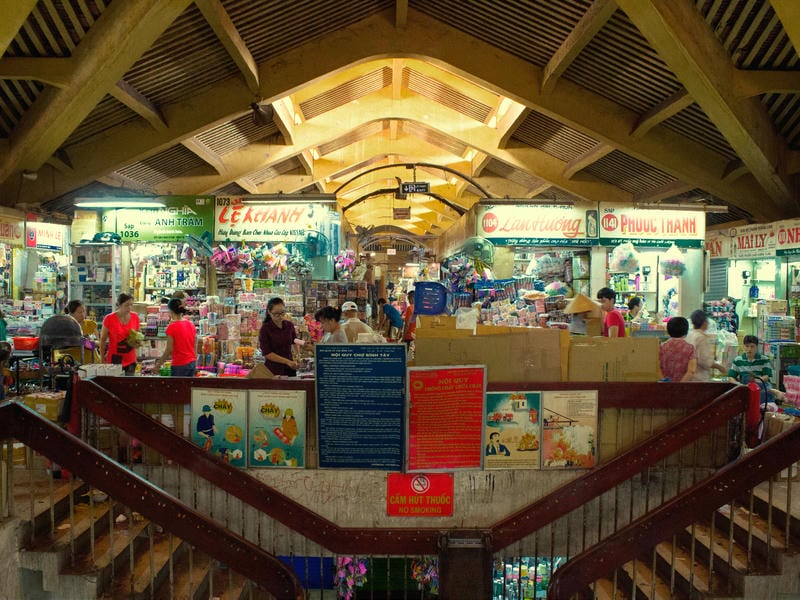
Architecture and layout of Binh Tay Market (Source: Saigon Hotel)
One of the highlights of Binh Tay Market is its unique architecture and well-planned layout:
- Architecture: High vaulted roofs, large columns decorated with intricate patterns, and a central clock tower create a striking visual impression. The combination of Asian and French-inspired styles gives the market both a historic and elegant feel.
- Market Zones:
- Wholesale area: Focused on dried goods, spices, and seafood, catering to bulk buyers.
- Retail area: Smaller stalls selling clothing, bags, souvenirs, and daily necessities.
- Food section: Street food vendors offering local specialties such as sticky rice, steamed buns, noodle dishes, and traditional desserts.
- Central courtyard and walkways: Spacious and well-organized, making it easy for visitors to move around, explore, and take photos.
Thanks to its smart design and thoughtful layout, Binh Tay Market preserves the charm of a traditional market while providing a convenient and enjoyable experience for shoppers and visitors alike.
What to explore at Binh Tay market?
Walking through Binh Tay Market feels like stepping into the everyday trading world of Saigon’s Chinatown. Rather than focusing on souvenir shopping, the market reflects real local commerce, where wholesalers, shop owners, and nearby residents come to buy and sell goods daily. Each section of the market reveals a different aspect of Cholon’s long-standing role as a commercial center.
1. Architecture and overall market layout
Binh Tay Market is designed as a large, open complex with high ceilings, wide corridors, and skylights that allow natural light to filter in. At the center stands the well-known clock tower, which serves as a natural meeting point and navigation landmark. From this central courtyard, long corridors stretch outward in a symmetrical layout, making it easier to explore the market despite its size. The architecture blends Chinese design elements with early 20th-century colonial influences, reflecting the history of the Chinese-Vietnamese community in Cholon.
2. Wholesale trading areas
A large part of the market is dedicated to wholesale trading, which defines the true character of Binh Tay Market. Many stalls sell goods in bulk rather than in small retail quantities. Visitors can observe shop owners and restaurant suppliers negotiating prices, weighing products, and loading goods for delivery. This area offers a clear picture of how products move through Cholon’s trading network and supply businesses across Ho Chi Minh City.
3. Spices, dried foods, and traditional ingredients
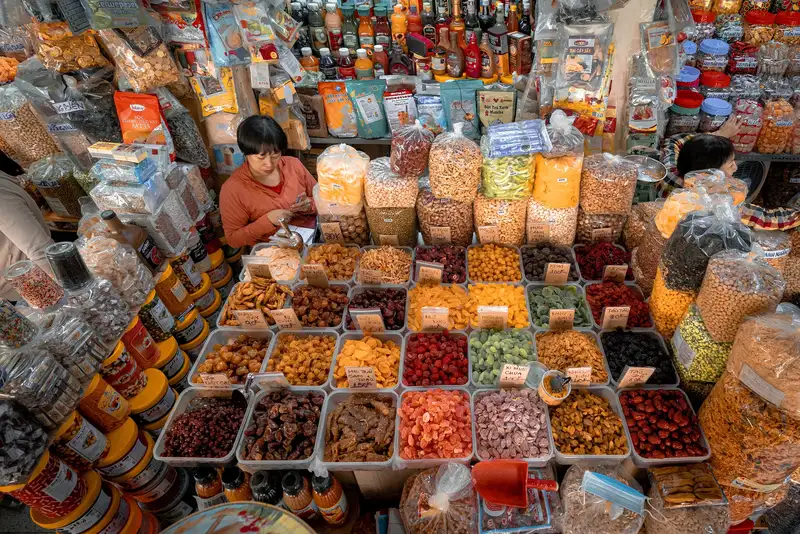
Stalls are filled with dried seafood, mushrooms, herbs, medicinal ingredients, tea leaves, coffee beans, and a wide range of spices used in both Vietnamese and Chinese cuisine (Source: Jackfruit Adventure)
One of the most lively and visually rich sections of the market is the dry goods area. Stalls are filled with dried seafood, mushrooms, herbs, medicinal ingredients, tea leaves, coffee beans, and a wide range of spices used in both Vietnamese and Chinese cuisine. The mix of aromas, colors, and constant activity makes this area especially engaging, whether you are shopping or simply observing.
4. Local food stalls inside the market
Food stalls inside Binh Tay Market serve simple, everyday dishes rather than tourist-oriented meals. You can find sticky rice, steamed buns, noodle soups, and traditional sweet desserts prepared quickly for vendors and local shoppers. Eating here provides an authentic glimpse into daily life in Cholon, with affordable prices and flavors that reflect local habits.
5. Retail shops and everyday goods
Beyond wholesale trading, the market also meets the daily needs of nearby residents. Retail stalls sell clothing, footwear, kitchen utensils, household items, and small accessories. Displays are practical and straightforward, emphasizing function over presentation. Browsing these stalls helps visitors understand how local people shop for everyday necessities.
6. Local life and cultural interactions
Throughout the market, visitors can observe strong community ties in action. Vendors chat with long-time customers, bargain in Cantonese or Teochew, and maintain business relationships that have lasted for years. These interactions give the market its distinctive atmosphere and highlight the cultural identity of Cholon’s Chinese-Vietnamese community.
If you want to dive deeper into Saigon’s old Chinese quarters, wet markets, and daily street food culture, Sinhcafe’s Discover Vietnam 18 Days combines top cities with authentic local experiences, including time in Ho Chi Minh City’s Chinatown. It’s ideal if you enjoy slow-paced travel, local cuisine, and cultural contrasts across the country.
What to buy at Binh Tay Market
Binh Tay Market is best known as a wholesale-focused market, so the items sold here are practical, traditional, and closely tied to everyday life in Cholon. Instead of trendy souvenirs, you’ll find goods that locals buy in bulk, use daily, or trade regularly. Shopping here gives you insight into what truly matters in a traditional Saigon market.
Dred Seafood
Dried seafood is one of the most popular products at Binh Tay Market. Stalls display shrimp, squid, cuttlefish, and dried fish in large baskets and sacks. Quality varies by freshness, color, and smell, which experienced vendors are always happy to explain. Prices are generally lower than in tourist markets, especially if you buy more than one item, making these products suitable for cooking or gifting.
Spices and cooking ingredients
The spice section is a highlight for anyone interested in Vietnamese and Chinese cuisine. You’ll find pepper, star anise, cinnamon, dried chilies, herbs, tea leaves, and coffee beans arranged in colorful piles. Many locals shop here for trusted ingredients they’ve used for years. Buying small quantities is common, and vendors often help adjust portions based on your needs
Dried Herbs and traditional medicinal products
Another distinctive category is dried herbs and traditional medicinal ingredients used in Chinese-style remedies. Roots, bark, seeds, and dried plants are sold by weight, often to regular customers. Even if you don’t plan to buy, this area offers a fascinating look into traditional health practices that remain part of daily life in Cholon.
Small souvenirs and local gifts
Although Binh Tay Market is not a souvenir-focused destination, you can still find small gifts such as ceramics, decorative items, and traditional accessories. These items often carry a more local feel compared to mass-produced souvenirs elsewhere, making them meaningful keepsakes connected to Cholon’s cultural identity.
Food to try at Binh Tay Market
The food scene around Binh Tay Market reflects the everyday eating culture of Saigon’s Chinatown. Most dishes here have roots in Teochew and Cantonese traditions, carried over by generations of Chinese-Vietnamese families. They’re not the kind of flashy “street food for tourists,” but rather the quiet staples that fuel vendors, shoppers, and local residents who trade and work in the market from early morning.
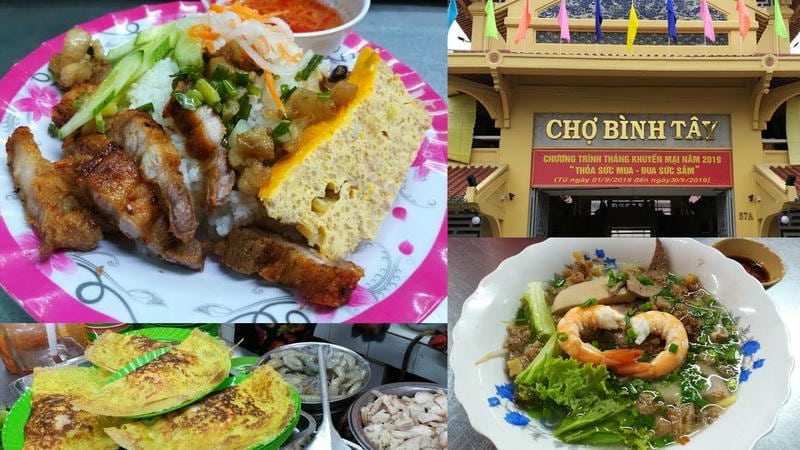
Food to try at Binh Tay Market (Source: Collected)
Char siu steamed bun
Char siu steamed buns remain one of the most recognizable snacks associated with Cholon. The filling is mildly sweet and savory, seasoned with soy sauce and sesame oil in a Cantonese style. People often grab them on the way to work or before opening their stalls. They exist mainly for convenience and energy, and that’s why they became a long-standing staple here. Prices usually range from 18,000 to 30,000 VND depending on size and filling.
Chinese-style sausages
Chinese sausages are closely tied to both holidays and everyday cooking in Cholon. Shoppers buy them by the kilo for family meals, especially during festive months. Some versions lean sweet and soft, while others carry hints of rice wine or Mai Que Lo. Their flavor profile is distinctly Chinese, and prices tend to be lower than supermarkets, making them one of the market’s most practical “specialties.” Expect around 180,000–260,000 VND/kg.
Herbal Jelly (Gui Ling Gao)
This dark herbal jelly carries a slightly bitter note at first taste but leaves a cooling finish. Its origins come from traditional Chinese medicinal recipes intended to balance body heat during Saigon’s dry season. Locals usually eat it in the afternoon with palm sugar syrup or coconut water. It’s not a dessert for show, it’s a functional treat meant for hot weather. Prices are modest, around 10,000–20,000 VND per small cup.
Fried sesame bun & Chinese Crullers
Fried sesame buns and Chinese crullers have been morning staples in Cholon for decades. Vendors fry them in small batches during rush hours so they stay warm and airy. They’re often paired with soy milk or tea, and they owe their popularity to both taste and practicality. They’re inexpensive too, usually 4,000–8,000 VND each.
Custard pastries with salted egg yolk
These pastries carry flaky layers wrapped around bean paste and salted duck egg yolk. Though associated more strongly with bakeries in Soc Trang, Cholon’s version leans richer and less sweet. Locals buy them mostly as gifts or for home rituals rather than eating on the spot. The salted yolk adds a creamy, savory note that balances the filling. Prices vary from 40,000–70,000 VND per small box depending on the bakery.
Herbal drinks & Soy milk
Herbal teas, chrysanthemum drinks, soy milk, and cooling tonics are everywhere around the market. They align with Chinatown’s long-standing habit of using drinks to regulate heat and humidity. People sip them while browsing or working, there’s no fixed drinking time. A cup typically costs 8,000–15,000 VND.
Read more: Mekong Delta food: 10 Must-try dishes that capture the spirit of Southern Vietnam
A visit to Binh Tay Market offers much more than shopping. It provides a look into Cholon’s cultural heritage, long-standing trading networks, and everyday culinary rituals shaped by generations of Chinese-Vietnamese communities. Whether you come for souvenirs, food, or simply to experience the rhythm of a working market, Binh Tay reveals a side of Saigon that is rich, layered, and often overlooked. For travelers who enjoy history, culture, and local life, this market is well worth adding to the itinerary.
Share via




Related articles

6-Day Vietnam Slow Travel Itinerary for Couples
Posts | 16/06/2026

Ben Tre Day Trip from Ho Chi Minh City: Explore Vietnam's Coconut Kingdom
Posts | 11/08/2026

Phan Thiet night market: The ultimate guide for first-time visitors
Posts | 25/04/2026
Discover Thien Hau Pagoda - A historic Chinese temple in Saigon
Posts | 13/01/2026









There are no reviews yet