


Vinh Trang Pagoda in My Tho: History, architecture & Travel guide
Vinh Trang Pagoda stands as one of the Mekong Delta’s most remarkable Buddhist landmarks, where tranquil gardens, ornate architecture, and monumental Buddha statues come together in harmony. Built in the mid-19th century and shaped by multiple cultural influences, the pagoda captivates travelers with its fusion of Vietnamese, Khmer, Chinese, and European aesthetics. For those exploring Tien Giang or seeking a deeper look into the spiritual and artistic heritage of the Mekong Delta, Vinh Trang Pagoda is a must-visit destination.
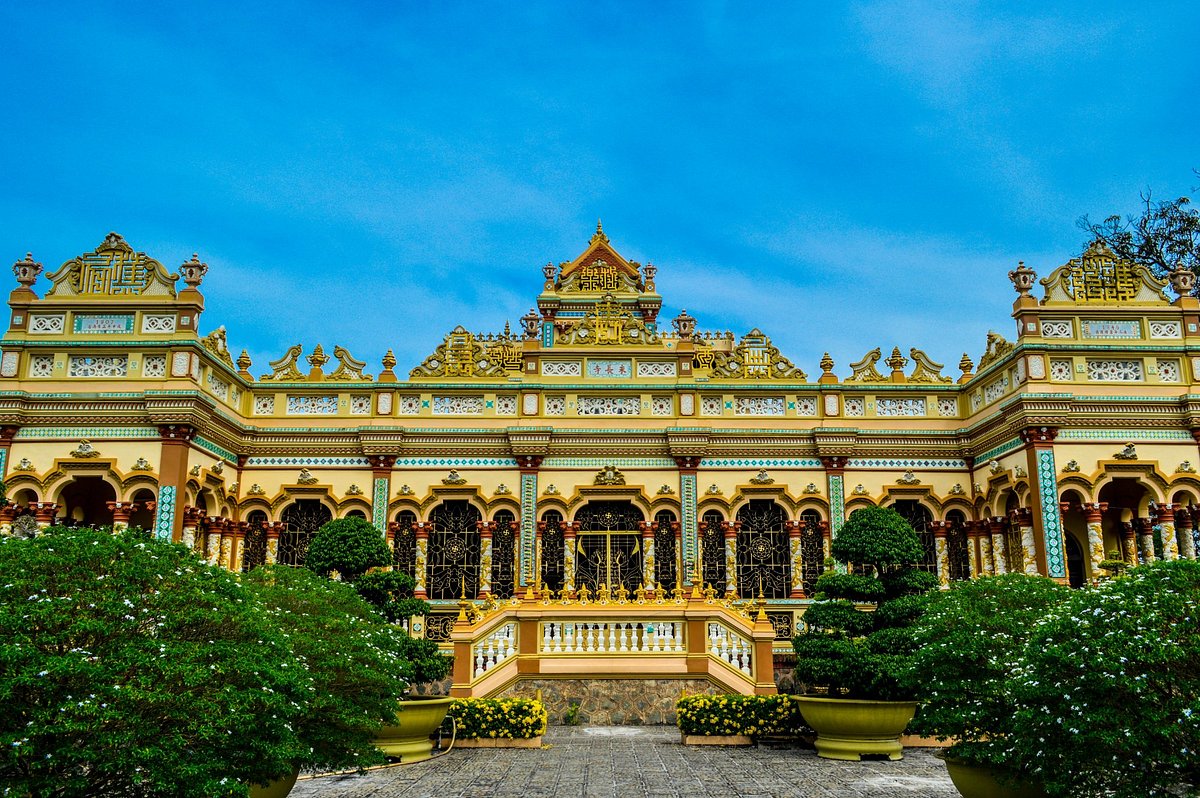
Vinh Trang Pagoda stands as one of the Mekong Delta’s most remarkable Buddhist landmarks, where tranquil gardens, ornate architecture, and monumental Buddha statues come together in harmony. Built in the mid-19th century and shaped by multiple cultural influences, the pagoda captivates travelers with its fusion of Vietnamese, Khmer, Chinese, and European aesthetics. For those exploring Tien Giang or seeking a deeper look into the spiritual and artistic heritage of the Mekong Delta, Vinh Trang Pagoda is a must-visit destination.
Introduction to Vinh Trang Pagoda
Vinh Trang Pagoda is one of the most famous Buddhist temples in the Mekong Delta, located in My Tho City, Tien Giang Province. It blends spiritual value, local history, and unique architectural styles, attracting both pilgrims and travelers from across Vietnam and abroad.
The pagoda covers a spacious area surrounded by lush gardens, creating a peaceful and refreshing atmosphere. It is well-known for its large Buddha statues and a complex of halls, gates, and courtyards that combine Vietnamese, Khmer, Chinese, and European influences.
Vinh Trang pagoda (Source: Tripadvisor)
Built in the early 19th century, Vinh Trang Pagoda reflects the cultural and religious identity of My Tho throughout different historical periods. Today, it serves as both a religious center for local Buddhists and a cultural landmark that represents the spirit of the Mekong Delta.
Vinh Trang Pagoda often appears in travel itineraries to My Tho and the wider Mekong Delta, making it an ideal stop for visitors who love Buddhist architecture, tranquil scenery, and meaningful cultural experiences.
Read more: Binh Tay Market Saigon: History, architecture, shopping & Food guide
Visiting guide to Vinh Trang Pagoda
To enjoy a smooth and meaningful trip to Vinh Trang Pagoda, travelers should note a few practical details such as opening hours, entrance fees, getting there, dress code, and the best time to visit. These small preparations not only help you plan your itinerary better but also enhance your experience at one of the most iconic Buddhist sites in the Mekong Delta.
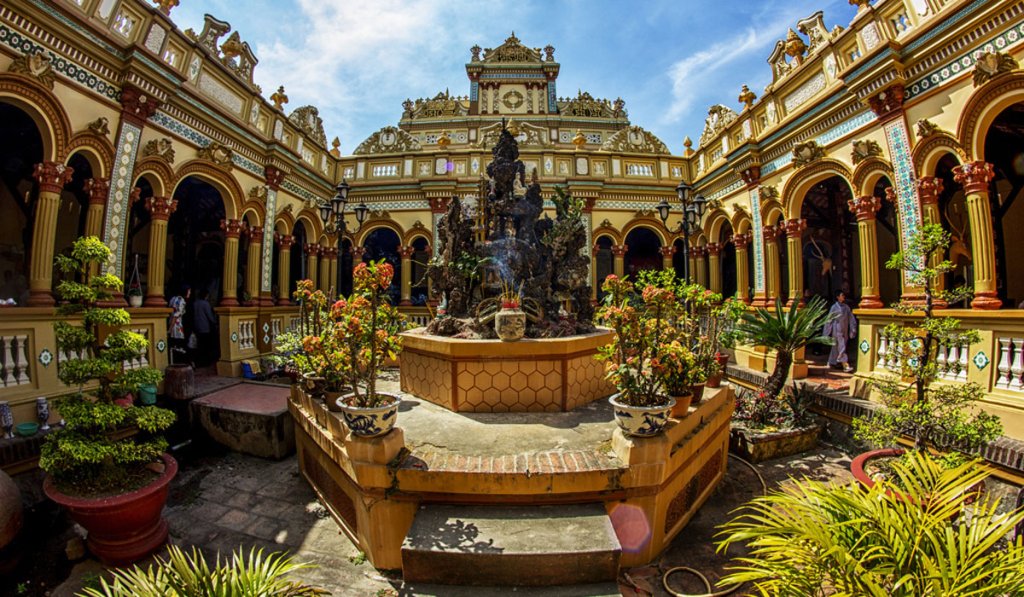
Visiting guide to Vinh Trang Pagoda (Source: Elephant Travel)
Opening hours, entrance fees & Visitor services
Knowing when the pagoda opens, how long to stay, and what basic services are available on-site allows travelers to plan their visit efficiently.
-
Opening hours: daily from 07:00 – 18:00 (may vary during Buddhist ceremonies).
-
Entrance fee: free of charge (donations are welcomed to support maintenance and temple activities).
-
Parking lot: available, motorbike parking fee around VND 3,000 – 5,000/vehicle (estimated).
-
Drinks & souvenirs: available, especially on busy days.
-
Average visiting time: 45 – 90 minutes, depending on photo stops, worship activities, and cultural experiences.
Best time to visit
Choosing the right time can influence your experience, especially if you want to enjoy the atmosphere, capture good photos, or witness Buddhist festivals.
-
Dry season (December – April): sunny, less rain, ideal for outdoor photography and temple visits.
-
Festival season: Buddhist festivals such as Vu Lan (7th Lunar month), Vesak / Buddha’s Birthday (15th day of the 4th Lunar month), and First Full Moon Festival (15th day of the 1st Lunar month) offer a spiritual and vibrant atmosphere.
-
Best hours in a day: mornings (07:00 – 09:30) and late afternoons (15:30 – 17:30) for cooler weather and better lighting.
How to get to Vinh Trang Pagoda
Vinh Trang Pagoda is located in My Tho City (Tien Giang Province), around 70 – 85 km from Ho Chi Minh City, making it convenient for short trips or Mekong Delta tours.
-
From Ho Chi Minh City:
-
Motorbike/Private car: via National Highway 1A → My Tho (80 – 110 minutes).
-
Bus: departs from Mien Tay Bus Station, travel time 90 – 120 minutes, ticket price VND 70,000 – 120,000/person.
-
-
Within My Tho City: taxi, motorbike, or bicycle (only 1 – 4 km depending on accommodation).
-
Tour options: many 1-day or 2-day Mekong tours include Vinh Trang Pagoda along with Thoi Son Islet, the Tien River, and local markets.
Dress code & Temple etiquette
As Vinh Trang Pagoda is an active place of worship, visitors are encouraged to follow basic etiquette to respect Buddhist practices.
-
Dress code: modest clothing; avoid sleeveless tops or shorts above the knee when entering the main halls.
-
Photography: allowed outdoors and in most areas; avoid flash during chanting or rituals.
-
Behavior: keep voices low, avoid littering, and refrain from disturbing worshippers.
History of Vinh Trang Pagoda
Vinh Trang Pagoda was established in 1849 during the Nguyen Dynasty by Thich Tran Luu, with the support of Mr. Bui Cong Dat, aiming to serve as a spiritual center for local Buddhists in My Tho, Tien Giang Province. The name “Vinh Trang” means “lasting forever with the mountains and rivers”, reflecting the aspiration for a stable and enduring place of worship and prosperity through time.
Over nearly 200 years, the pagoda has undergone multiple renovations and expansions, each leaving unique architectural marks. Its design harmoniously blends Vietnamese, Khmer, Chinese, and Western influences. Vinh Trang Pagoda has not only been a place for Buddhist practice and ceremonies but also a cultural and educational center, preserving religious, artistic, and sculptural values of the Mekong Delta region.
One of the most remarkable features of the pagoda is the set of 18 wooden Arhat statues carved in 1907, along with more than 60 statues of Buddha, Arhats, and deities made of wood, bronze, and terracotta. These works are highly appreciated by art researchers for their cultural significance and aesthetic value.
The pagoda is also recognized as a national historical and cultural site, designated in 1984, highlighting its importance in the spiritual and cultural life of the local community. Structures such as the three-entrance gate, intricate mosaic decorations, and three giant outdoor Buddha statues stand as vivid evidence of the pagoda’s architectural evolution over time.
What to explore at Vinh Trang Pagoda
Vinh Trang Pagoda is not just a spiritual center but also a treasure trove of art, culture, and history. Visiting this iconic temple offers a fascinating journey through its architectural beauty, intricate statues, and serene gardens. Whether you are a history enthusiast, a photography lover, or a curious traveler, there is plenty to explore at Vinh Trang Pagoda.
The architecture of Vinh Trang Pagoda
Vinh Trang Pagoda stands out with its unique architectural design that blends multiple cultural influences. The exterior immediately impresses visitors with the three-entrance gate (tam quan), spacious courtyards, long corridors, and beautifully maintained gardens. The roofs and pagoda structures display a harmonious mix of Vietnamese, Khmer, Chinese, and Western styles, creating an aesthetic that is both grand and inviting. Visitors can enjoy walking through the shaded gardens, observing the intricate roof decorations, and appreciating the peaceful open spaces around the temple.
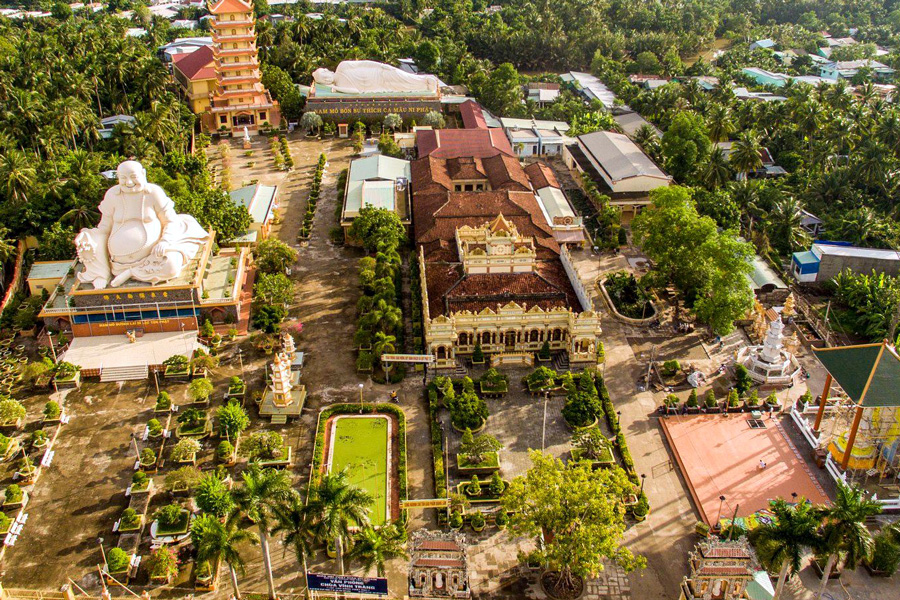
The architecture of Vinh Trang Pagoda (Source: Collected)
Inside the pagoda, the main hall and side chambers showcase detailed craftsmanship. The ceilings, wooden pillars, and walls are adorned with delicate carvings and colorful murals that reflect Buddhist stories and traditional motifs. Every corner of the interior highlights the artistry of the craftsmen who built and restored the pagoda over the past two centuries.
A particularly striking feature is the extensive use of mosaic tiles and sành sứ (ceramic) decorations, which adorn the gates, altar areas, and walls. Some decorative details even incorporate French and Roman-inspired motifs, giving the pagoda a rare architectural identity that distinguishes it from other temples in the Mekong Delta.
Iconic Buddha and Arhat Statues
One of the most remarkable aspects of Vinh Trang Pagoda is its collection of Buddha and Arhat statues, which are both culturally significant and visually stunning. In the outdoor courtyard, visitors will find three giant Buddha statues representing Amitabha, Maitreya, and Shakyamuni in Nirvana, serving as iconic symbols of peace and spiritual guidance.
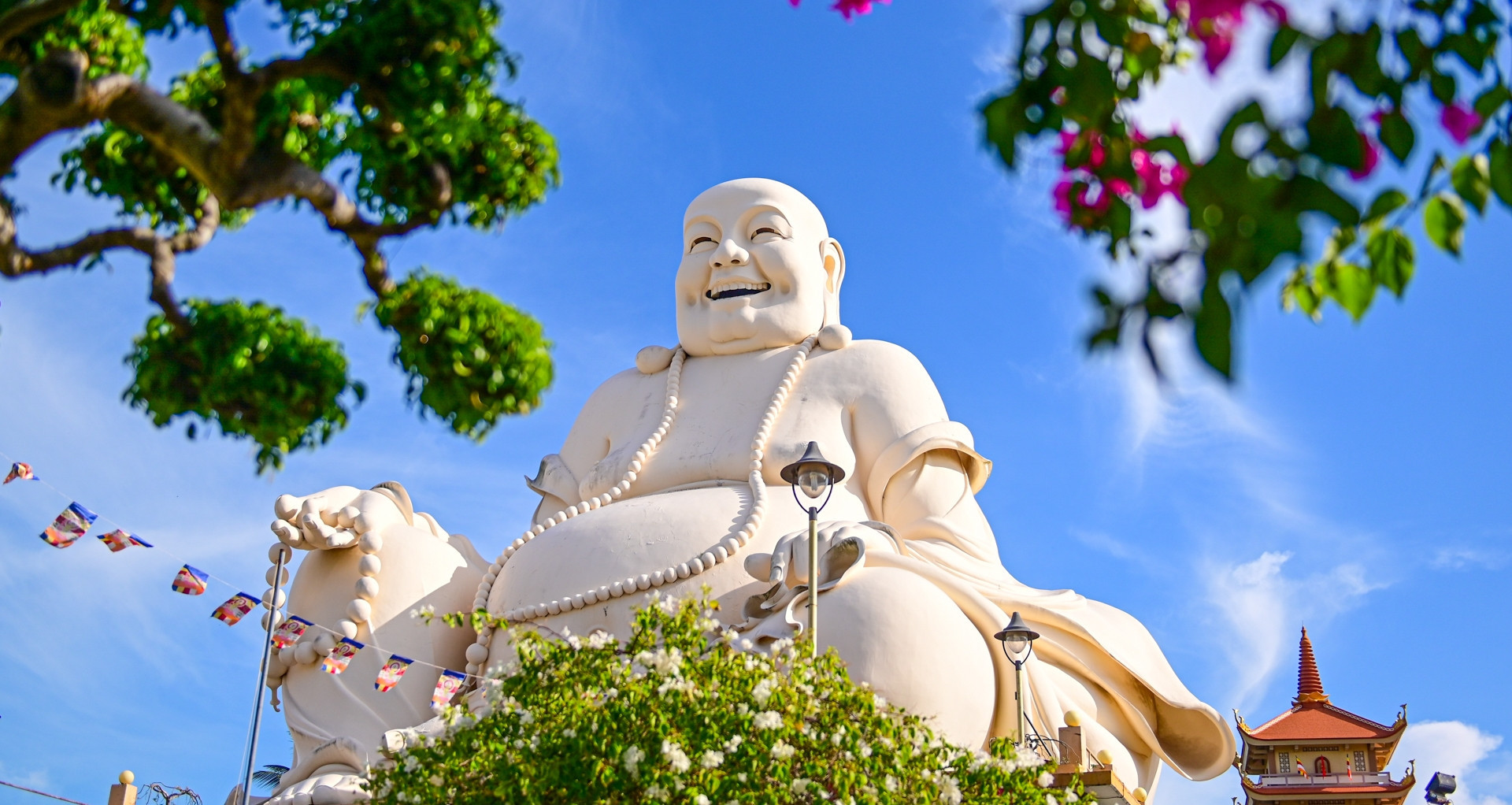
The iconic Buddha statue of Vinh Trang Pagoda (Source: Vietnamnet)
Inside, the pagoda houses the 18 wooden Arhats carved in 1907, each with a unique expression and pose, reflecting the mastery of local artisans. Alongside these are numerous other statues of Buddha and deities crafted from wood, bronze, and terracotta, each carrying symbolic meanings related to compassion, enlightenment, and protection.
These statues are carefully positioned to create visually appealing scenes for visitors. Photographers and travelers often favor the courtyard and main hall for capturing the pagoda’s spiritual ambiance and detailed artistry. Each statue not only serves a religious purpose but also adds to the aesthetic and cultural value of the site, making Vinh Trang Pagoda a must-visit for anyone exploring the Mekong Delta.
Read more: Explore Ben Tre: Top must-visit Ben Tre attractions in the Mekong Delta
Cultural and spiritual experiences at Vinh Trang Pagoda
Vinh Trang Pagoda is not only a place for Buddhist worship but also a vibrant center of culture and spirituality, offering visitors a deep insight into the art, traditions, and spiritual life of the Mekong Delta. During your visit, you can participate in traditional festivals, admire unique Buddha statues, enjoy Southern Vietnamese music, and relax in the tranquil temple grounds.
Participating in traditional Buddhist Festivals
Vinh Trang Pagoda regularly hosts important Buddhist festivals, attracting both local devotees and tourists. Taking part in these events allows visitors to experience a sacred and serene atmosphere, while gaining a deeper understanding of the region’s spiritual and cultural traditions.
-
Vu Lan Festival (7th lunar month): This is a time to express filial piety to parents and ancestors. The temple holds rituals of offering robes to monks, chanting, and prayers for family blessings, creating a spiritually uplifting and heartfelt atmosphere.
-
Buddha’s Birthday (Vesak): Commemorating the birth of Buddha, the pagoda is beautifully decorated, candles are lit for prayers, and community chanting ceremonies are held, attracting numerous worshippers and visitors.
-
Full Moon Days (Rằm) and Memorial Ceremonies for Abbots: The temple observes full moon festivals in the first and seventh lunar months, as well as memorial days for past abbots, allowing visitors to learn about Buddhist calendars and the cultural practices of the Mekong Delta.
- Mid-Autumn Festival: During the Mid-Autumn Festival, Vinh Trang Pagoda organizes lantern parades, lion dances, and gift-giving for children, creating a joyful and family-friendly atmosphere. This festival experience is perfect for families to engage with local traditions while enjoying the festive spirit of the Mekong Delta.
Experiencing spiritual rituals
Beyond festivals, visitors can participate in chanting, reciting sutras, and offering incense, or simply observe the rituals of prayer and blessing in the serene temple spaces. These experiences provide a closer connection to Buddhist spiritual life, while bringing a sense of peace and tranquility amid the hustle of daily life.
Nearby Attractions
After exploring Vinh Trang Pagoda, travelers can continue their journey through My Tho to enjoy riverside scenery, spiritual landmarks, and signature Mekong Delta experiences. Below are some nearby attractions that pair perfectly with a visit to the pagoda.
Tien Giang Museum
Located within a short drive from the pagoda, Tien Giang Museum offers a compact yet insightful look into the region’s history, culture, and wartime artifacts. Exhibits include traditional costumes, agricultural tools, and relics related to the resistance period. It’s an ideal stop for travelers interested in context and heritage.
My Tho Cathedral
This elegant French-built Catholic church showcases Roman architectural lines, tall spires, and colorful stained glass windows. The calm surroundings make it a pleasant place to photograph and observe the blend of colonial and local influences that shaped My Tho’s cultural landscape.
Dong Tam Snake Farm
About 10–12 km away, this unique attraction functions as both a research center and an educational site for snake species, venom extraction, and medicinal uses. It’s a niche but memorable destination for travelers seeking something different beyond religious and river-based excursions
For travelers planning a deeper journey through Southern Vietnam and the Mekong Delta, Sinhcafe designs well-paced tours featuring culture, landscapes, and authentic local life. The Discover Vietnam itinerary is a popular choice among international travelers.
A visit to Vinh Trang Pagoda offers more than just sightseeing, it opens a window into the layered history, devotional practices, and multicultural identity of the Mekong Delta. Whether you come for its serene atmosphere, impressive statues, or exquisite architectural details, the pagoda leaves a lasting impression through both visual beauty and cultural depth. Combined with nearby attractions and river-based experiences, it is an ideal stop on any journey through My Tho and Tien Giang.
Share via




Related articles

Visit Ha Giang in November: Is it a good time to go?
Posts | 21/09/2026
Yang Bay Waterfall: A Hidden Paradise near Nha Trang you shouldn’t miss
Blog | 24/03/2026
Diep Son island: Walk across the sea in Vietnam’s hidden paradise
Posts | 24/03/2026
Co Tien Mountain: A Scenic Hike with Stunning Views in Nha Trang
Blog | 24/03/2026








There are no reviews yet