


Xeo Quyt Ecotourism: A 2-Hour journey between melaleuca forest and a revolutionary base
Xeo Quyt Ecotourism (Xeo Quit) takes you through melaleuca forests, winding waterways and a hidden revolutionary base in Dong Thap, all in a 2-hour visit.
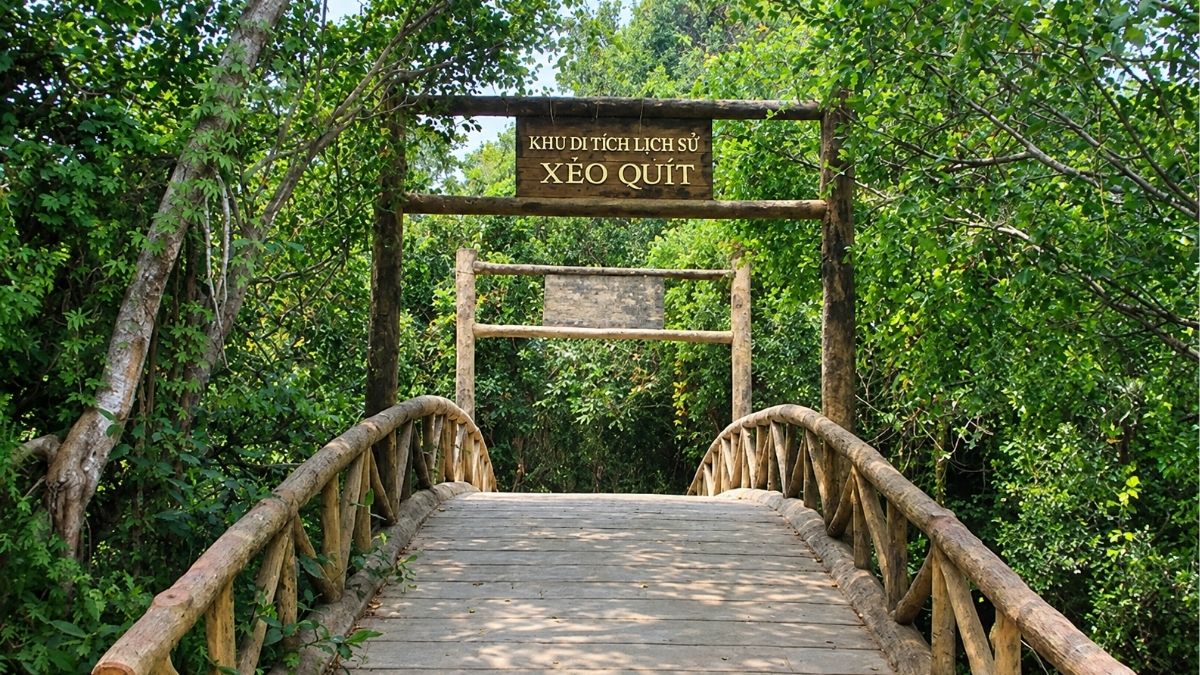
For fifteen years, a guerrilla headquarters remained hidden in Xeo Quyt’s flooded melaleuca forest, reportedly just two kilometers from an enemy outpost. Today, the same forest preserves traces of that wartime past while offering a peaceful ecotourism experience by boat and on foot. Xeo Quyt ecotourism brings these two sides together in a compact two-hour visit, from the hidden revolutionary base to the waterways and forest that shaped its history.
Why did Xeo Quyt become a revolutionary base hidden in the melaleuca forest?
Xeo Quyt is a historical and ecological site located about 30 km from Cao Lanh, at 458, Highway 4, My Hiep Commune, Dong Thap Province, Vietnam. This address is under the new My Hiep Commune, formed by the 2025 administrative reorganization through the merger of the former My Hiep, My Long and Binh Thanh communes (Source: Bao Dien Tu Chinh Phu). The site covers about 70 hectares, including a 50-hectare conservation area and a 20-hectare area for tourism services.
Xeo Quyt became a revolutionary base because its low-lying landscape, dense melaleuca forest and maze of narrow waterways provided natural protection and made the area difficult for military forces and vehicles to access. The waterways allowed cadres to move through the forest, while the dense vegetation helped conceal buildings and activities from outside observation. Local residents also supported the cadres working and living in the area, allowing the base to operate within this challenging environment.
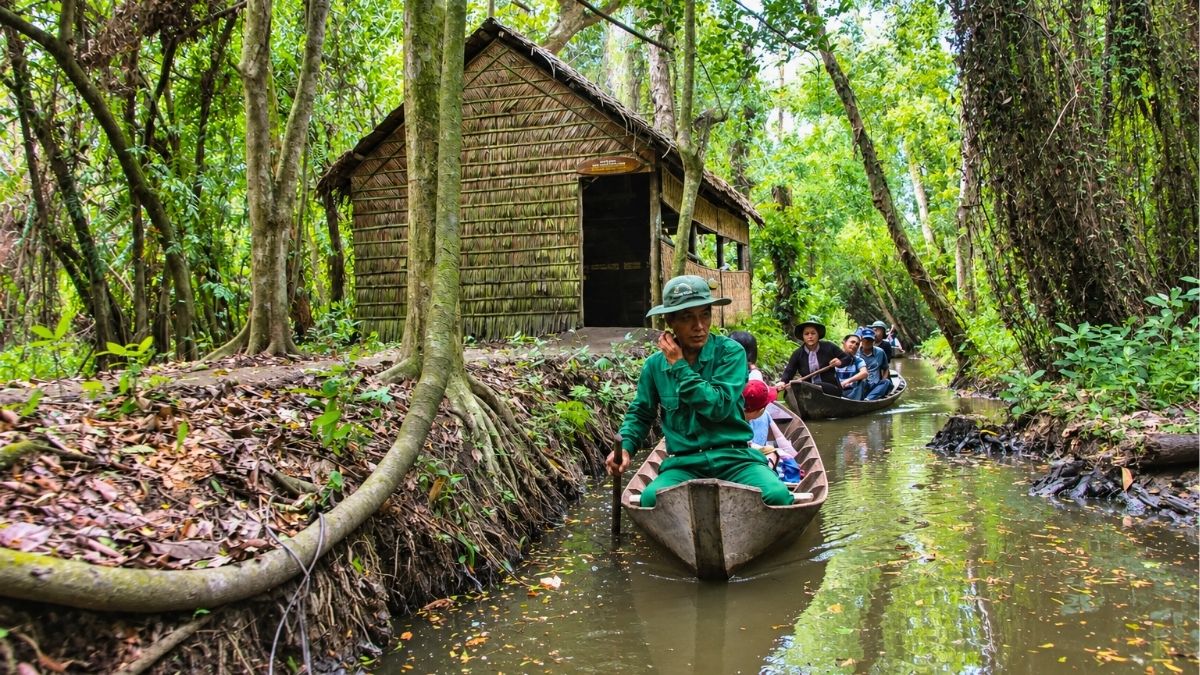
Xeo Quyt’s dense melaleuca forest and narrow waterways helped conceal and protect its revolutionary base (Source: Bao Lam Dong)
It was within this landscape that Xeo Quyt served as a base during the war. From 1960 to 1975, the Kien Phong Provincial Party Committee used Xeo Quyt as a revolutionary base during the resistance against the United States. The site became known for its network of fighting fortifications, bomb shelters, secret shelters and other wartime structures.
Many of these wartime traces remain visible today. Visitors can still see these traces among the melaleuca forest. The conservation area preserves the former revolutionary base, including the Provincial Party Committee Hall, office buildings, kitchens and defensive structures. Visitors can reach the site on foot or by three-leaf boat along the canals, following routes that reflect how closely the wartime base was connected to its surrounding landscape.
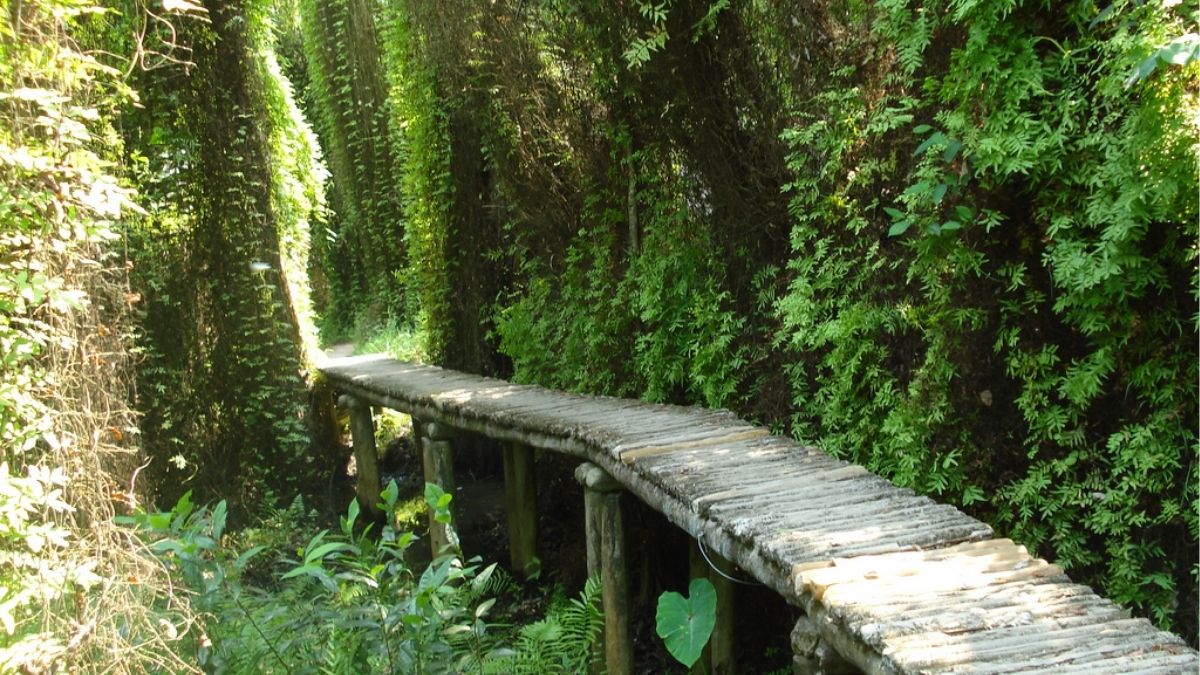 Visitors can reach the site on foot or by three-leaf boat along the canals (Source: dulich.dongthap.gov.vn)
This combination of historical remains and natural surroundings has shaped xeo quyt ecotourism’s significance today. Xeo Quyt was officially recognized as a national historical site on April 9, 1992 (Source: Bao Phap Luat). Its historical significance is now closely linked with its natural environment: the same forest and waterways that once helped conceal the revolutionary base have become the setting for one of Dong Thap’s distinctive xeo quyt ecotourism experiences.
Read more: Mekong Delta Vietnam: All you must know before you go
The Xeo Quyt ecotourism experience in just 2 hours
- Opening hours: Daily, roughly 7:00 AM-4:30 PM.
- Visit duration: Allow about 2 hours for the boat ride, walking route, and time to enjoy the forest.
- Entry fee: Typically 20,000-100,000 VND, depending on current rates and whether a guide or boat package is included. The boat ride may be ticketed separately.
- Tip: Fees can vary by season and may change over time, so confirm the current price at the entrance or with a local operator.
- Route: Boat Pier → Leg 1: Boat Ride (30-40 min) → Leg 2: Revolutionary Base Walk (50-60 min) → Leg 3: Melaleuca Forest Ecosystem (20-30 min)
Leg 1: A boat ride through the melaleuca forest
Duration: around 30 minutes
The boat experience begins at the Xeo Quyt boat dock inside the historical site, where visitors board a three-seat sampan for a slow ride through the narrow canals. The boat ticket may be charged separately from the entrance fee, so check the current price at the entrance before joining the ride.
Once on the boat, the route immediately moves away from the main path and into the melaleuca forest. The sampan travels slowly along narrow, winding canals, with trees and dense vegetation close on both sides. In some sections, the waterway is so narrow that the boat passes just beneath the overhanging branches, while patches of water hyacinth and exposed tree roots appear along the banks. The slow pace makes it possible to observe the forest at water level and spot small details that are easy to miss when walking.
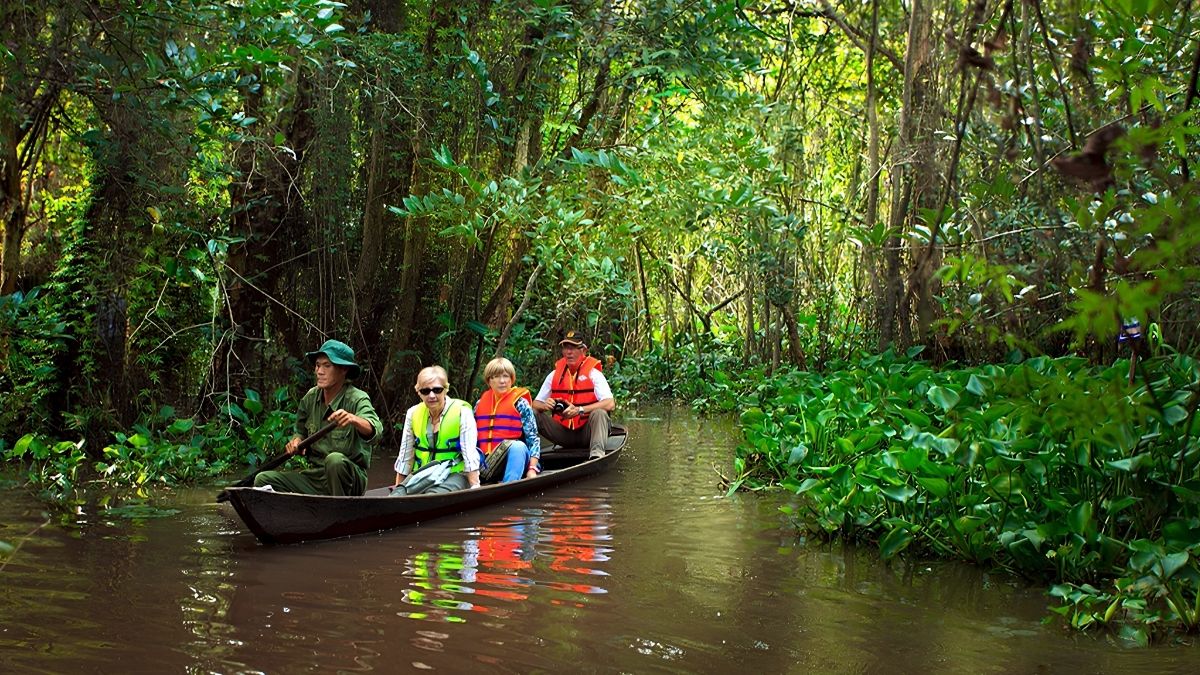 The boat experience begins at the Xeo Quyt boat dock inside the historical site (Source: dulich.dongthap.gov.vn)
Hiring a guide is particularly worthwhile for the boat section, as the wartime traces along the waterways are not always easy to spot from the boat. Along the route, the guide points out secret shelters, defensive positions, kitchens, meeting rooms and other structures hidden among the trees, while also sharing stories about the difficult lives of the revolutionary soldiers who once lived and worked in these hidden bases.
These explanations help connect the canals, vegetation and wartime structures, making it easier to understand how the natural landscape itself helped conceal the revolutionary base rather than experiencing the boat ride simply as a scenic trip.
If a slow-paced Mekong boat experience like this is what you're after for a broader trip, our guide to a Mekong Delta day trip from Ho Chi Minh City walks through how to combine this kind of waterway experience with other stops in the region.
Leg 2: Walking the revolutionary base on foot
Duration: around 45-60 minutes
Back on dry land, the roughly 1.5-kilometer walking trail loops through the heart of the old revolutionary base. Along the route, visitors can stop at:
- A-shaped Bomb Shelter: Built to provide protection from bomb blasts.
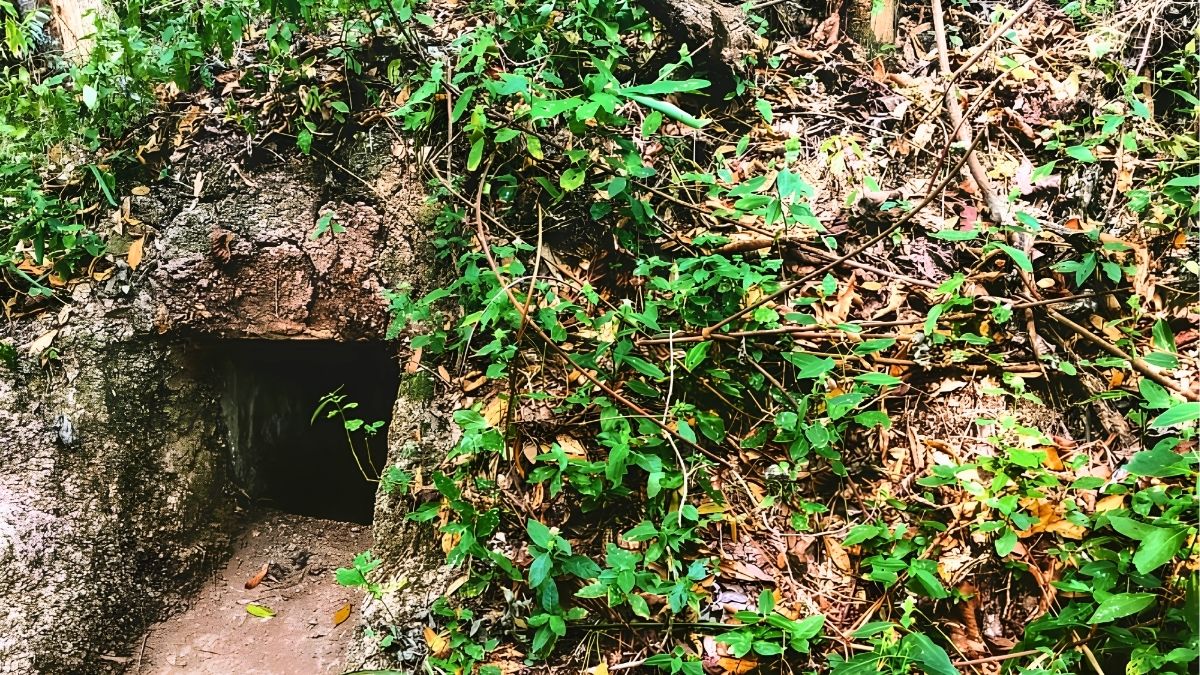 A-shaped Bomb Shelter (Source: kenh14.vn)
- Z-shaped Fighting Fortification: Designed to provide defensive cover during combat.
- L-shaped Secret Tunnel: Used to move between positions while remaining concealed.
- Provincial Party Committee Hall: A former working and meeting space for the provincial committee.
- Office Buildings: Where revolutionary officials worked and handled documents during the war.
- Kitchen: A simple working space used to prepare food for the people living at the base.
- Living Areas: Modest spaces where officials and cadres ate, rested and coordinated activities.
The structures sit low among the surrounding vegetation, showing how the base made use of the natural terrain for concealment. Since local residents may have limited English, having a guide is particularly helpful if you want to understand the purpose of each structure and hear the stories behind the former base. Exploring these remains is a core part of the xeo quyt ecotourism experience.
Visitors can also explore the route independently. Google Maps is useful for getting to Xeo Quyt, but local paths, bridges and access routes may not always be updated in time, which can lead to unnecessary detours. Once inside the site, a simple tip is to keep a canal as your reference point and continue along it, giving you more to see while reducing the chance of getting lost.
Comfortable, closed-toe walking shoes are recommended, as the trail can include packed dirt, wooden sections and stretches with exposed roots. Taking the route slowly rather than rushing from one structure to the next also gives more time to observe the forest and understand how the revolutionary base was integrated into its surroundings.
Leg 3: Observing the melaleuca ecosystem
Duration: around 20-30 minutes
After exploring the revolutionary base, spend the final 20-30 minutes observing the melaleuca forest and wetland ecosystem around the site. Xeo Quyt is home to more than 170 plant species and around 200 animal species, including several species listed in Vietnam's Red Data Book (Source: Wikipedia). The forest, canals and dense vegetation provide habitats for birds, fish and other wildlife, although many animals can be difficult to spot during a short visit.
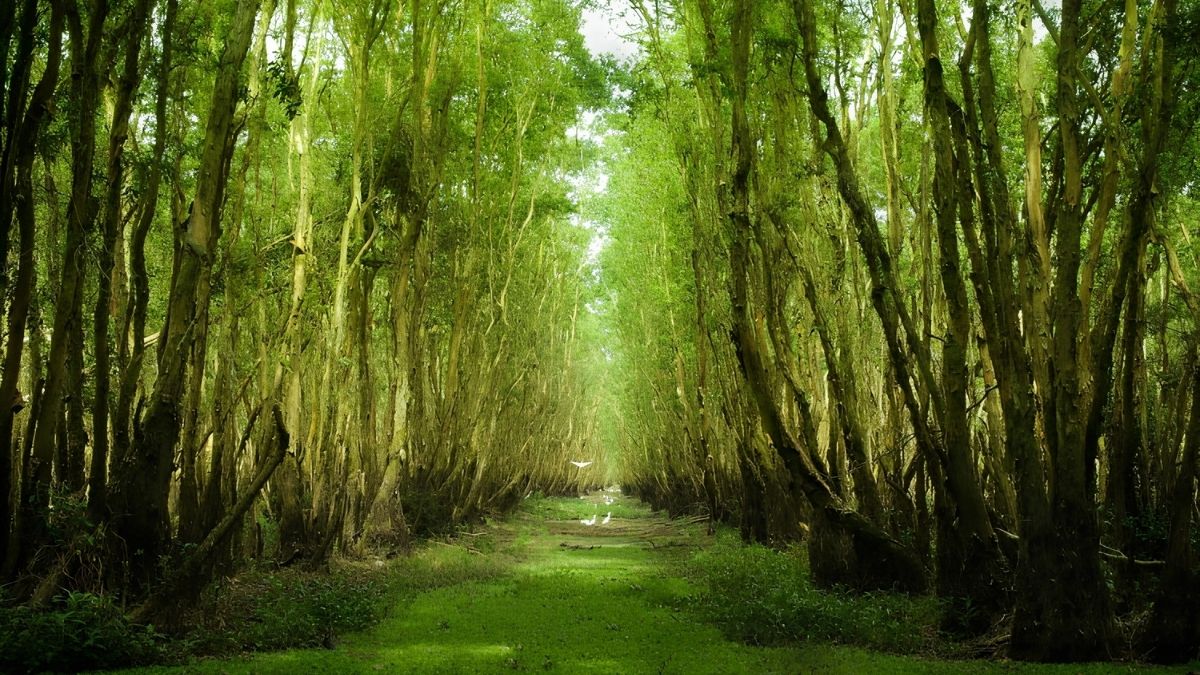 Observing the melaleuca ecosystem (Source: Bao Tuoi Tre)
Take your time around the canal edges, melaleuca trees, water plants and quieter sections of the forest, where you may hear birds, see fish moving through the water or spot other wildlife among the vegetation. Keep your voice low and avoid sudden movements if you want to observe animals without disturbing them.
Practical tip: Do not feed, touch or try to catch the wildlife, and avoid picking plants or flowers. Keep to the designated paths and waterways, and bring a camera or binoculars if you are interested in birdwatching. A slower pace is more rewarding here than trying to cover the area quickly.
Several notable areas along the sightseeing route are worth a longer stop, especially if you want to take photos or observe nature:
- Lotus ponds: If you visit during the lotus season, the blooming ponds create a beautiful natural scene characteristic of Dong Thap Muoi, with pink lotus flowers contrasting against the green melaleuca forest.
- Melaleuca trees and vines: Look for the green vines covering the melaleuca trunks, especially where sunlight filters through the canopy.
- Canal edges: Slow down near quieter waterways to watch birds, fish and other wildlife among the vegetation.
Should I stay longer than two hours?
No, two hours is usually enough for most visitors. This gives you enough time to complete the boat ride, walk along the forest route and spend a short period observing the surroundings without feeling rushed. Staying for around 3 hours is worthwhile if you are particularly interested in birdwatching, photography or simply want more time to enjoy the quieter parts of the forest. Arriving earlier in the day can also give you more time to observe the ecosystem before leaving the site.
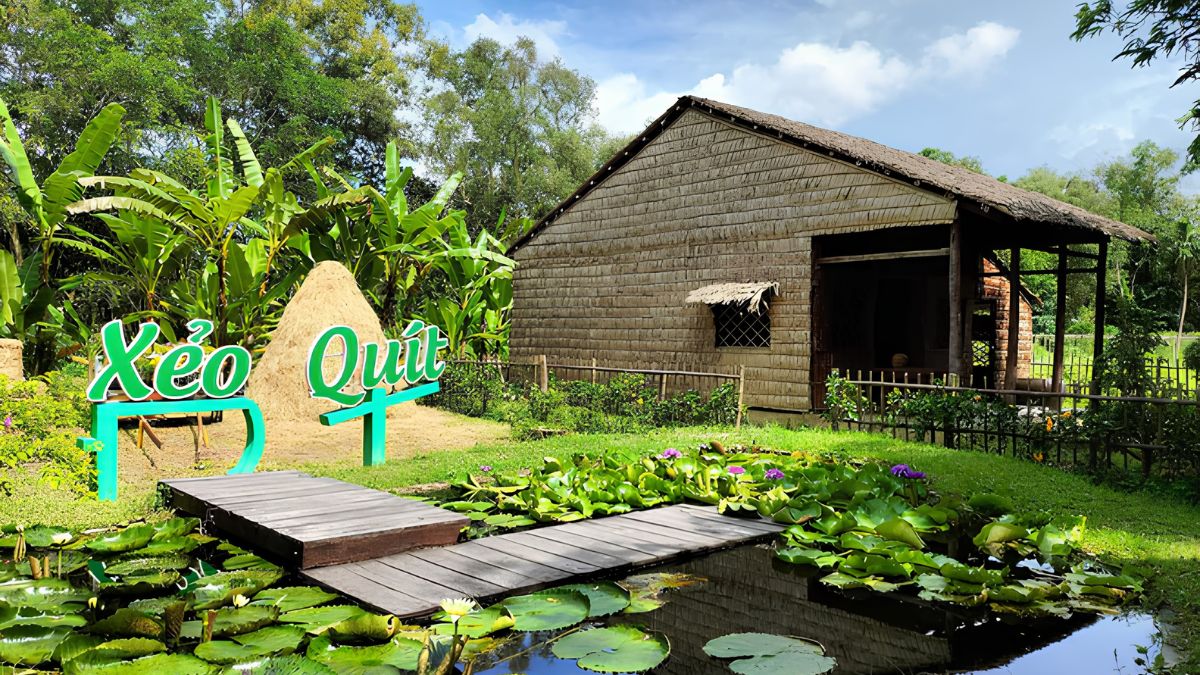
Two hours is usually enough for most visitors (Source: kenh14.vn)
Read more: Mekong Delta Market: A Journey through the heart of the river life
When is Xeo Quyt most beautiful and easiest to experience?
The wet season, from May to November, is when Xeo Quyt looks most lush and atmospheric, while the dry season, from December to April, is generally easier for walking and sightseeing.
|
Season |
Period |
Temperature |
Forest & waterways |
Best for |
|
Dry season |
Dec-Apr |
25-34°C |
Drier trails and lower water levels |
Easier walking and predictable sightseeing |
|
Wet season |
May-Nov |
22-30°C |
Greener forest and fuller canals |
Boat rides and a more atmospheric landscape |
During the wet season, the canal network floods more fully, which can open up more of the waterway for a longer, more immersive boat ride through areas that may be too shallow to navigate in the dry months. This is when the melaleuca forest feels most like the swamp base of its wartime history, with water often reaching close to the base of the tree trunks. The trade-off is that some of the lower-lying bunkers and shelters can flood, occasionally limiting how far inside you can go, while the walking trail can become muddy and slower to navigate.
Heavy rain can suspend boat trips for safety, while a sudden downpour can make the canal ride much less comfortable. If your schedule is flexible, morning is the best time to visit year-round: the air is cooler, birdlife tends to be more active before the midday heat, and there is less intense sun on the more open sections of the waterways. Arriving shortly after the 7:00 AM opening also gives you the quietest part of the day before visitor numbers increase.
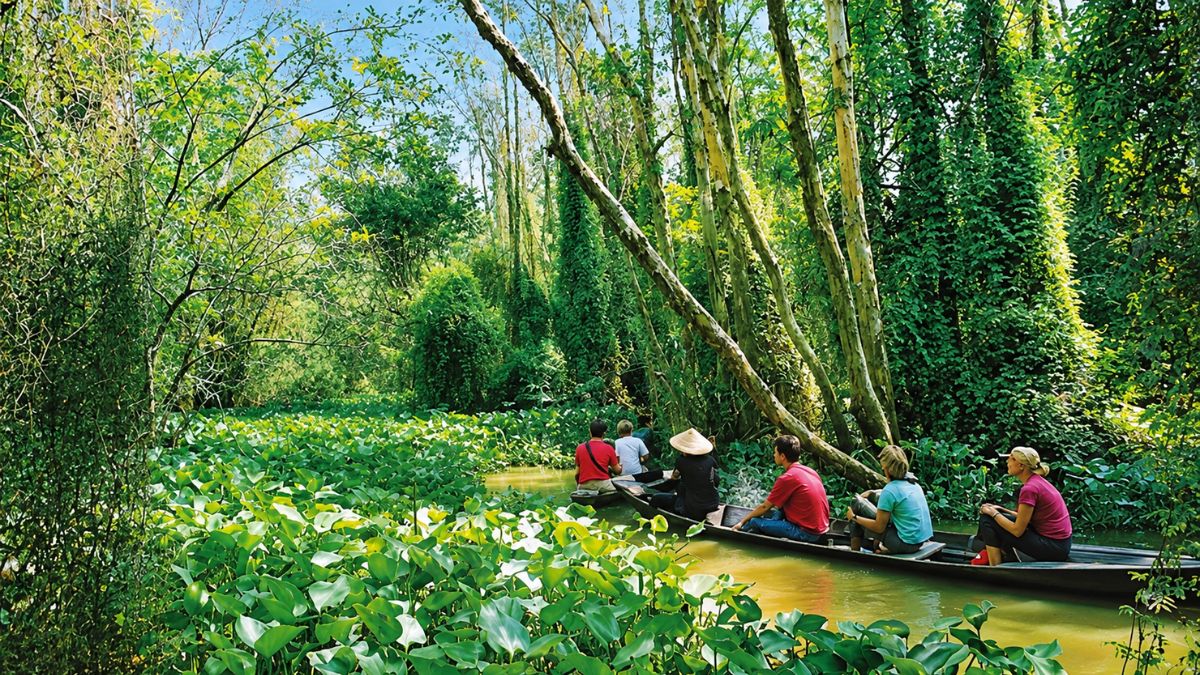 If your schedule is flexible, morning is the best time to visit year-round (Source: Viet Nam News)
Beyond choosing the right time, bringing a few practical essentials will also make the two-hour visit more comfortable.
- Comfortable, closed-toe shoes: the walking trail includes dirt paths, boardwalks, and root-covered ground that isn't sandal-friendly.
- A hat, sunglasses, and sunscreen: much of the open canal and entrance area has little shade, especially in the dry season.
- Insect repellent: a genuinely wet, forested environment means mosquitoes are a real factor, particularly near still water.
- A light rain jacket during the wet season (May-November): sudden downpours are common and can start with little warning.
- Plenty of drinking water: there are limited amenities once you're inside the trail loop itself, so carrying enough for the full two hours is worth doing rather than assuming a vendor will be nearby.
Is Xeo Quyt right for your trip?
|
Traveler type / preference |
Good fit? |
Why |
|
History-focused travelers |
✓ |
A closer look at the local history of the Vietnam War |
|
Nature lovers |
✓ |
Melaleuca forest, waterways and a boat ride in one visit |
|
Families with older children |
✓ |
Enough variety between boating, walking and exploring the site |
|
Slow-paced travelers |
✓ |
A quiet place to enjoy the forest and waterways |
|
Travelers looking for a major landmark or dramatic viewpoint |
✕ |
The main draw is the setting and history, not the views |
|
Travelers with very limited time in the Mekong Delta |
✕ |
You may want to prioritize better-known Mekong Delta experiences |
|
Travelers who prefer minimal walking or interpretation |
✕ |
You’ll need to walk, and a guide can add context to the historical sites |
Xeo Quyt is worth adding when you want a quieter and more historically focused Mekong Delta experience. If you'd like this stop built into a wider Mekong Delta route rather than a rushed single-site detour, reach out to Sinh Cafe Travel to plan the timing, transport, and pacing around it, or take a look at our Mekong Delta tour options to see how Xeo Quyt fits alongside Cao Lanh, Chau Doc, and Can Tho.
 Visit Sinh Cafe Travel to include Xeo Quyt in your Mekong Delta itinerary
FAQs
How long does it take to visit Xeo Quyt?
→ A standard visit takes about two hours, including the boat ride, 1.5-kilometer walking loop, and time to observe the ecosystem. Wildlife enthusiasts and photographers may want 2.5-3 hours.
Is Xeo Quyt similar to the Cu Chi Tunnels?
→ Both preserve Vietnam War-era resistance sites, but Cu Chi focuses on underground tunnels, while Xeo Quyt features above-ground structures hidden within a flooded melaleuca forest.
Can you get inside the bunkers and tunnels at Xeo Quyt?
→ Access depends on season and site conditions. Some lower structures may flood or close during the wet season, so check with staff on arrival.
Is Xeo Quyt suitable for families with children?
→ Yes. The boat ride and walking trail are relatively easy, while the historical structures make the visit more engaging for children. Very young children may need breaks.
How do you get to Xeo Quyt from Ho Chi Minh City or Can Tho?
→ Xeo Quyt is about 147 km from Ho Chi Minh City and 50 km from Can Tho. Most travelers use a private car or visit as part of a Mekong Delta tour.
Share via




Related articles

Visit Ha Giang in November: Is it a good time to go?
Posts | 21/09/2026

Ha Long bay 1 day tour: Best itinerary, cruise options & Travel tips
Posts | 23/03/2026
Yang Bay Waterfall: A Hidden Paradise near Nha Trang you shouldn’t miss
Blog | 24/03/2026
Diep Son island: Walk across the sea in Vietnam’s hidden paradise
Posts | 24/03/2026








There are no reviews yet