


Khai Dinh Tomb: A Unique Window into Vietnam’s Imperial Heritage


Nestled in the hills near Hue, Vietnam, Khai Dinh Tomb (Lăng Khải Định) stands as an architectural masterpiece that uniquely combines cultural influences, reflecting the personality and aspirations of Emperor Khai Dinh. Completed in 1931, this extraordinary mausoleum merges Vietnamese and European architectural styles, creating a monument that both honors tradition and introduces modern elements. From its intricate mosaics to imposing statues, Khai Dinh Tomb offers visitors an immersive experience into Vietnam’s royal history and the grandeur of the Nguyen Dynasty, set against a peaceful landscape. Whether you are passionate about history or architecture, this site is a must-see in Hue.
An Introduction to Khai Dinh Tomb
Serving as the final resting place of the 12th Nguyen emperor, Khai Dinh Tomb is a remarkable fusion of Vietnamese tradition and Western design influences. Situated in Hue—a city rich with royal legacy—this tomb stands apart from others for its personalized architectural style reflecting Emperor Khai Dinh’s distinct tastes. Constructed over 11 years, it blends Vietnamese, Chinese, and French aesthetics, making it one of the most distinctive imperial landmarks in Vietnam’s cultural capital.

Source: Collected
The Vision Behind Khai Dinh Tomb
Commissioned in 1920 by Emperor Khai Dinh and completed in 1931, the tomb embodies the emperor’s fascination with European culture, especially French architecture, encountered during his travels. Unlike his predecessors who favored traditional designs, Khai Dinh aimed to create a mausoleum that was both a tribute to his reign and a symbol of modernity. His decision to incorporate French materials such as cement and wrought iron sparked debate among Vietnamese elites, who saw it as a break from tradition. Nevertheless, the tomb remains a singular symbol of East meeting West at the twilight of the Nguyen Dynasty.

Source: Collected
Architectural Significance
Khai Dinh Tomb is celebrated as an architectural wonder that fuses traditional Vietnamese motifs with Gothic and Baroque influences. Its dark exterior contrasts vividly with brightly decorated interiors, featuring elaborate mosaics made from glass and ceramics. These details narrate Vietnam’s evolving cultural identity and the emperor’s ambition to create a distinctive legacy.

Source: Collected
Highlights of Khai Dinh Tomb
-
Grand Entrance Staircase: Flanked by intricately carved stone dragons symbolizing strength and nobility, this staircase, made with French-imported cement, sets a majestic tone as visitors approach.
-
Stele Pavilion: This pavilion contains a large granite stele inscribed by Emperor Bao Dai, detailing Khai Dinh’s life and reign, showcasing exquisite calligraphy and craftsmanship.
-
Courtyard of Mandarins: Filled with life-sized statues of mandarins, soldiers, and horses, this courtyard represents the emperor’s loyal protectors, crafted with remarkable detail.
-
Thien Dinh Palace: The tomb’s most ornate section, housing the emperor’s remains, features dazzling mosaics and a central bronze statue of Khai Dinh imported from France, highlighting the blend of traditional and Western styles.
Best Time to Visit
Hue, known for its historical significance and stunning landscapes, has a tropical climate with distinct rainy and dry seasons. Deciding when to visit Khai Dinh Tomb depends on your personal preferences, as each season offers a unique experience:
- Dry season (March to August): This is the best time to visit Hue, as the dry season offers plenty of sunlight and minimal rainfall, ideal for exploring historical sites like Khai Dinh Tomb. From March to May, temperatures remain relatively mild, averaging between 25-30°C (77-86°F), making it a pleasant time to stroll through the tomb’s grounds. However, June to August can bring hotter temperatures, sometimes exceeding 35°C (95°F), so morning visits are recommended.
- Rainy season (September to February): While the rainy season can bring frequent showers, it also brings cooler temperatures, usually ranging between 18-24°C (64-75°F). The mist and rain add a mystical quality to the tomb, especially if you’re interested in photography. The rainy season is generally less crowded, offering a quieter experience, though heavy rain may affect accessibility to certain areas.
Getting There
Visitors can reach Khai Dinh Tomb by renting a motorbike or bicycle, taking a taxi or private car, or joining guided tours from Hue. Early arrival is advised for comfort and to avoid crowds.
- Motorbike or bicycle rental: For an adventurous experience, visitors can rent a motorbike or bicycle in Hue and reach Khai Dinh Tomb within 30-45 minutes.
- Taxi or private car: Hiring a taxi or car with a driver is the most comfortable way, especially for families or groups. Many drivers offer half- or full-day rates for tomb tours.
- Organized tours: Numerous guided tours from Hue include transportation to Khai Dinh Tomb, along with other nearby attractions. These tours often provide valuable historical insights and allow visitors to see multiple sites without navigating independently.
Nearby Attractions
When visiting Khai Dinh Tomb, take the opportunity to explore other remarkable imperial sites nearby that offer a deeper understanding of Vietnam’s royal history and showcase different architectural styles and landscapes.
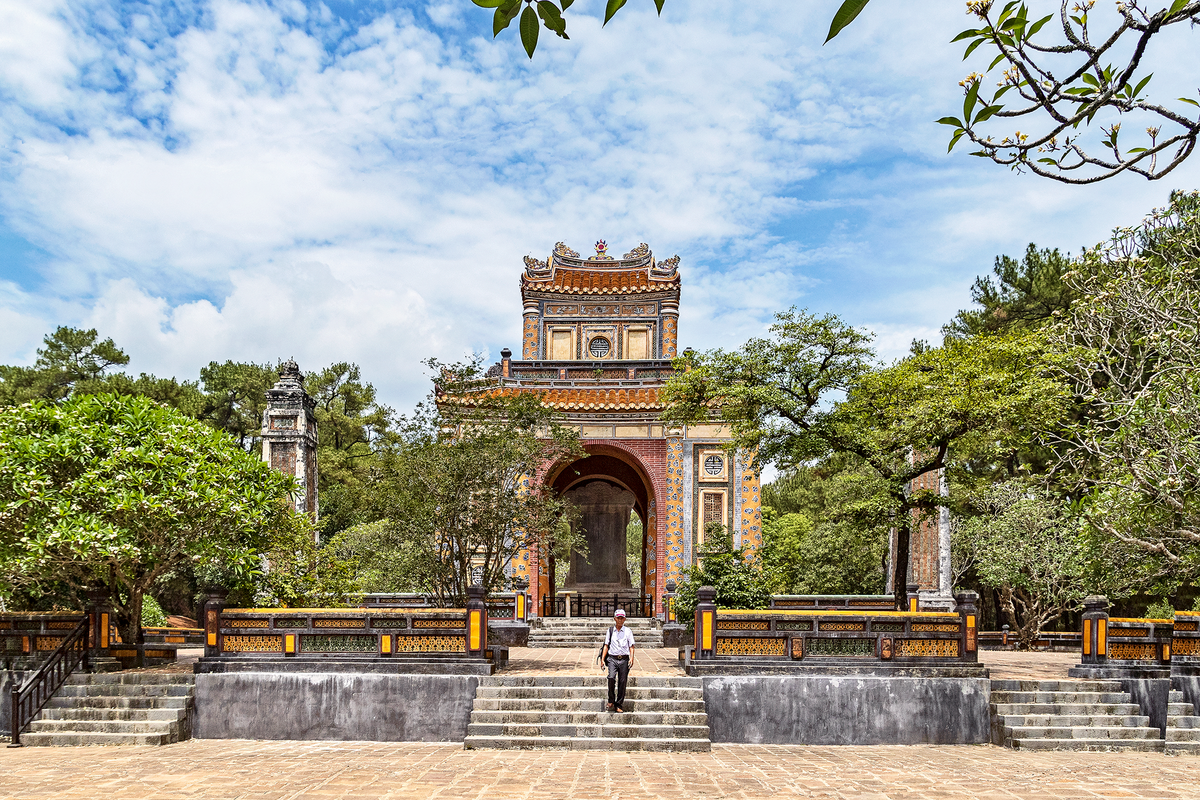
Tu Duc Tomb is a serene retreat known for its poetic layout and peaceful atmosphere. Unlike the grandiosity of Khai Dinh Tomb, Tu Duc’s complex is designed as a quiet sanctuary, surrounded by lotus ponds, shaded pavilions, and lush gardens. Built for Emperor Tu Duc, this tomb reflects a harmonious balance between nature and architecture, inviting visitors to enjoy tranquility and contemplation in a beautifully landscaped setting.

Source: Collected
Minh Mang Tomb stands out for its elegant symmetry and classical Vietnamese design. Situated amidst scenic lakes and verdant forests, the tomb’s layout emphasizes harmony and balance, consistent with Confucian principles. The complex features graceful courtyards, ornate temples, and intricately carved stonework, all blending seamlessly with the natural environment. This site offers a more traditional aesthetic compared to Khai Dinh’s eclectic style and provides insight into the cultural values of the Nguyen Dynasty.
Hue Imperial City (Citadel), a UNESCO World Heritage site, was the political and cultural heart of the Nguyen Dynasty for over a century. This sprawling complex includes palaces, temples, gardens, and the Forbidden Purple City, once reserved exclusively for the emperor and his court. Visiting the Citadel offers a fascinating glimpse into the grandeur of Vietnam’s royal past, with its impressive architecture and rich historical significance. The Citadel’s well-preserved structures and museums allow visitors to explore the dynasty’s legacy in depth.
Source: Collected
Together, these nearby attractions complement the experience of Khai Dinh Tomb by providing varied perspectives on the Nguyen emperors’ lives, their artistic preferences, and their relationship with the natural world. A tour through these sites paints a fuller picture of Hue’s imperial heritage and the cultural richness of Vietnam’s last royal dynasty.
Planning your visit with knowledgeable local guides can enrich your experience, offering deep insights into Vietnam’s rich imperial history and cultural heritage. You can explore at the following link: Hue City Tour 01 Day
Share via




Related articles

Discover the Natural Wonder of Ganh Da Dia – Vietnam’s Hidden Gem in Phu Yen
Blog | 22/08/2025

Exploring the best time to visit Ha Long Bay
Blog | 30/12/2025
Phát Diệm cathedral: Discover the Majestic Phat Diem Stone Cathedral in Ninh Binh
Blog | 30/12/2025
Nha Trang Cathedral: The Gothic Soul Anchored in the Heart of the Coastal Pearl
Blog | 30/12/2025









There are no reviews yet