


Japanese Covered Bridge: The Timeless Icon of Hoi An
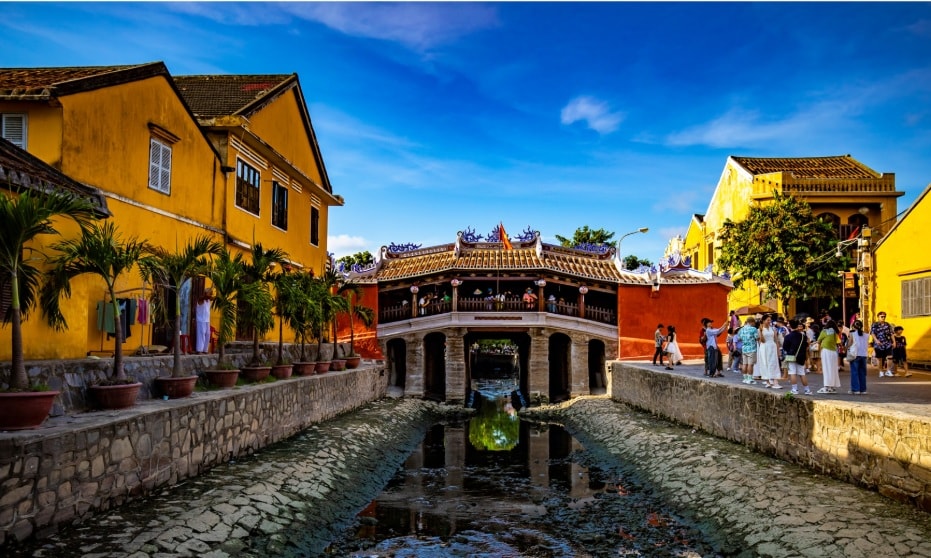
Standing at the heart of Hoi An Ancient Town, the Japanese Covered Bridge is more than just a historic crossing. It’s a timeless symbol of the city’s cultural soul. Known locally as Chua Cau, this guide explores its fascinating history along with practical visiting tips to help you understand why the bridge remains one of Hoi An’s most treasured attractions.
Introduction about Japanese Covered Bridge
The Japanese Covered Bridge is one of the most recognizable landmarks in Hoi An Ancient Town. Built during a period of intense international trade, the bridge reflects the town’s role as a meeting point of cultures and communities. Over time, it has become a cultural symbol closely associated with the history and identity of Hoi An.
History of Japanese Covered Bridge in Hoi An Vietnam
The Japanese Covered Bridge in Hoi An dates back to the late 16th century, during a period when the town was one of Southeast Asia’s busiest trading ports. Japanese merchants living and trading in Hoi An began the bridge’s construction around 1593 to link their settlement with the nearby Chinese quarter across a small canal. The bridge was completed a few years later, likely by 1595, making it one of the oldest surviving structures in the ancient town.
In 1653, a small temple was added at the center of the bridge, reflecting changing cultural influences and local spiritual practices. The bridge became widely known as “Chùa Cầu” (Pagoda Bridge) after this addition, a name that emphasizes its combined function as both a crossing and a place of worship in the community.
A notable event in the bridge’s history occurred in 1719, when Lord Nguyễn Phúc Chu bestowed the formal name Lai Viễn Kiều, which means “Bridge to Welcome Travelers from Afar,” underscoring its significance as a symbol of hospitality in the port town.
By the mid-17th century, Japan’s shift to a strict isolationist policy ended most of its overseas trade and the Japanese community in Hoi An gradually left. The bridge remained under local care and continued to be maintained by succeeding generations. Over the centuries, it underwent several restorations, especially in the 18th and 19th centuries, each time incorporating more Vietnamese and Chinese influences into its design.
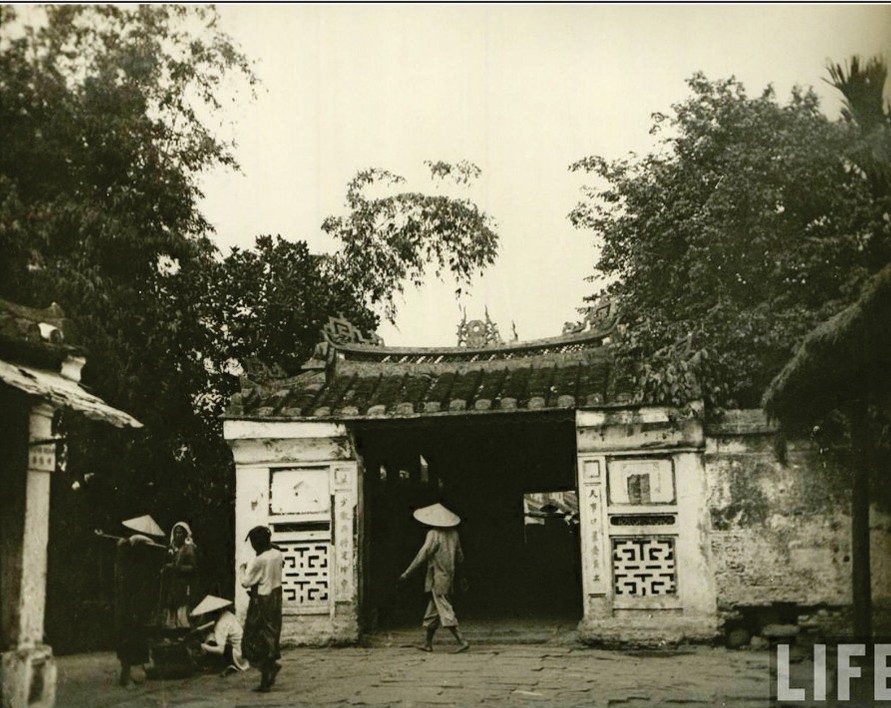
The history of Japanese Covered Bridge (Source: Hoi An Heritage)
In 1990, the Japanese Covered Bridge was officially recognized as a National Historic and Cultural Monument of Vietnam, ensuring its protection and preservation as a key heritage site. Today, the bridge continues to stand as a testament to Hoi An’s multicultural trading history and long-standing cultural exchange.
Architecture and Design of Japanese Covered Bridge
The Japanese Covered Bridge is best known for its distinctive house above bridge below design, a rare architectural form in Viet Nam. The structure is approximately eighteen meters long and about three meters wide, creating a compact yet well proportioned crossing over the narrow canal in Hoi An Ancient Town.
The bridge is made up of two short approach sections on land and a central section spanning the waterway. The approach sections are built with brick and stone arches, while the middle portion rests on solid stone piers set deep into the canal bed. This foundation system has allowed the bridge to remain stable despite centuries of changing water levels and seasonal flooding.
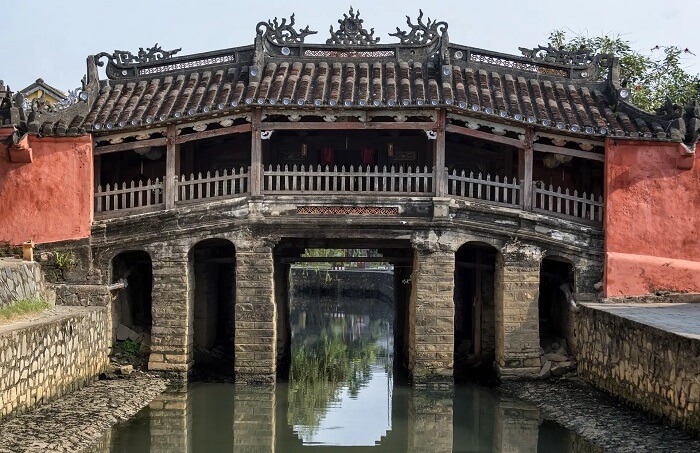
A rare architecture in Vietnam (Source: Hoi An Heritage)
Above the stone base, the bridge features a wooden framework constructed entirely from traditional timber elements. Wooden columns, beams and floor planks are assembled using time honored joinery techniques, similar to those found in historic houses throughout Hoi An. Inside the bridge, wooden partitions divide the space in the traditional thuong song ha ban style, with latticed panels above and solid boards below.
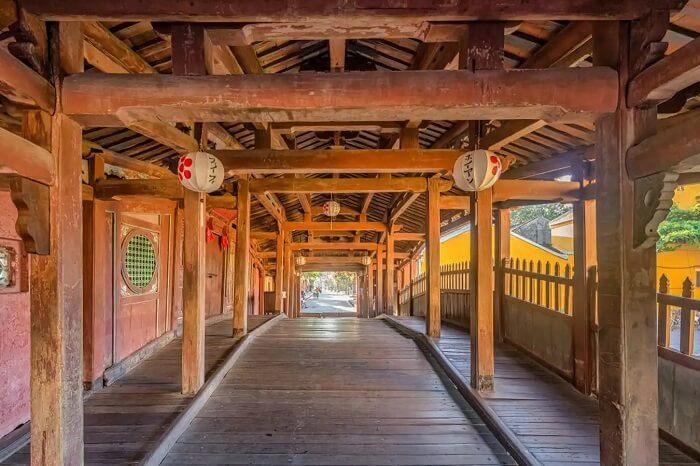
The architecture inside the bridge (Source: Hiep Hoi Du Lich Quang Nam)
The roof is covered with curved yin yang tiles that protect the interior from sun and rain. Along the roof ridges and eaves, decorative ceramic fragments are carefully inlaid, adding subtle visual detail while strengthening exposed edges. Together, these architectural elements reflect a careful balance between structural function and refined craftsmanship that has endured for more than four centuries.
The Renovation of Japanese Covered Bridge
Over more than four centuries, the Japanese Covered Bridge has undergone several important restoration campaigns to maintain its structure and appearance. These renovations were carried out to address damage caused by weather, flooding and the natural aging of materials.
One of the earliest notable restorations took place in 1653, when structural repairs were made to strengthen the bridge as it continued to serve the growing community in Hoi An. Further restoration work followed in the following centuries, focusing mainly on reinforcing wooden elements, repairing the roof and stabilizing the stone foundation.
In modern times, the bridge received special attention after being recognized as a National Historic and Cultural Monument in 1990, leading to more systematic conservation efforts aimed at preserving its original character.
The most recent major restoration was completed in 2024, following an extensive conservation project. This renovation focused on improving structural safety, restoring architectural details and ensuring the bridge could be preserved for future generations, while maintaining its historical integrity.
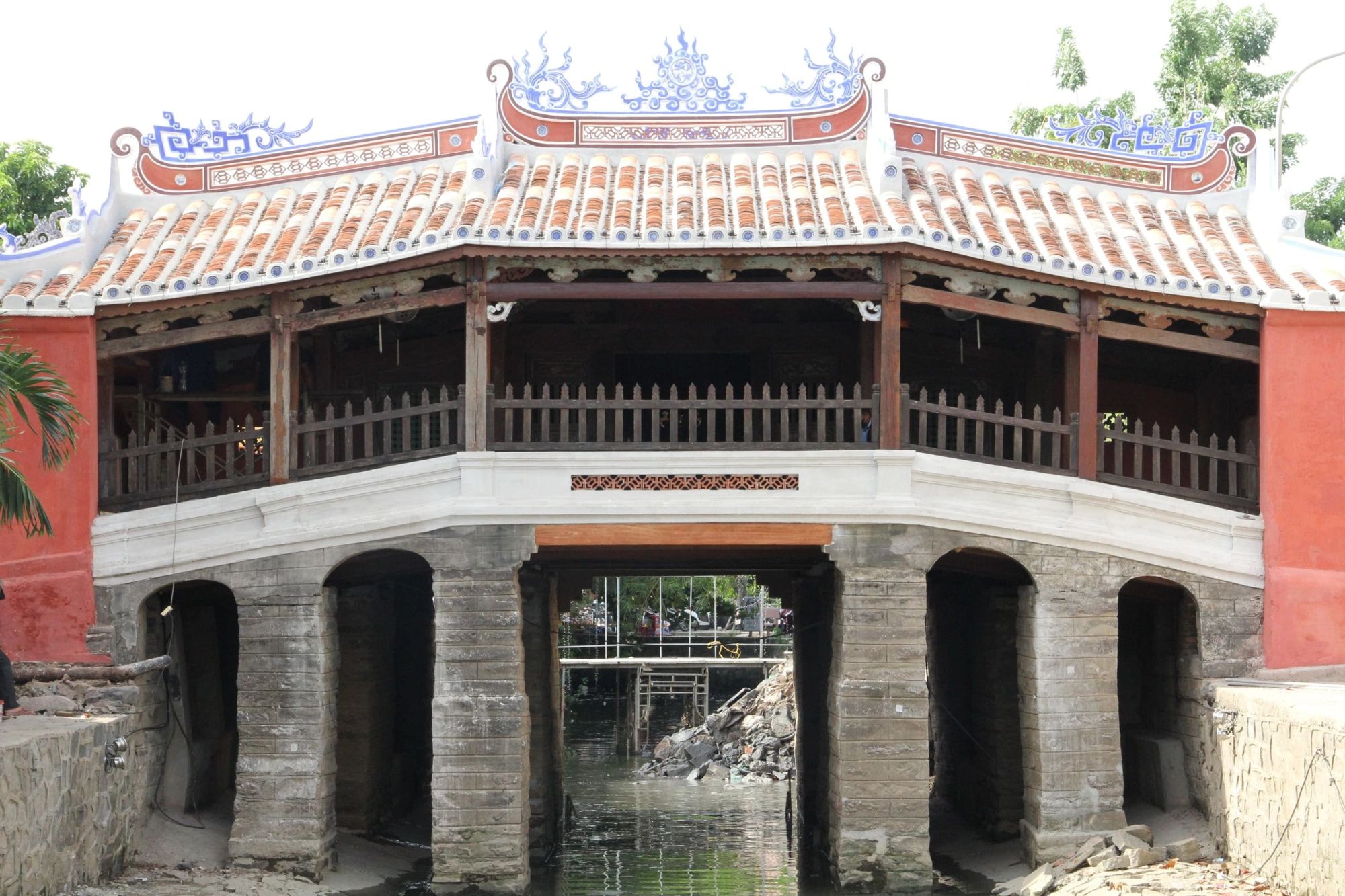
The recent renovation of Japanese Covered Bridge in Hoi An (Source: Bao Thanh Nien)
Where is the Japanese Covered Bridge? How to get there from Da Nang and Hoi An?
The Japanese Covered Bridge stands in the heart of Hoi An Ancient Town, near Nguyen Thi Minh Khai Street. Although Hoi An is now administratively part of Da Nang following recent adjustments, the bridge remains one of the most iconic and instantly recognizable landmarks of Hoi An’s old town.
Getting to the Japanese Covered Bridge from Hoi An
If you are already in Hoi An, reaching the Japanese Covered Bridge is simple and does not require motorised transport:
- Walk on foot from Old Town centre: If you are already staying inside or near the ancient town, the bridge is within a short walk. From Tran Phu Street or Hoi An Central Market, it typically takes five to ten minutes to walk to the bridge through the atmospheric streets lined with lanterns and historic buildings.
- Bicycle from around town: Hoi An is very bicycle-friendly and many hotels offer bike rentals. Cycling to the Japanese Covered Bridge is an enjoyable way to explore the old town and its surroundings before arriving at the heritage site on foot.

Riding a bike around Hoi An (Source: Hoi An World Heritage)
Getting to the Japanese Covered Bridge from Da Nang
Hoi An is located about 30 kilometres south of Da Nang and reaching the Japanese Covered Bridge from Da Nang is straightforward with several transportation options:
- Taxi or Ride-Hailing Services: A taxi or ride-hail ride from Da Nang city centre or Da Nang International Airport will take around 45 to 60 minutes and offers the most convenient direct trip to Hoi An Ancient Town.
- Shuttle or Tour Bus: Shuttle buses and organised day tours between Da Nang and Hoi An run regularly and are a cost-effective choice for travellers. These services often include drop-off near the old town, from where you then walk to the Japanese Covered Bridge.
- Motorbike rental: Renting a motorbike in Da Nang and riding along the coastal road to Hoi An is a popular option for independent travellers. The journey takes just over an hour and gives a scenic view along the way, though you will need to park outside the pedestrian zone and continue on foot.
Getting to the Japanese Covered Bridge from Hanoi
For visitors coming from Hanoi, there is no direct route to Hoi An, but several common ways exist:
- Flight to Da Nang: The fastest way is to fly from Hanoi to Da Nang, a flight of around one and a half hours and then transfer to Hoi An by taxi, shuttle, or bus.
- Overnight Train or Sleeper Bus to Da Nang: More adventurous travellers often take an overnight train or sleeper bus from Hanoi to Da Nang, which typically takes between 14 and 20 hours, depending on the service chosen. Once in Da Nang, you can continue to Hoi An and then reach the Japanese Covered Bridge on foot or by bicycle.
Getting to Hoi An is relatively straightforward, especially when traveling from major cities in central and northern Viet Nam. However, for travelers who plan to explore multiple regions of the country and are unsure how to connect destinations smoothly, joining a well organized itinerary can help simplify the journey.
Designed for first time visitors and those with limited time, the Vietnam Highlight 9 Days tour by Sinhcafe offers a balanced way to experience Viet Nam’s cultural and historical highlights while still allowing time to enjoy iconic sites such as the Japanese Covered Bridge in Hoi An.
The temple inside Japanese Covered Bridge
At the center of the Japanese Covered Bridge lies a small yet spiritually significant temple that adds depth to the monument’s cultural identity. Although commonly referred to as “Chua Cau” or Japanese Covered Bridge, this sacred space is not a Buddhist pagoda. Instead, it reflects the blending of Taoist beliefs and local spiritual traditions that have shaped Hoi An for centuries.
The temple was established to worship Bắc Đế Trấn Vũ, also known as Xuanwu, a Taoist guardian deity believed to control water, storms and natural disasters. In a historic port town like Hoi An, where floods and harsh weather once posed constant threats, the presence of this deity symbolized protection, stability and peace for both residents and merchants.
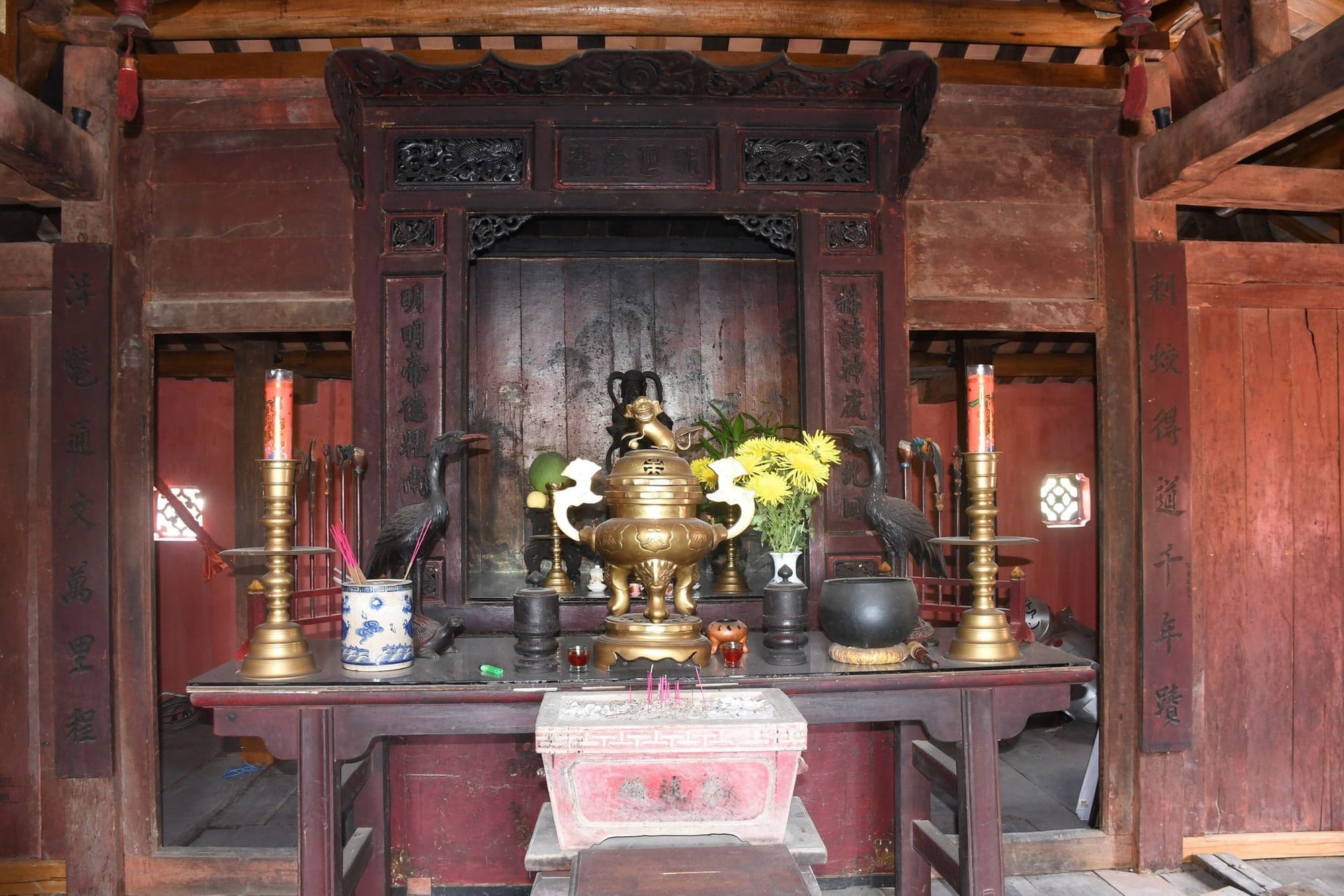
The temple was established to worship Bắc Đế Trấn Vũ (Source: Bo Van Hoa The Thao Va Du Lich)
Inside the shrine stands a lacquered and gilded wooden statue of the deity, preserved in a solemn and restrained setting. The space is modest in scale, harmonizing with the bridge rather than dominating it and is separated from the walkway by a traditional wooden partition commonly found in Hoi An’s old houses. This layout allows the temple to function as a quiet place of worship while remaining an integral part of the bridge’s structure.
For generations, local residents have regarded the temple as a sacred place closely tied to daily life in the ancient town. On full moon days and during traditional festivals, people often stop by to light incense and pray for peace, good fortune and protection for their families and the community. Today, the temple continues to play a spiritual role while offering visitors insight into the beliefs and rituals that underpin Hoi An’s living heritage.
Why is the Japanese Covered Bridge worth visiting?
The Japanese Covered Bridge offers visitors a rare opportunity to experience the cultural essence of Hoi An within just a few quiet moments. Located at the very heart of the Ancient Town, the bridge is easy to reach on foot and naturally fits into any walking itinerary through lantern lit streets and historic houses. A short stop here allows travelers to connect with centuries of local life without feeling rushed or overwhelmed.
Beyond its convenient location, the bridge provides a unique sense of atmosphere that many larger landmarks cannot. Standing on the wooden deck, visitors can observe daily life along the canal while enjoying a peaceful pause from the bustling streets nearby. The combination of flowing water, aged timber and soft light creates an experience that feels both intimate and timeless.
Why is the Japanese Covered Bridge worth visiting? (Source: Hoi An Heritage)
The Japanese Covered Bridge is also ideal for travelers who value meaningful cultural encounters. Whether you are interested in history, architecture, photography, or simply slowing down to absorb the spirit of Hoi An, the bridge offers a balanced experience that rewards quiet observation rather than lengthy exploration. This subtle charm is what makes it a memorable stop for first time visitors and returning travelers alike.
Visiting Information for Hoi An Japanese Covered Bridge
Before planning your visit to the Japanese Covered Bridge, it is helpful to understand the basic entrance regulations and opening hours. As one of the most important heritage landmarks in Hoi An Ancient Town, access to the bridge is carefully managed to protect its historical structure while still allowing visitors to experience its cultural and spiritual value.
Ticket Price and Entrance Information
There is no separate ticket required to visit the Japanese Covered Bridge Vietnam. Access to the bridge is included in the Hoi An Ancient Town entrance ticket, which allows visitors to explore multiple heritage sites within the old town.
Current reference ticket prices are as follows:
- Vietnamese visitors: 80,000 VND per person
- International visitors: 120,000 VND per person
- Children under 1m tall: Free
- Children from 1m to 1.4 m tall: 50,000 VND per person
(Note: Ticket prices are for reference only and may change depending on local regulations and management policies)
Visitors may freely view the bridge from the outside and take photographs at any time without a ticket. However, walking across the bridge and entering the small temple inside requires a valid Hoi An entrance ticket.
To protect the structure of this centuries old wooden bridge, the number of visitors allowed on the bridge at one time is limited. Traditionally, a maximum of around 20 visitors are permitted simultaneously. During busy periods, visitors may be asked to queue briefly before entering.
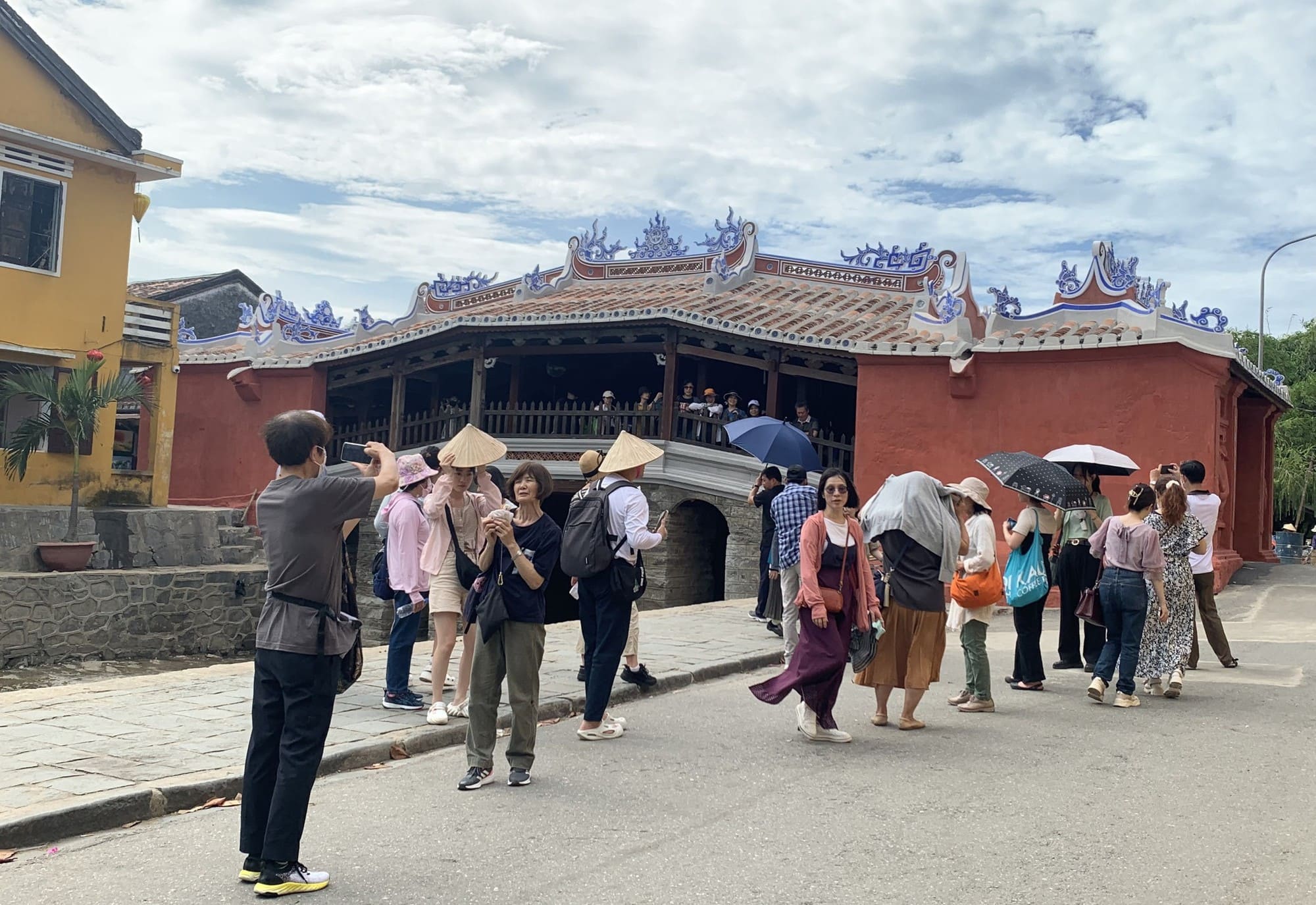
Visitors queue to visit Chua Cau (Source: Hiep Hoi Du Lich Quang Nam)
As the bridge is considered a sacred heritage site, visitors are encouraged to dress modestly, remain quiet and respect the cultural atmosphere while inside.
Opening hours and Best time to visit
The Japanese Covered Bridge is open to visitors during specific time slots each day to ensure both safety and preservation. Current visiting hours for walking on the bridge and entering the shrine are generally divided into two sessions:
- Morning from 9:00 to 11:00
- Late afternoon and evening from 15:00 to 22:00
The best time to visit is early in the morning or later in the evening, when the atmosphere is calmer and temperatures are more comfortable. Visiting after sunset is especially rewarding, as the soft glow of lanterns reflects on the water, enhancing the bridge’s timeless charm.
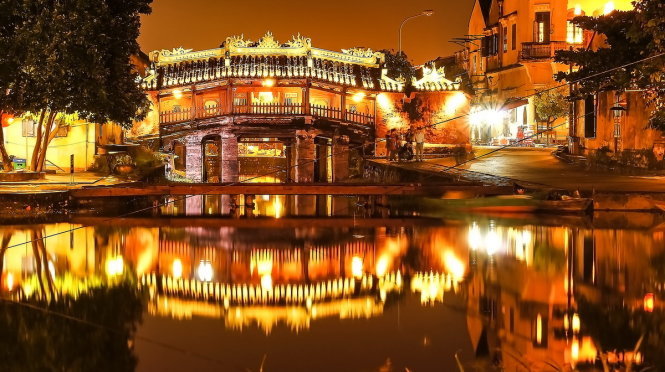
Japanese Covered Bridge at night with lantern lights reflected on the water (Source: Bao Tuoi Tre)
It’s also important to consider the season when planning your visit. Hội An experiences heavy rains and occasional flooding from September to November, which can make walking around the ancient town less convenient. The dry months from February to April are generally the most comfortable for sightseeing.
During weekends, holidays and full moon days, the bridge can become crowded so arriving outside peak hours or during the early morning is recommended for a more relaxed experience.
Read more: Best Hotel near Hoi An Ancient House
Interesting facts about Japanese Covered Bridge
The Japanese Covered Bridge is more than a historic landmark. Filled with fascinating stories, symbols and beliefs, it offers visitors a glimpse into Hoi An’s unique cultural and spiritual heritage.
Japanese Covered Bridge appears on Vietnam’s 20,000 VND
The Japanese Covered Bridge is one of the very few historical landmarks in Viet Nam to be featured on a national banknote. Its image appears on the reverse side of the 20,000 VND polymer note, highlighting the bridge’s cultural importance and long standing symbolic value.
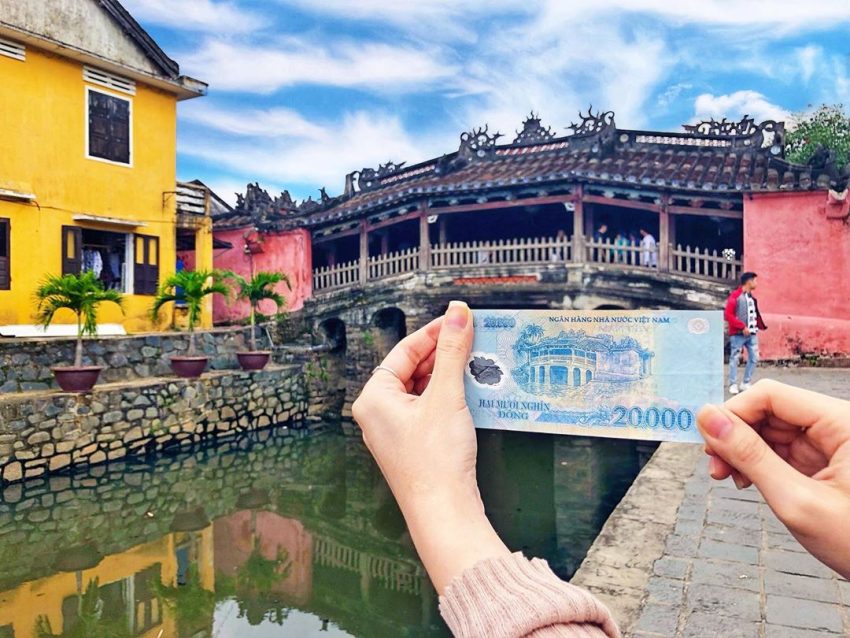
Chua Cau featured on the back of 20,000 VND banknote (Source: Kenh14)
This recognition reflects not only its architectural beauty but also its role as a representative icon of Hoi An Ancient Town and Viet Nam’s shared heritage.
Built to protect Hoi An from natural disasters
Beyond its function as a crossing, the Japanese Covered Bridge was believed to serve a powerful spiritual purpose. According to a shared legend among Vietnamese, Japanese and Chinese communities, a giant sea monster was thought to lie beneath the region, stretching across Asia. Each time it moved, earthquakes and floods would strike the surrounding lands.
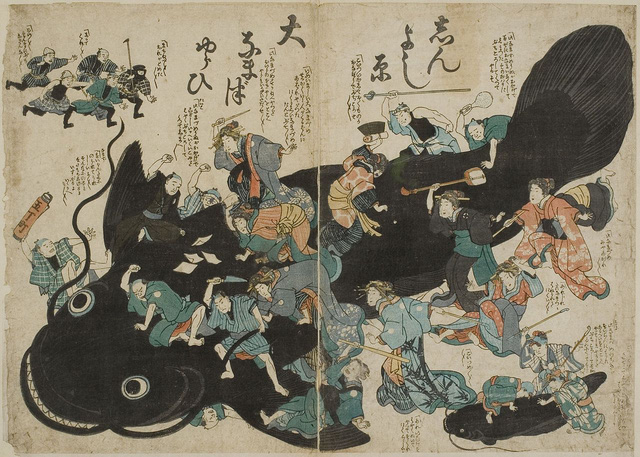
Con Cu, Namazu, or Cau Long is a giant catfish believed to bring disasters to people (Source: Cafef)
The bridge was symbolically constructed as a sacred sword placed across the creature’s back, preventing it from stirring and bringing calamities. This belief reflects how ancient communities combined engineering with spiritual protection, hoping to safeguard Hoi An’s trading port and ensure peaceful daily life.
The enduring mystery of the Dog and Monkey Statues
At both ends of the Japanese Covered Bridge stand pairs of dog and monkey statues, quietly guarding the structure. Their presence has long intrigued visitors, as there is no single explanation universally agreed upon.
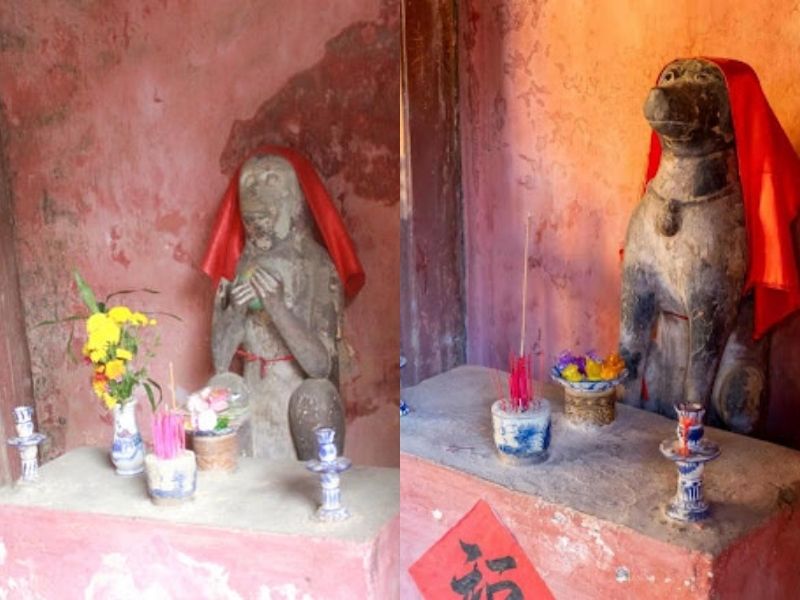
Statues of the Monkey and the Dog at Japanese Covered Bridge
One interpretation suggests the animals mark the time of construction, which is believed to have begun in the Year of the Monkey and completed in the Year of the Dog according to the lunar calendar. Another view links the statues to Japanese spiritual beliefs, where monkeys are seen as divine messengers and protectors, while dogs symbolize loyalty and good fortune. Together, they reinforce the bridge’s role as a spiritual guardian of the town.
One of the few bridges in Vietnam that also houses a shrine
Although commonly called “Chua Cau,” meaning Pagoda Bridge, the Japanese Covered Bridge is neither a typical bridge nor a traditional pagoda. Inside the structure is a small shrine, making it one of the rare bridges in Viet Nam that also functions as a place of worship.
Rather than serving a purely religious role, the shrine reflects local beliefs in spiritual protection. Over centuries, residents have come here to pray for peace, safety and prosperity, reinforcing the bridge’s significance beyond its physical form.
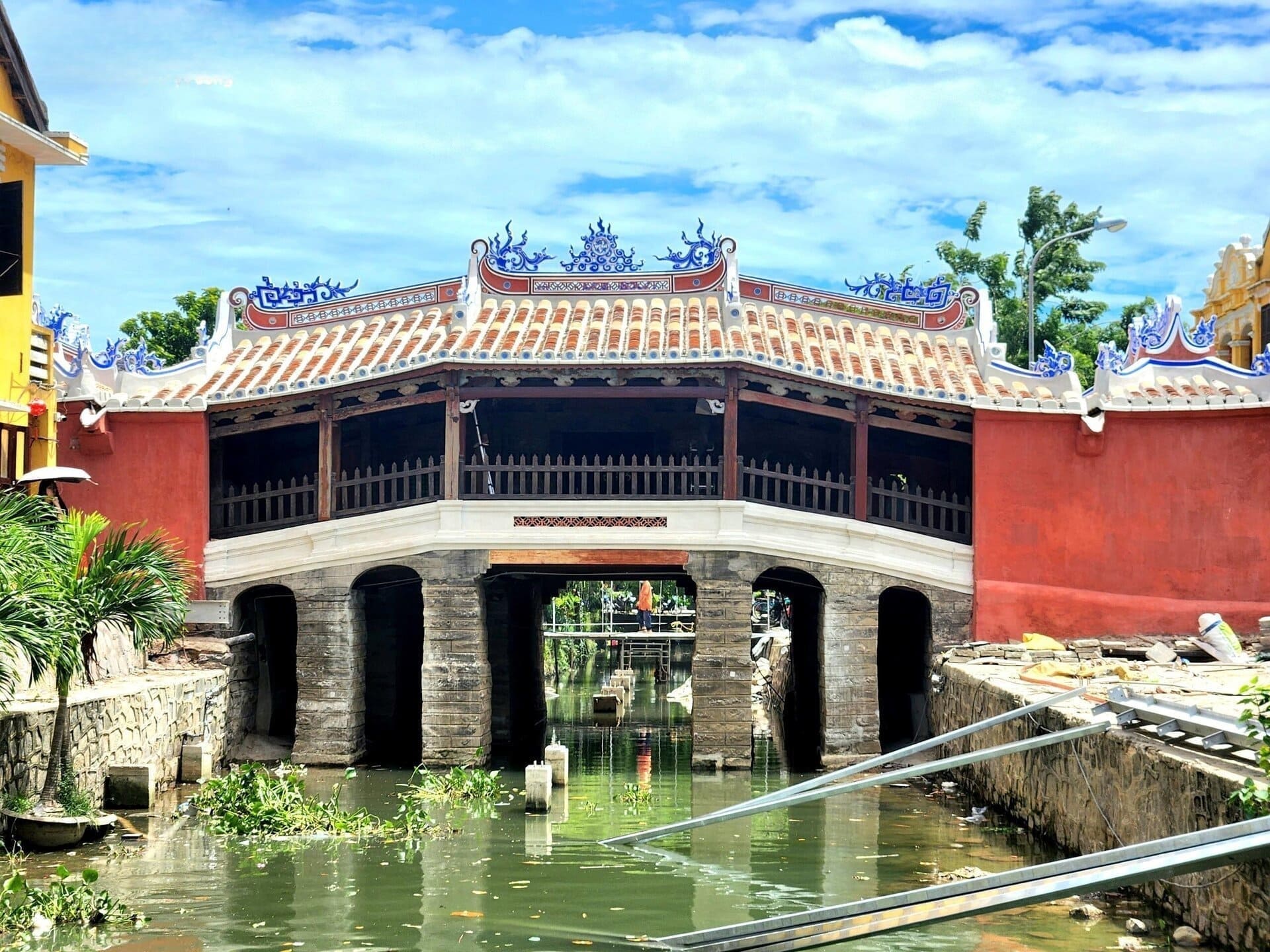
Pagoda Bridge is a covered bridge that houses a small shrine (Source: Kenh14)
A unique blend of Japanese, Chinese and Vietnamese Cultures
The Japanese Covered Bridge stands as a living testament to the cultural exchanges that once shaped Hoi An as an international trading port. Built by Japanese merchants, later maintained and influenced by Chinese communities and preserved by Vietnamese generations, the bridge embodies a rare harmony of three cultures.
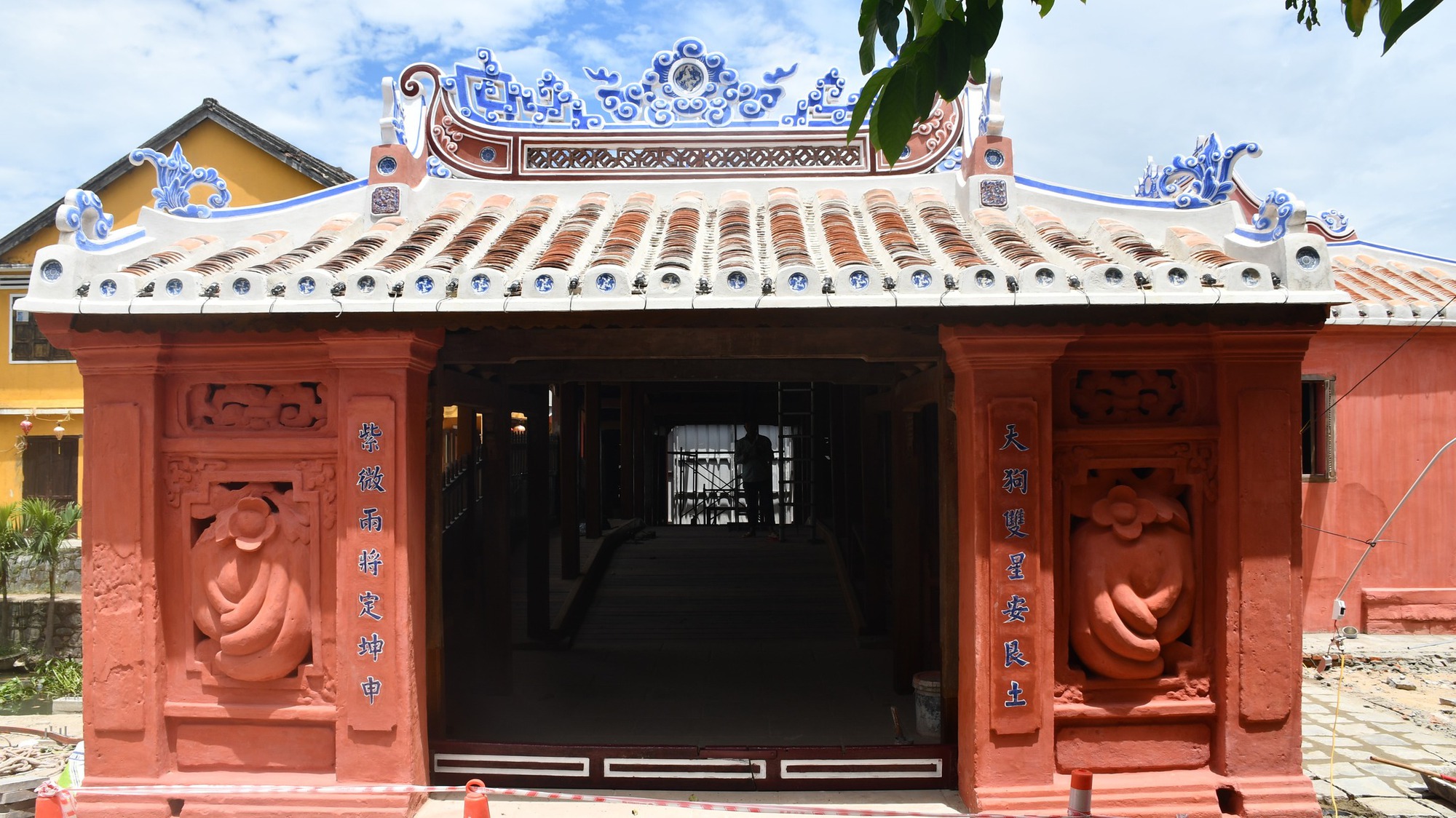
Japanese Covered Bridge is a unique blend of three cultures (Source: Bo Van Hoa The Thao Va Du Lich)
This blend can be felt not only in its structure and decorative details but also in the legends, rituals and local practices associated with it. The bridge remains a powerful symbol of cooperation, coexistence and shared heritage in Hoi An Ancient Town.
Useful tips when visiting Japanese Covered Bridge
Visiting the Japanese Covered Bridge is a memorable experience, but a few practical tips can help make your visit smoother and more enjoyable:
- Dress appropriately: The bridge houses a small shrine and is considered a sacred site. Modest clothing and respectful behavior are expected. Avoid loud voices and keep noise to a minimum.
- Plan your timing: The bridge can be viewed from the outside at any time, but walking across and exploring the shrine is best during the opening hours of Hoi An Ancient Town. Early mornings and late afternoons are ideal to avoid crowds and enjoy soft lighting for photos.
- Limit on visitors: To protect the bridge’s structure, a maximum of around 20 people is allowed on the bridge at once. During busy periods, you may need to wait your turn.
- Photography tips: Both the exterior and interior offer excellent photo opportunities. Sunrise and sunset provide the most atmospheric lighting, while nighttime lanterns in Hoi An create a magical backdrop.
- Combine with a walking tour: The bridge is located at the heart of Hoi An Ancient Town, making it easy to explore nearby historic houses, markets and riverside cafes. Planning a walking route helps you make the most of your visit.
- Respect the site: Do not litter or touch the wooden structures. The bridge has stood for over 400 years and careful behavior helps preserve it for future generations.
Read more: Vietnam 5 days itinerary: Best plan for all travelers
Place near Japanese Covered Bridge
From the Japanese Covered Bridge, you can easily explore many nearby cultural and historic attractions in the heart of Hoi An. Here are some highlights to include in your visit.
Phung Hung Old House
- Address: 04 Nguyen Thi Minh Khai, Hoi An, Da Nang, Vietnam
- Opening Hours: 8:00 AM - 6:00 PM daily
- Entrance Fee: Included in the Hoi An Ancient Town ticket
Phung Hung Old House is one of the most well preserved merchant homes in the area. Built by a prosperous trading family in the late 18th century, it showcases elegant woodwork, traditional ornamental details, and displays that reveal the lifestyle of Hoi An’s historic merchant class.
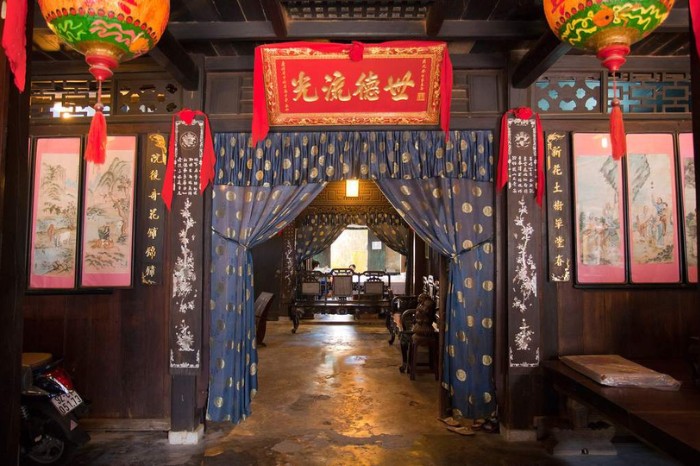
Phung Hung Old House (Source: Hiep Hoi Du Lich Quang Nam)
Tan Ky Ancient House
- Address: 101 Nguyen Thai Hoc, Hoi An, Da Nang, Vietnam
- Opening Hours: Approximately 8:00 AM - 5:00 PM daily
- Entrance Fee: Included in the Hoi An Ancient Town ticket
Tan Ky Ancient House is another iconic heritage structure, known for its harmonious blend of Vietnamese and Chinese architectural elements. Its interior and courtyard spaces offer a vivid sense of life in Hoi An’s trading heyday.
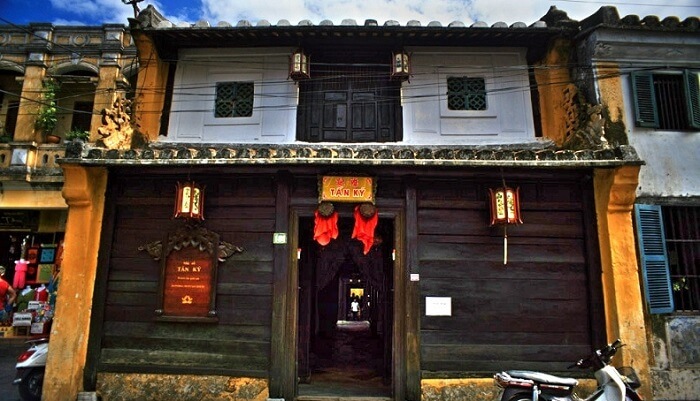
Tan Ky Ancient House (Source: Hiep Hoi Du Lich Quang Nam)
Assembly Halls in Hoi An
- Address: Various locations within Hoi An Ancient Town, Da Nang, Vietnam
- Opening Hours: Around 8:00 AM - 5:00 PM daily
- Entrance Fee: Usually included in the Hoi An Ancient Town ticket; some halls may have small additional fees
Hoi An’s assembly halls were traditionally built by Chinese merchant communities as social and spiritual gathering places. They are richly decorated with wood carvings, ceramic motifs, and symbolic inscriptions.
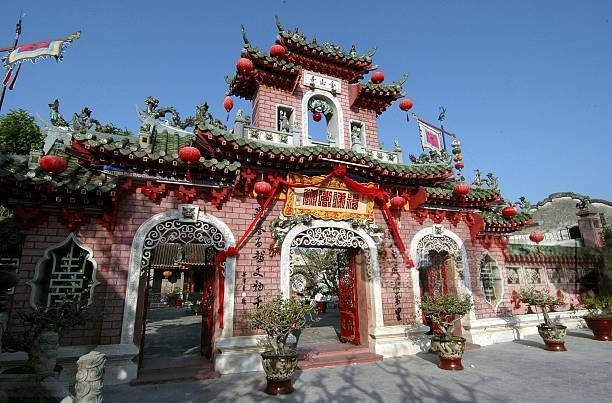
Hoi An’s assembly halls
Night market and Lantern Streets
- Address: Along Bach Dang and Nguyen Hue streets near the riverfront, Hoi An, Da Nang, Vietnam
- Opening Hours: Around 5:00 PM - 10:00 PM daily (later on weekends and full‑moon nights)
In the evening, the riverside area lights up with colorful lanterns and market stalls. The Night Market is ideal for local snacks, souvenirs, and night photography.
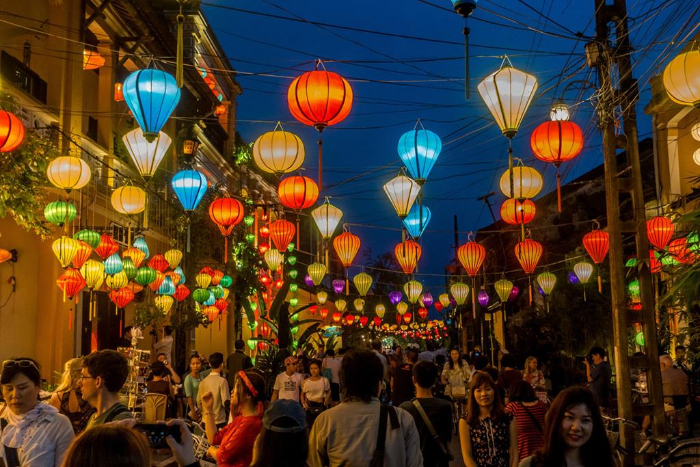
Lantern Streets
Coffees and local restaurants nearby
- Address: Scattered throughout Hoi An Ancient Town, Da Nang, Vietnam
- Opening Hours: Typically 7:00 AM - 10:00 PM (varies by establishment)
- Entrance Fee: Charges apply for food and drinks
Hoi An offers a wide range of cafés and eateries near the bridge, serving traditional Vietnamese coffee, local specialties, and international dishes - perfect for resting after sightseeing.
Visiting the Japanese Covered Bridge offers more than just a glimpse of Hoi An’s architecture; it is a journey through centuries of culture, legends, and craftsmanship. From its historic design to the fascinating stories of the Dog and Monkey statues and the shrine within, the bridge remains a symbol of the city’s rich heritage.
If you want to plan your trip to Hoi An or explore more of Vietnam with expert guidance, Sinhcafe can help. Contact us today at +84 904 488 850 or +84 24 3756 8868 to get advice, tips, or a tailored itinerary for your journey.
Share via




Related articles

Vung Tau port: Discover the bustling port life and exciting activities
Blog | 20/08/2025
Exploring the best time to visit Ha Long Bay
Blog | 30/12/2025
Phát Diệm cathedral: Discover the Majestic Phat Diem Stone Cathedral in Ninh Binh
Blog | 30/12/2025

Nha Trang Cathedral: The Gothic Soul Anchored in the Heart of the Coastal Pearl
Blog | 30/12/2025









There are no reviews yet