


Ho Chi Minh Museum Hanoi: Discovering a cultural and spiritual landmark
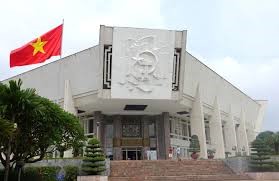
The Ho Chi Minh museum Hanoi is one of the most popular cultural sites in Vietnam’s capital. It gives visitors a closer look at the life and legacy of President Ho Chi Minh. The Ho Chi Minh museum site is located near the famous Ho Chi Minh Mausoleum. Its design is shaped like a lotus, a symbol of purity and simplicity. For history lovers and first-time travelers alike, the Ho Chi Minh museum in Hanoi is a must-see destination.
Overview of the Ho Chi Minh Museum Hanoi
The Ho Chi Minh museum Hanoi is one of the most important historical and cultural landmarks in Vietnam. Situated at 19 Ngoc Ha Street, Ba Dinh District, Hanoi, the museum is part of the larger Ho Chi Minh Complex, which also includes the Ho Chi Minh Mausoleum, the Presidential Palace, and the One Pillar Pagoda. This area is considered the political and cultural heart of the capital, attracting millions of visitors each year.
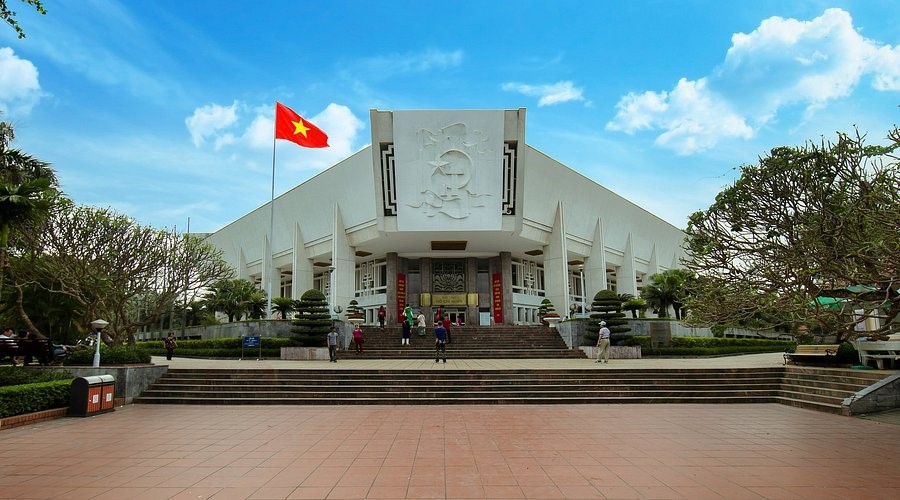
Overview of the Ho Chi Minh Museum Hanoi (source: tripadvisor)
The Ho Chi Minh museum entry fee is affordable, set at around 40,000 VND for foreigners, with discounts and free entry available for Vietnamese. The museum opens daily from 8:00 AM to 12:00 PM and 2:00 PM to 4:30 PM, but it is closed on Mondays and Fridays.
For travelers searching for authentic cultural experiences, the Ho Chi Minh museum Hanoi Vietnam offers an unforgettable journey through history, making it one of the must-see attractions in the capital.
History of the Ho Chi Minh Museum Hanoi
The Ho Chi Minh Museum was officially inaugurated on May 19, 1990, on the occasion of the 100th anniversary of President Ho Chi Minh's birth. It was built to honor his life, his vision, and his role in Vietnam’s independence. Its creation was a collaborative effort between Vietnamese and Soviet architects, signifying the strong relationship between the two nations at the time.
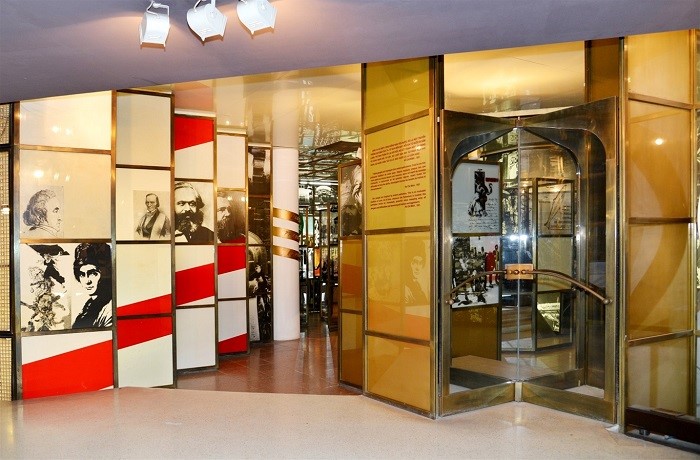
From the start, the museum has preserved and displayed a vast collection of documents, photos, and personal items. These exhibits trace Ho Chi Minh’s early life, his years abroad, and his leadership during Vietnam’s revolution. They also reflect key moments in the country’s 20th-century history.
The unique architecture of Ho Chi Minh museum Hanoi
The Ho Chi Minh museum Hanoi is famous not only for its collections but also for its striking architecture. The building was designed in the shape of a lotus flower, a symbol of purity and simplicity.
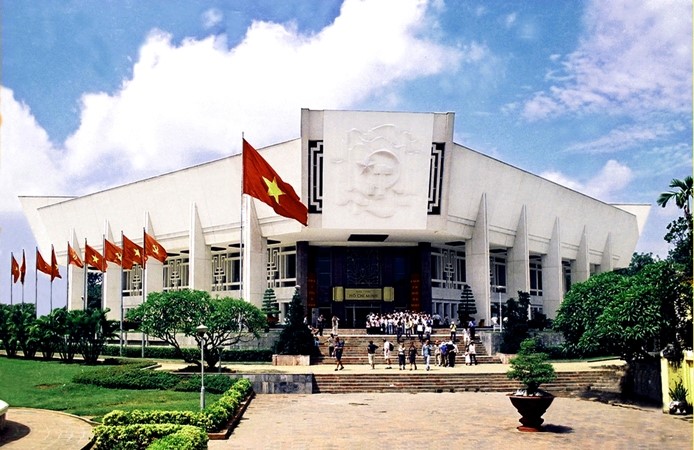
The unique architecture of Ho Chi Minh museum Hanoi
From the outside, its clean lines and solid structure give a sense of strength and stability. The white façade stands out in the heart of Ba Dinh District, attracting visitors from afar. One highlight is the grand entrance hall, which often impresses visitors with its scale and solemn atmosphere. Lighting, layout, and artworks are all chosen to create a sense of respect and reflection.
Inside, the space is wide and carefully organized. The museum covers an area of 18,000 square meters with four floors. Exhibition rooms are arranged in a way that guides visitors through different stages of Ho Chi Minh’s life and Vietnam’s history. The design combines traditional values with modern exhibition techniques, making the experience both educational and visually engaging.
A deep dive into the museum's exhibition halls
The Ho Chi Minh museum Hanoi is organized across three main exhibition floors, each with its own theme and highlights. Together, they guide visitors step by step through the life of Ho Chi Minh and the history of Vietnam in the 20th century.
1st floor: The revolutionary journey and life's work
Upon entering the main hall of the Ho Chi Minh Museum, you are greeted by an imposing yet approachable bronze statue of Uncle Ho. This first floor is dedicated to telling his life story through nine major themes, arranged chronologically to allow for a seamless and impactful narrative.
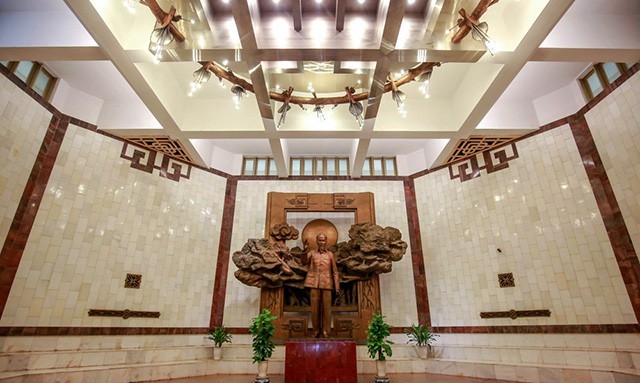
A deep dive into the museum's exhibition halls
Themes 1 & 2: You'll begin by exploring his early life in Nghe An province (1890 - 1910) and then follow his arduous journey abroad in search of a path to national salvation (1911 - 1920) aboard the ship Amiral Latouche-Tréville.
Themes 3, 4 & 5: This section covers his years of political activity and the founding of the Communist Party. You'll discover how his time in France exposed him to Marxist-Leninist ideals, leading to the formation of his revolutionary thoughts. Exhibits also highlight the challenges he faced, including his imprisonment in Hong Kong and Guangxi.
Themes 6, 7 & 8: These exhibits delve into the years of resistance and nation-building. They vividly recreate his life during the nine-year war in the mountainous regions of Northwest Vietnam (1945 - 1954), his diplomatic efforts, and his work in building a socialist North while fighting for the reunification of the South. A deeply moving display at the end of this section documents the final years of his life and his passing in 1969.
Theme 9: The Great Legacy. The final theme on this floor provides a powerful summary of his life's work and the ideological and moral heritage he left behind for future generations, affirming his immense stature in Vietnam and across the world.
2nd Floor: The leader of glorious victories
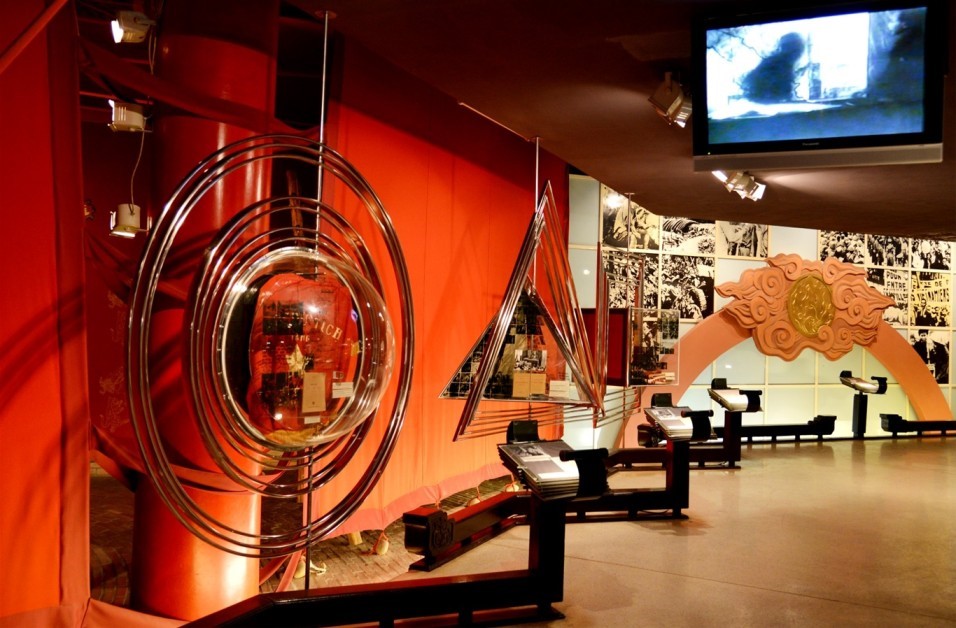
Continuing from the first floor, the second floor broadens the historical context, offering a deeper understanding of the era in which Uncle Ho lived and fought. This space is dedicated to showcasing the glorious victories of the Vietnamese people under his leadership, with a special focus on the historic Dien Bien Phu campaign.
The artifacts and documents on this floor not only focus on Vietnam but also model the global situation at the time. You will see how the Russian October Revolution impacted Vietnam’s revolutionary movement, as well as Ho Chi Minh’s role in the global revolutionary movement and Vietnam’s part in the Allied forces against Fascism. A separate section is also dedicated to showcasing Vietnam's achievements during the Doi Moi (Renovation) period.
A deep dive into the museum's exhibition halls
3rd Floor: A vaster historical canvas and profound ideology
The third floor of the Ho Chi Minh Museum offers a more macro-level perspective, focusing on the significant historical events of the 20th century across the region and the world. These global shifts had a profound impact on the ideology and actions of the young man, Nguyen Tat Thanh, as he evolved into the revered leader of his people.
By displaying international historical events, the third floor helps visitors understand that Ho Chi Minh's ideology was not formed in a vacuum. It was the result of a lifelong process of learning, researching, and distilling the essence of cultures and revolutionary movements from around the globe. This unique focus provides a comprehensive and insightful view into the intellectual depth of his legacy.
Ho Chi Minh Museum Hanoi: Rules and recommendations
Dress code: Given the museum's significance as a place of historical reverence, visitors are expected to dress respectfully. Shorts, tank tops, and short skirts are generally not permitted. It's best to wear long pants, dresses, or skirts that cover the knees, and shirts that cover the shoulders.
Photography: You are permitted to take photos in most areas, but flash photography is often prohibited to protect the artifacts. Some specific areas may also have restrictions on photography, so always look for signs.
Timing your visit: To avoid large crowds, especially tour groups, it's advisable to visit early in the morning right after opening or during the mid-afternoon. The weekends and public holidays tend to be the busiest.
Useful travel tips to Ho Chi Minh Museum Hanoi
The Ho Chi Minh museum Hanoi Vietnam is more than a cultural landmark - it is a place where history, memory, and inspiration come together. For both local and international travelers, the museum offers a deep understanding of Vietnam’s modern history and the values that shaped its people.
To make your visit to the Ho Chi Minh museum in Hanoi smooth and enjoyable, here are some essential tips:
- Plan your route: Combine your visit with nearby attractions such as the Ho Chi Minh Mausoleum, Presidential Palace, and One Pillar Pagoda for a complete cultural experience.
- Arrive early: The museum can get crowded, especially on weekends. Morning visits are usually quieter.
- Dress appropriately: Modest clothing is recommended, as the museum is part of an important historical complex.
- Bring water and snacks: Facilities inside are limited, so it’s better to prepare beforehand.
- Hire a guide: While English explanations are available, guided tours offer much richer context and stories.
- Check the schedule: Remember the museum is closed on Mondays and Fridays.
Useful travel tips to Ho Chi Minh Museum Hanoi
The Ho Chi Minh Museum is one of the must-visit attractions in Hanoi. With Sinhcafe guided tours, visitors can explore priceless artifacts, inspiring stories, and gain a unique perspective on Vietnam’s historical journey. Whether you are a history enthusiast, a student, or simply a curious traveler, just contact us via hotline 090 4488 850 or 024 3756 8868 - We promise to bring you an experience that is both educational and unforgettable. If you're planning to travel to China, you might find it useful to read this guide on whether Google is accessible in China and how to stay connected.
Share via




Related articles

Vung Tau port: Discover the bustling port life and exciting activities
Blog | 20/08/2025
Phát Diệm cathedral: Discover the Majestic Phat Diem Stone Cathedral in Ninh Binh
Blog | 30/12/2025
Nha Trang Cathedral: The Gothic Soul Anchored in the Heart of the Coastal Pearl
Blog | 30/12/2025

Vietnam’s Hidden Jungle Paradise Cuc Phuong National Park
Blog | 30/12/2025









There are no reviews yet