


Da Nang Food Guide: 4-Day Foodie’s Journey Through Da Nang & Hoi An
Discover the ultimate Da Nang food guide with this 4-day culinary journey through Da Nang and Hoi An. From fresh seafood and local street food to authentic Central Vietnamese specialties, this itinerary helps you experience the best flavors, markets, cafés, and hidden foodie gems in two of Vietnam's most beloved destinations.
Day 1: Exploring Da Nang's Street Food
Breakfast in the city center
Start your food journey in Hai Chau, Da Nang's culinary hub, with a bowl of Mi Quang costing around 25,000-45,000 VND. Popular spots like Mi Quang Ba Mua, Mi Quang Ba Vi, and Mi Quang 1A are known for chewy noodles, rich broth, and toppings such as shrimp, chicken, and pork.
Located just 5-10 minutes from Dragon Bridge and Han Market, these restaurants are convenient stops for exploring Da Nang's cuisine. Mi Quang's unique combination of yellow noodles, savory toppings, peanuts, and crispy rice crackers reflects the flavors of Central Vietnam.
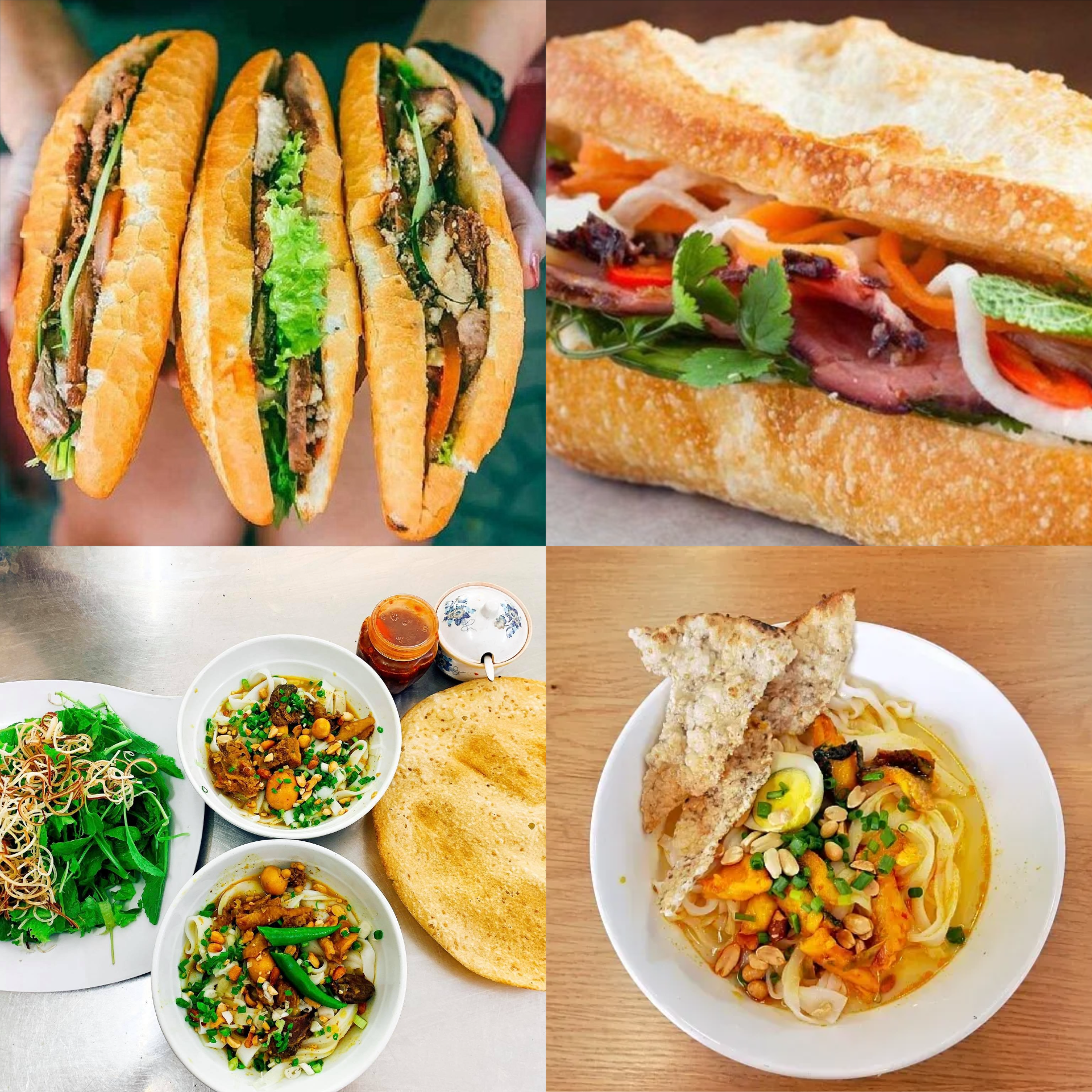 My Quang and Da Nang bread (Source: Da Nang Newspaper)
Right after that, you can try Da Nang bread for only about 15,000 - 30,000 VND/loaf. If you want to enjoy Da Nang's specialties right in the city center, you can visit famous banh mi and Quang noodle shops, which are both delicious and conveniently located.
- For banh mi, Banh mi Co Tien is popular for its crispy crust, fragrant pate, and generous fillings
- Banh mi Ba Lan is famous for its flavorful mixed banh mi
- while Banh mi Trung Luong is a familiar place to enjoy banh mi with beef sausage and roasted pork.
Compared to Saigon-style banh mi, which is often filled with rich sauces and fillings, banh mi in Da Nang is simpler, with less sauce, focusing on the crispness of the bread and the distinct flavors of grilled meat and pate. This "simplicity" allows diners to appreciate each ingredient more clearly.
Han Market and Con Market
After breakfast, it only takes about 5-10 minutes to travel from the city center to reach. Han Market and Con Market- These are two of Da Nang's most famous markets for those who love street food. The prices of dishes here are quite affordable, ranging from only 10,000 to 40,000 VND, making it perfect to enjoy many dishes in one sitting.
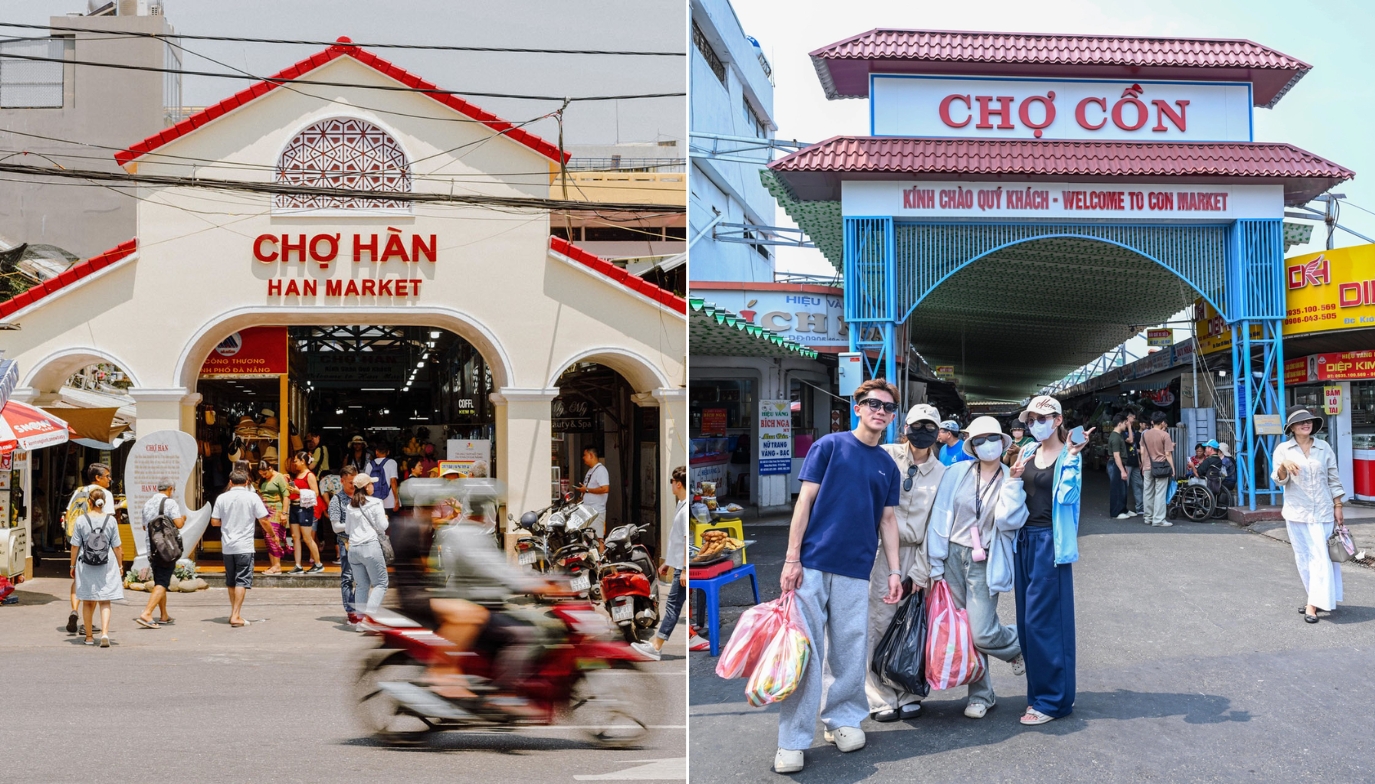 Tourists experience the food and shopping at Han Market and Con Market (Source: Collected)
Here, visitors can enjoy Central Vietnamese specialties such as banh beo, banh nam, banh bot loc, nem lui, and sweet soups. Known for soft textures, flavorful fillings, and spicy fish sauce, these dishes showcase the bold and balanced flavors of Da Nang cuisine.
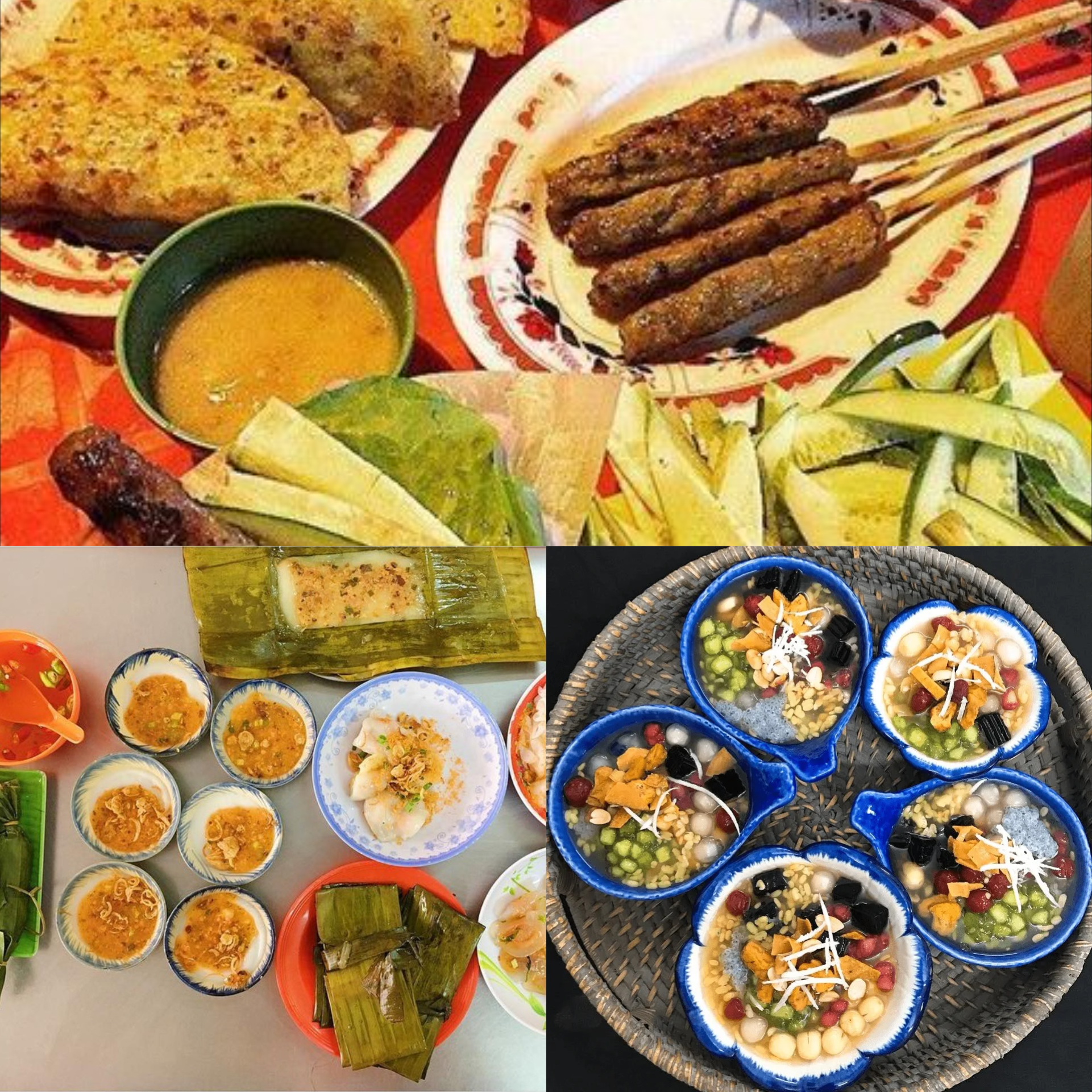 Traditional dishes you should try when visiting Da Nang (Source: Dan Tri)
Besides enjoying the food, strolling through the markets is also an opportunity for tourists to observe the daily life of the locals, buy specialties or souvenirs at reasonable prices.
Evening at My Khe Beach
In the evening, head to My Khe Beach, just 10-15 minutes from the city center, where many beachfront restaurants serve fresh seafood at reasonable prices. Seafood in Da Nang is prized for its freshness, with shrimp, crab, squid, and shellfish prepared using simple methods such as steaming or grilling to preserve their natural flavors. Along Vo Nguyen Giap Street, visitors can enjoy quality seafood while overlooking the beach.
- Among them, My Hanh Seafood is one of the oldest and most highly regarded restaurants, known for its diverse menu and ocean views.
- Muoi Bien Seafood Restaurant attracts visitors with its lobster, crab, and oyster dishes prepared fresh from the tank.
- For those who want to enjoy seafood in a lively atmosphere, Be Man Seafood is also a popular destination for both locals and tourists.
All three restaurants are only about 5-10 minutes from the city center and are very convenient for combining a meal after enjoying My Khe beach. Compared to places like Nha Trang or Phu Quoc, Da Nang's seafood isn't elaborate in terms of sauces; instead, it focuses on the "original flavor," combined with the open sea, cool breeze, and streetlights to create a very comfortable, down-to-earth yet touristy atmosphere.
 Da Nang Seafood - A Harmony of Sea Flavors (Source: Dan Viet)
Enjoying dinner in an open-air setting, listening to the sound of the waves and feeling the cool breeze from My Khe Beach will be an unforgettable experience. The vibrant yet relaxing atmosphere makes this the perfect place to end your first day exploring Da Nang's culinary scene.
Day 2: Discover the distinctive flavors of Da Nang cuisine
Banh xeo (Vietnamese savory pancake) and Nem lui (grilled pork skewers) - The culinary essence of Central Vietnam
The second day is the ideal time to explore the distinctive cuisine of Central Vietnam, with banh xeo (Vietnamese savory pancake) and nem lui (grilled pork skewers) always on the list of favorites for both locals and tourists. A full serving usually costs from 40,000 - 90,000 VND. Enough for a delicious lunch or dinner at a very reasonable price.
If you want to enjoy authentic Da Nang-style banh xeo (Vietnamese savory pancake) and nem lui (grilled pork skewers), you can visit several famous restaurants in the city center.
- First is Banh Xeo Ba Duong , a long-standing restaurant famous for its crispy banh xeo, fragrant grilled nem lui, and signature dipping sauce.
- Another option is Banh Xeo Nem Lui Ba Ngoc, operating since 1977 and loved by many locals for its traditional flavors.
- If you're near My Khe beach, Hong Banh Xeo - Nem Lui is also a worthwhile stop, offering golden crispy banh xeo, flavorful nem lui, and reasonable prices. These are all well-known and convenient places to combine with your Da Nang culinary exploration.
Unlike Southern-style banh xeo (Vietnamese savory pancake), Da Nang's version is smaller, crispier, and filled with shrimp, pork, and bean sprouts. Its light, crunchy texture makes it a favorite local specialty. The pancakes are wrapped with fresh herbs and rice paper, then dipped in a flavorful fish sauce or peanut sauce, creating a fresh and well-balanced taste.
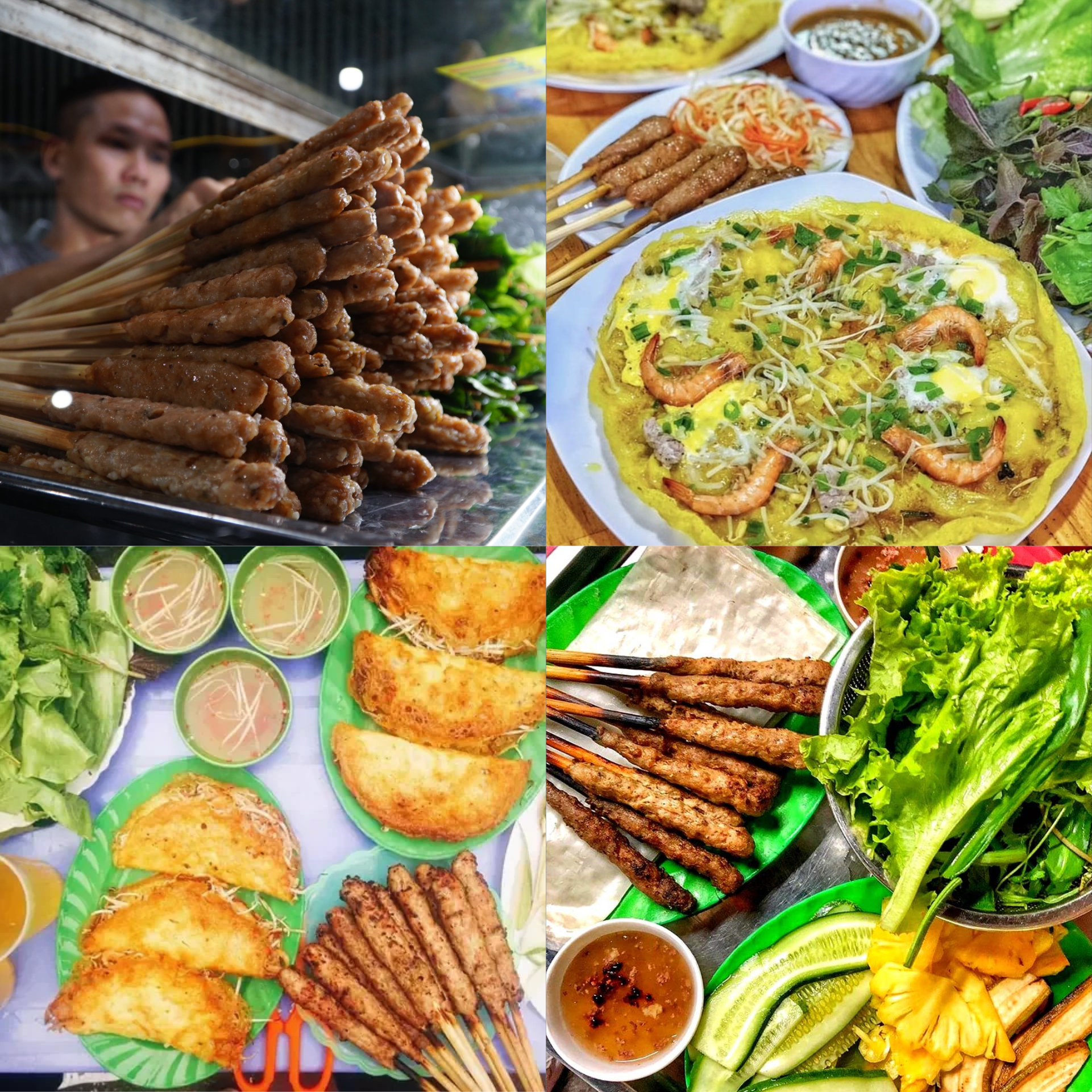 Da Nang's Banh Xeo and Nem Lui - an unforgettable culinary experience (Source: Collected)
Da Nang's banh xeo (Vietnamese savory pancake) is smaller and crispier than the Southern version, filled with shrimp and pork, and served with fresh herbs and flavorful dipping sauce. A perfect pairing is nem lui (grilled pork skewers), charcoal-grilled pork skewers wrapped with rice paper, fresh vegetables, and peanut sauce, offering a smoky and well-balanced Central Vietnamese flavor.
Experience Vietnamese coffee culture
After lunch, take some time to relax at a local cafe and experience the city's slow pace of life. Drink prices in Da Nang are quite reasonable, only around 25,000 - 60,000 VND for a quality cup of coffee. Vietnamese coffee is renowned for its stronger and bolder flavor compared to Western-style coffee.
The beans are roasted thoroughly and brewed using a traditional filter, allowing each drop to fall slowly, resulting in a cup of coffee with a distinct bitterness, a rich aroma, and a long-lasting aftertaste. This is why many international visitors consider Vietnamese coffee to be one of the most impressively flavored coffees in Asia.
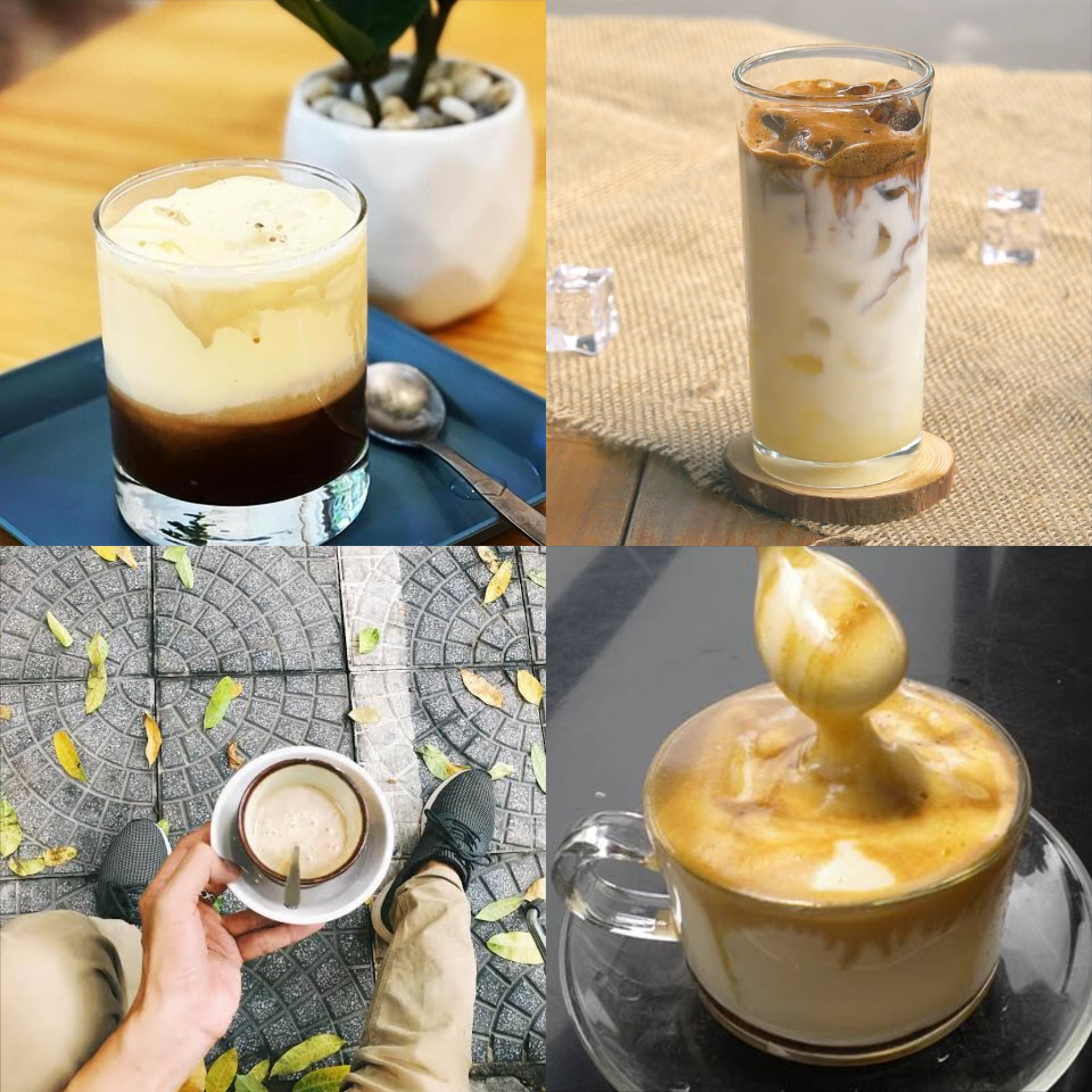 From egg coffee to coconut coffee: Discover the unique coffee culture in Vietnam (Source: Ho Chi Minh City Travel Magazine)
For a unique taste, try egg coffee with its creamy custard layer or refreshing coconut coffee blended with ice and coconut milk. Cafes like Reply 1988 Café and Cong Ca Phe, located 5-10 minutes from Dragon Bridge and Han River, are ideal places to enjoy these drinks. Beyond the flavor, Da Nang's coffee culture is about slowing down-chatting with friends, relaxing, and watching the rhythm of local life.
Evening Food Tour - Discover Da Nang Street by Street
As the city lights up, Da Nang becomes more vibrant with a plethora of street food stalls, night markets, and bustling food streets. This is the ideal time to participate in a food tour, where you can enjoy a variety of dishes at prices starting from 20,000 - 60,000 VND per dish.
A popular Da Nang street food is oc hut (Vietnamese spicy snails), stir-fried with lemongrass, chili, and aromatic herbs for a fragrant, spicy flavor. For an authentic experience, visit Oc Hut Hanh, located just 5-10 minutes from the Han River, making it a convenient evening stop. Rice paper rolls with pork are another Da Nang specialty, featuring tender boiled pork, fresh herbs, and rice paper served with rich fermented fish sauce. For an authentic taste, visit Banh Trang Cuon Thit Heo Ba Huong, about 10 minutes from Da Nang city center.
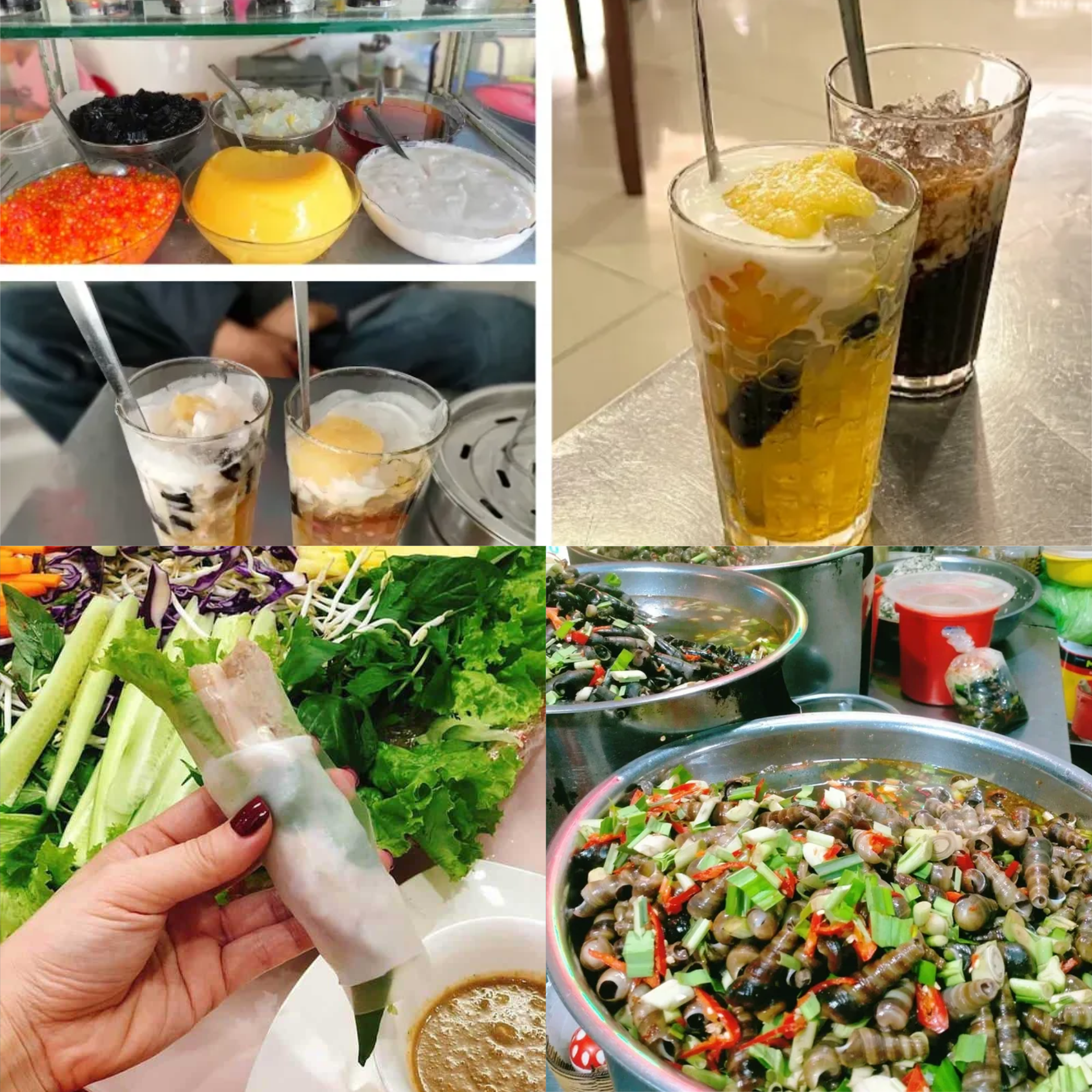 Enjoy suction snails, Pork spring rolls and traditional sweet soup in Da Nang (Source: Collected)
End your food journey at Che Lien, where you can enjoy Vietnamese desserts such as che bap, mung bean sweet soup, and che thap cam. Located just 5-10 minutes from Han Market and Dragon Bridge, it is a convenient stop to refresh after exploring Da Nang. The charm of Da Nang cuisine lies in its fresh ingredients, balanced flavors, and simple cooking style that reflects the warmth of Central Vietnamese culture.
Day 3: The culinary delights of Hoi An
The final day of the trip will take you from the coastal city of Da Nang to Hoi An - a World Heritage Site. The world is famous for its ancient beauty and cuisine that reflects the fusion of many cultures. From the center of Da Nang to the ancient town of Hoi An is only about 30 km, travel time from 40-50 minutesby car or motorbike. The cost of a taxi or ride-hailing service usually ranges from 100,000 - 300,000 VND/trip. While buses or shuttle buses would be more economical if you want to optimize your budget.
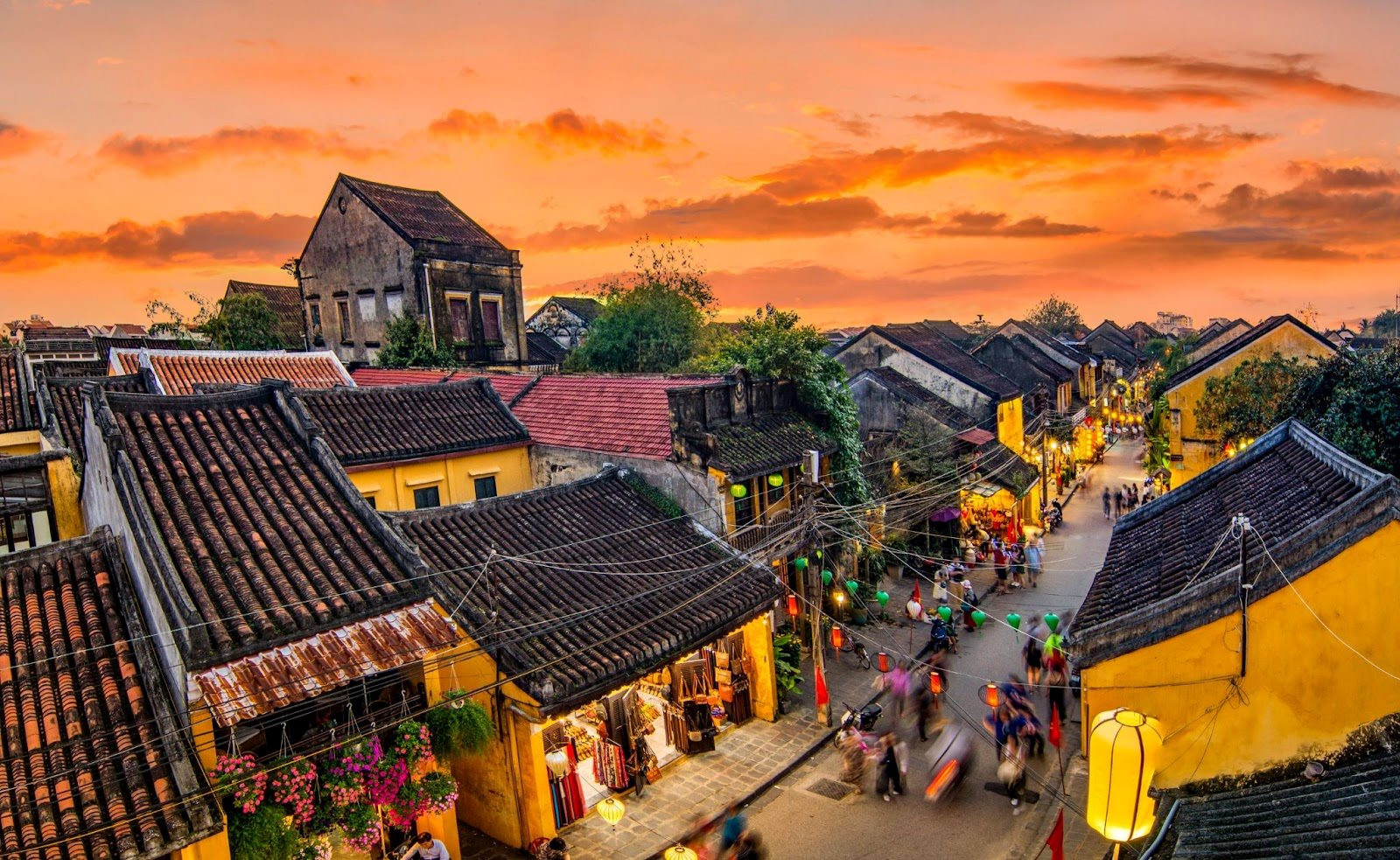 Hoi An Ancient Town - A UNESCO World Heritage Site (Source: Hanoi People)
The coastal road connecting Da Nang with Hoi An is also one of the most beautiful routes in Central Vietnam. Along the way, tourists can admire My Khe Beach, Non Nuoc Beach, and the high-end resorts stretching along the coast, offering a relaxing feeling before entering the peaceful atmosphere of the ancient town.
Enjoy the dishes that have made Hoi An famous
Hoi An cuisine is known for its simple yet refined flavors, with most dishes costing around 30,000–70,000 VND. A must-try is Cao Lau, featuring chewy yellow noodles, char siu pork, fresh herbs, crispy pork cracklings, and rich sauce. Popular spots like Cao Lau Ba Le and Cao Lau Thanh offer authentic bowls for around 30,000–50,000 VND.
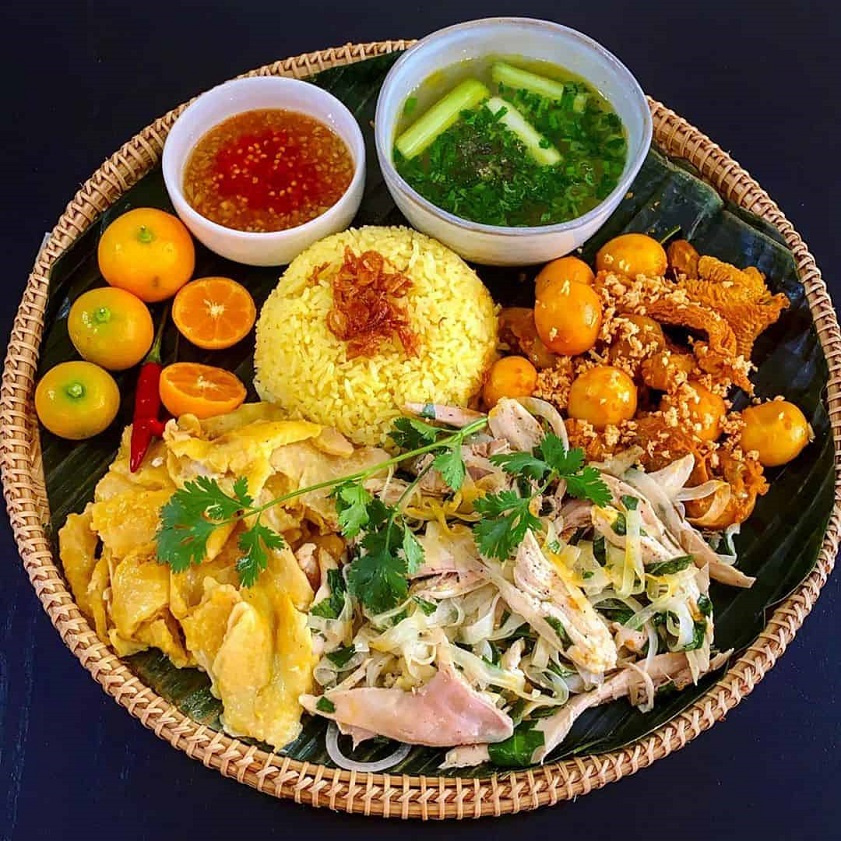
Another local favorite is Hoi An chicken rice, made with turmeric-infused rice, tender shredded chicken, herbs, and a light sweet-sour dressing. Com Ga Ba Buoi, near Hoi An Ancient Town, is a popular choice with prices around 35,000–60,000 VND per serving.
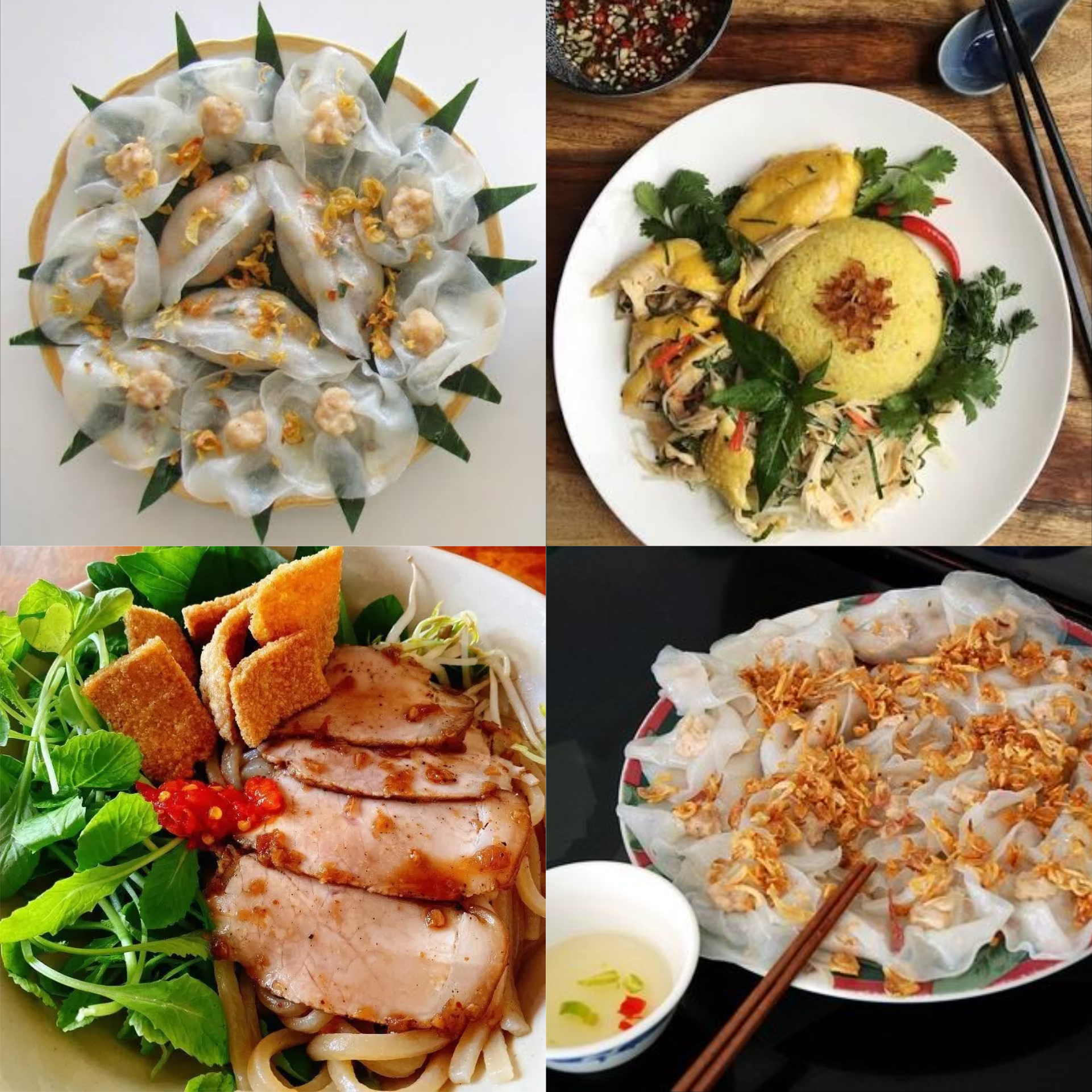 Cao Lau, Hoi An chicken rice, Banh Vac - local dishes Must-see when visiting Hoi An (Source: Thanh Nien Newspaper)
White Rose Dumplings (banh bao – banh vac) are a Hoi An specialty made with translucent rice wrappers filled with shrimp or pork, topped with crispy fried shallots and served with a light dipping sauce. Try them at White Rose Restaurant, just 5–10 minutes from Hoi An Ancient Town, for around 40,000–70,000 VND per plate.
Dinner amidst the atmosphere of Hoi An's old town
As evening falls, Hoi An Ancient Town glows with colorful lanterns along the streets and Hoai River, creating a romantic atmosphere. Visitors can enjoy dinner at local restaurants with prices around 100,000-300,000 VND per person. Compared with Da Nang's bold flavors, Hoi An cuisine is more delicate and balanced, focusing on fresh ingredients and light seasoning that allows diners to enjoy a variety of dishes.
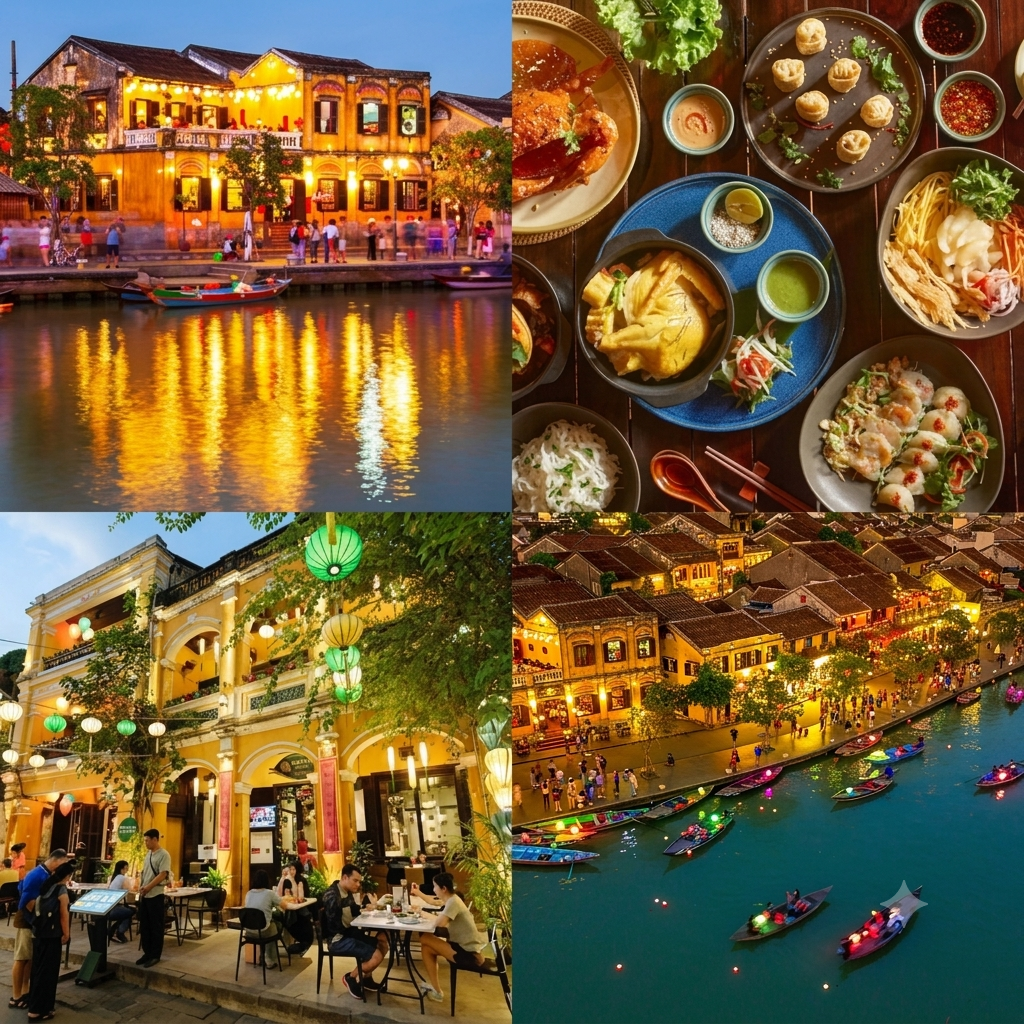 Tourists have dinner in Hoi An at night (Source: Colleted)
What makes dinner in Hoi An truly memorable is not only the food but also the enchanting atmosphere of the Ancient Town. Restaurants such as Morning Glory Signature and HOME Hoi An Restaurant are set among charming old streets, allowing diners to enjoy authentic local cuisine while overlooking lantern-lit alleys and the peaceful Hoai River. As you savor your meal, the glow of colorful lanterns, the gentle sound of rowing boats, and the slow rhythm of Hoi An create a dining experience that is as much about culture as it is about food.
Day 4: Experience cooking and explore the culinary culture of Central Vietnam
Join a traditional cooking class
After exploring Da Nang and Hoi An's cuisine, the final day offers a chance to join a cooking class and discover the secrets behind Vietnamese dishes. Classes usually cost 400,000-900,000 VND/person, including market visits, ingredient selection, and hands-on cooking. The experience often starts at a local market, where visitors learn about fresh ingredients, traditional shopping habits, and the role of seasonal produce in Vietnamese cuisine.
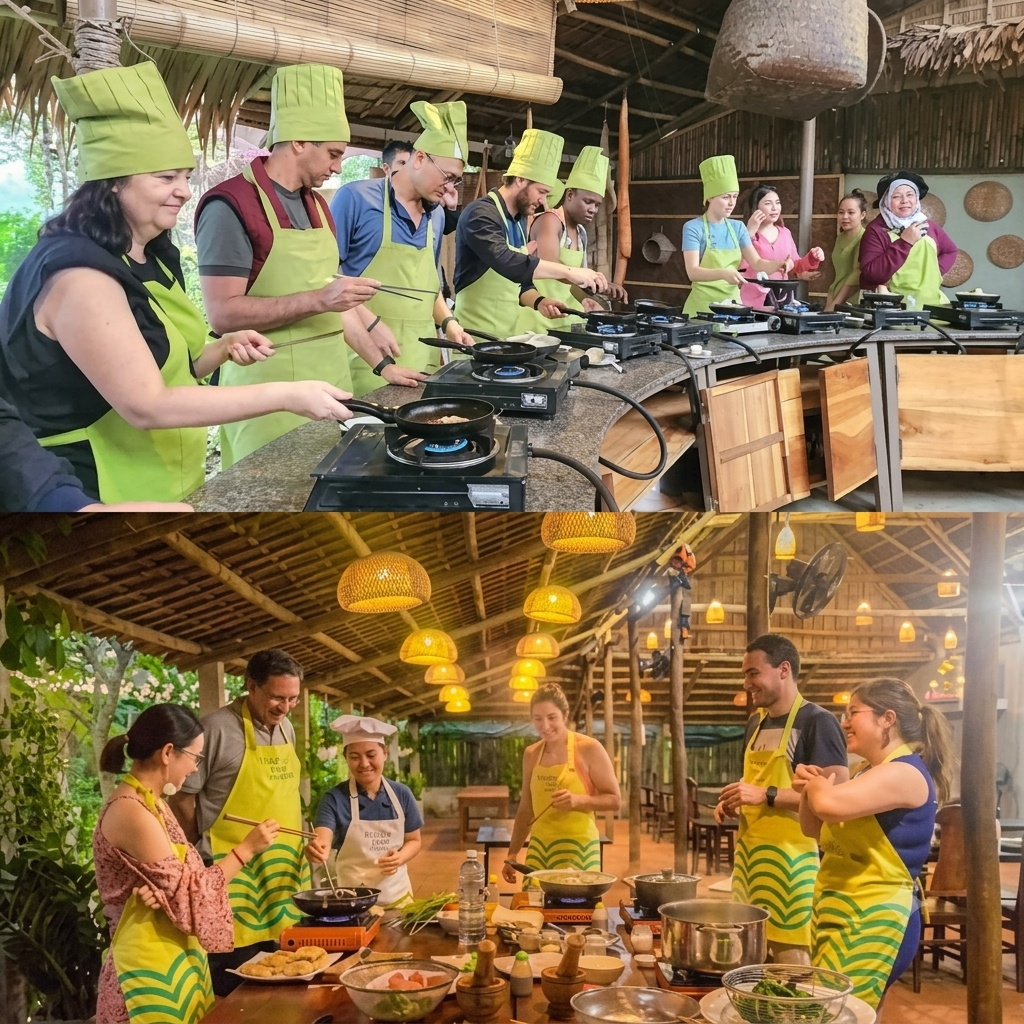 Tourists participate in a cooking class. tradition (Source: Vietnam National Tourism Administration)
Visitors can learn to prepare Vietnamese specialties such as spring rolls, banh xeo (Vietnamese savory pancake), cao lau (a type of noodle dish), and nem cuon (Vietnamese steamed rice rolls) while discovering the balance of salty, sweet, sour, and spicy flavors. More than a cooking lesson, the class offers insight into the use of fresh ingredients, herbs, and dipping sauces that define Vietnamese cuisine.
Discover Tra Que vegetable village
After the cooking class, many tours will take visitors to Tra Que vegetable village, an agricultural village with a history of over 400 years and considered the most famous source of aromatic herbs in Hoi An. If you join a tour, the entrance fee is usually included; if you go independently, the entrance fee is only about 50,000 - 100,000 VND/person.
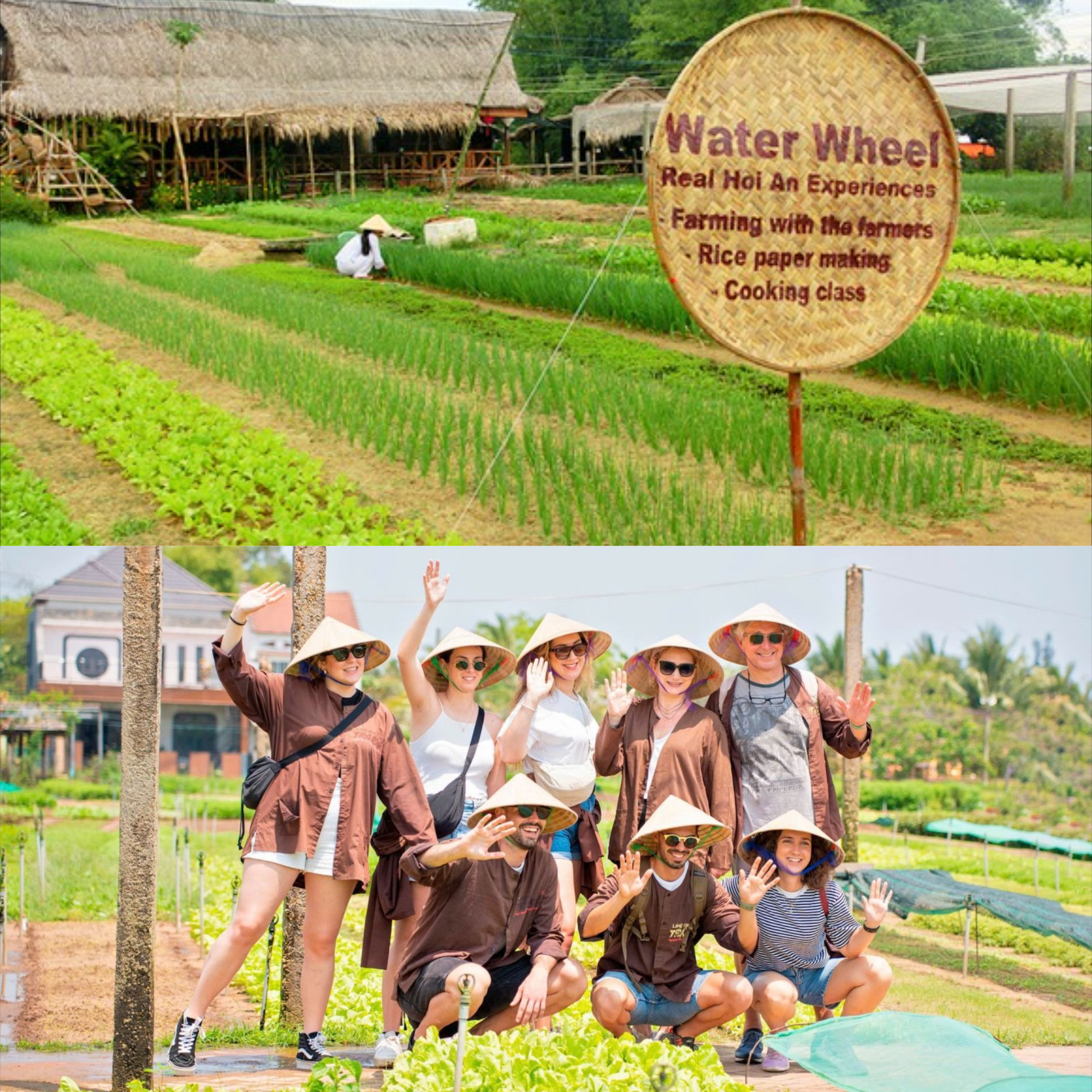 Tourists visiting Tra Que vegetable village (Source: Da Nang City Electronic Information Portal)
Tra Que Village is famous for its fresh organic herbs grown with traditional farming methods using seaweed and natural fertilizer. Visitors can explore the farms, join local activities like planting and harvesting, and discover why herbs are an essential part of Vietnamese cuisine.
Dinner concludes our culinary journey through Central Vietnam
The final dinner, with a budget of 150,000–400,000 VND/person, is a chance to enjoy favorite dishes and end the journey in a relaxing atmosphere. After four days, travelers can experience the contrast between Da Nang's vibrant flavors and Hoi An's refined cuisine, while discovering the culture and lifestyle of Central Vietnam through food.
Emily, a tourist from Australia, shared: " After four days exploring Da Nang and Hoi An, what I remember most isn't just the delicious food, but also the feeling that everything unfolded so effortlessly. I didn't have to spend time searching for good restaurants, planning itineraries, or calculating routes between destinations.
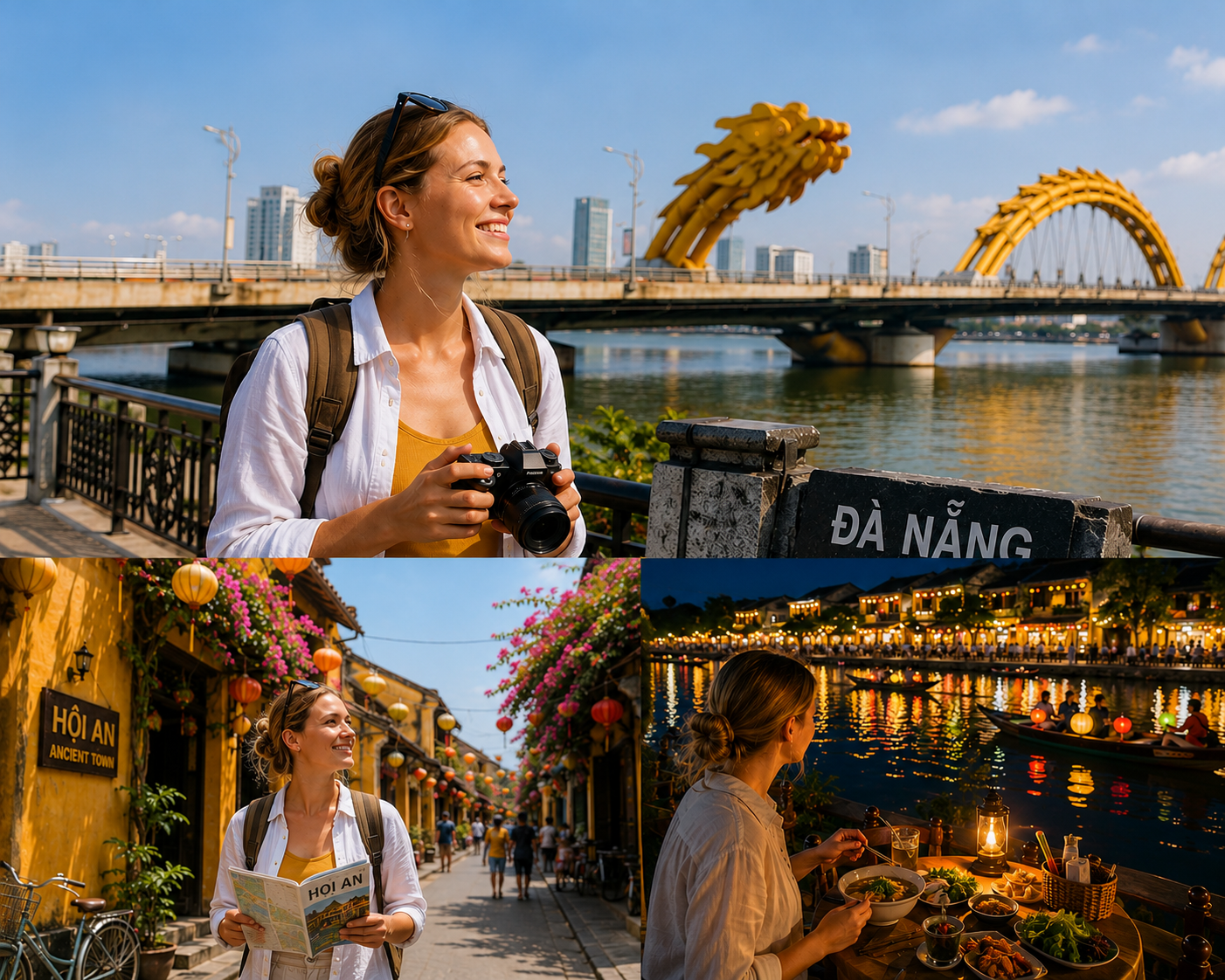 Emily, an Australian tourist visiting Da Nang (Source: Colleted)
Each day was well-organized, from enjoying street food in Da Nang, experiencing coastal seafood, discovering famous Hoi An specialties, to participating in a cooking class and visiting Tra Que vegetable village. Thanks to this, I had more time to savor each dish, chat with locals, and truly appreciate the differences in culinary culture of each place. If you also want a relaxing trip like this, I think itineraries designed by are a great option SinhCafe. It's a worthwhile option to consider. Everything is meticulously prepared, so all you need to do is simply enjoy the trip and bring back many memorable experiences."
Cost for a 4-day culinary journey
A 4-day trip to Da Nang and Hoi An isn't just about food; it also includes transportation, cultural experiences, and leisurely sightseeing. Therefore, the cost can vary depending on your chosen experience, from budget-friendly to luxurious.
|
Category |
Reference cost |
|
Eating and drinking every day |
300,000 - 800,000 VND/person/day |
|
Traveling from Da Nang to Hoi An |
100,000 - 300,000 VND/visit |
|
Cooking class |
400,000 - 900,000 VND/person |
|
Sightseeing (market, vegetable village, small entrance fee) |
50,000 - 150,000 VND |
|
Accommodation |
600,000 - 1,500,000 VND/night |
Overall, this is a relatively affordable trip compared to many other coastal destinations in the region, especially since you can enjoy delicious food, experience the culture, and explore many destinations within a short travel distance.
Local Tips for a More Authentic Food Experience
-
Choose local-favorite restaurants: Small eateries crowded with locals often offer more authentic flavors, traditional recipes, and reasonable prices.
-
Carry cash for small vendors: Markets, street food stalls, and local shops may prefer cash payments, so keep small notes available for convenience.
-
Try local dipping sauces: Central Vietnamese cuisine is defined by its flavorful sauces, from fermented fish sauce to sweet-sour and peanut sauces that enhance each dish.
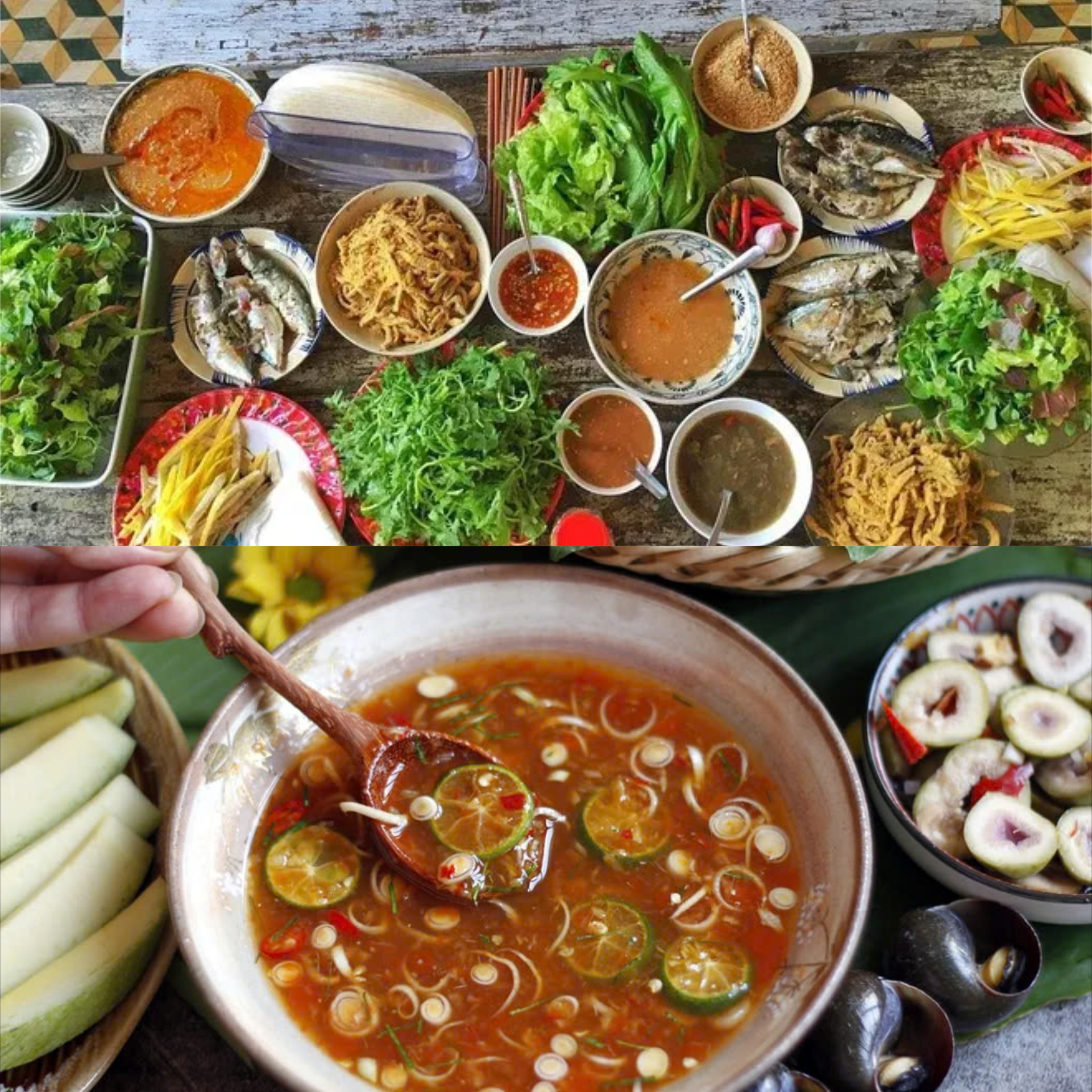 Various local dipping sauces in Da Nang (Source: Dan Tri)
-
Explore food at different times: Morning markets offer fresh ingredients and local breakfasts, while evenings are ideal for street food, seafood, and lively dining experiences.
-
Learn basic Vietnamese phrases: Simple phrases like “not spicy,” “more vegetables,” or “how much?” can make ordering food easier and create a friendlier connection with locals.
-
Book cooking classes early: Hoi An cooking classes are popular during peak seasons, so advance booking helps secure your spot and enjoy a more complete experience.
Frequently Asked Questions (FAQ)
How much money do I need for a 4-day food trip in Da Nang and Hoi An?
-> Typically, the budget is around 4-6 million VND/person (Excluding airfare) is enough to cover food, transportation, accommodation, and some experiences like cooking classes.
What is the best time of year to explore the culinary delights of Da Nang and Hoi An?
-> From February to August. It's the ideal time thanks to the dry weather, making it convenient to explore local markets, the old town, and outdoor food stalls.
Should I take a cooking class in Hoi An?
-> Yes. This is an opportunity to learn how to prepare traditional dishes, select local ingredients, and gain a deeper understanding of Vietnamese culinary culture.
Is it easy to find vegetarian dishes or dishes suitable for people on a diet?
-> Yes. Both Da Nang and Hoi An have many restaurants serving vegetarian, vegan, and gluten-free or seafood-friendly options.
Should you explore on your own or should you book a food tour?
-> You can certainly explore on your own. However, if you want to save time and experience many local specialties at reputable locations, a food tour or pre-planned itinerary will be more convenient.
Which has more appealing cuisine: Da Nang or Hoi An?
-> Each place has its own unique characteristics. Da Nang stands out with its fresh seafood and flavorful dishes, while Hoi An impresses with its light and delicate traditional cuisine and culturally rich dining atmosphere.
After a four-day journey exploring the culinary delights of Da Nang and Hoi An, from simple street food stalls to authentic local specialties, it's clear that every experience becomes easier and more fulfilling when the itinerary is well-planned. If you want to enjoy such a trip without worrying too much about planning, transportation, or choosing places to eat, pre-designed itineraries are available SinhCafe. It would be a worthwhile option to make the trip more relaxing and enriching.
Share via




Related articles
Escape Australian Winter: 5-Day Vietnam Beach Itinerary (June-August)
Posts | 20/06/2026
Distance and travel overview from Hoi An to Nha Trang
Posts | 26/04/2026
What is Halal food ? Top 5 delicious Halal food in Da Nang for travelers
Posts | 02/07/2026
Best Beaches in Central Vietnam: Da Nang, Hoi An & Quy Nhon Compared
Posts | 02/07/2026









There are no reviews yet