


Ben Tre museum: History, exhibits, and visitor guide to the coconut land
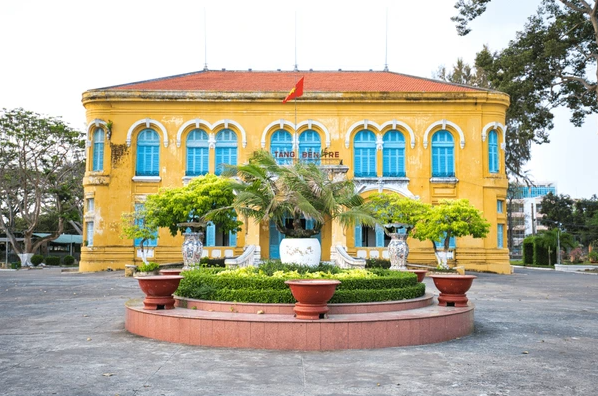
Welcome to Ben Tre, the legendary Coconut Land! Beyond its lush waterways lies a heroic witness to history: the Ben Tre museum. Discover the resilient Dong Khoi spirit, the secrets of Colonel Pham Ngoc Thao, and the unique Coconut House. Start your journey back in time to touch the brave heart of the Mekong Delta today!
Introduction to Ben Tre Museum
Beyond its lush orchards and meandering waterways lies a silent yet powerful witness to Vietnam’s most defining struggles: the Ben Tre museum. This isn't just a building housing old relics; it is a meticulously preserved National Relic that stands as a fortress of memory.
Where is Ben Tre museum located?
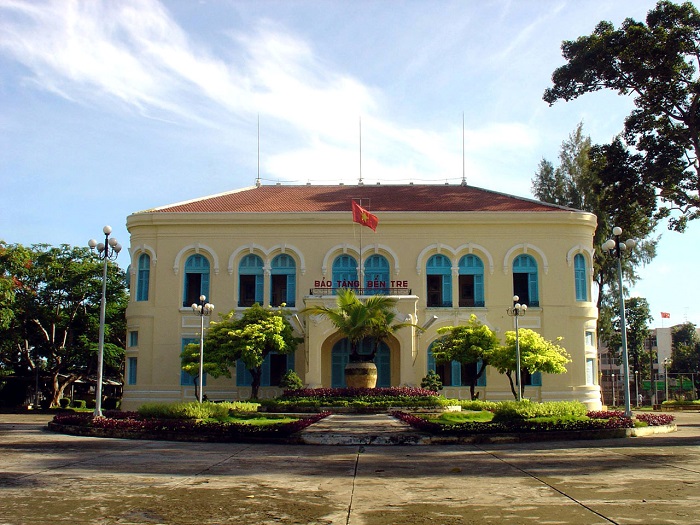
The Ben Tre Provincial Museum commands a prime location in the city, making it easy to find and visit. Its full address is 146 Hung Vuong Street, An Hoi Ward, Ben Tre City. This central positioning immediately hints at the building's historical importance, as it occupies some of the most sought-after real estate in the city since the colonial era.
The museum’s setting is particularly beautiful and symbolic of Ben Tre itself. The main facade faces the gentle Ben Tre River, offering a serene and picturesque view. This placement, surrounded by cool, mature trees and carefully maintained flower beds, creates a unique atmosphere - a quiet oasis nestled conveniently near the dynamic energy of the modern city center. It’s an ideal starting point for your exploration of the province's history before diving into its famous natural attractions.
Introduction to Ben Tre Museum
Ben Tre museum opening hours and fees
To ensure a smooth visit, note the operating schedule and admission details. The museum maintains consistent hours, accommodating most travelers' schedules.
Operating hours: The museum is open daily from 7:00 AM to 5:00 PM. This extensive window allows for flexible planning, though many experienced travelers recommend visiting during the cooler early morning or late afternoon hours.
Entrance fees (Use the latest confirmed rates):
- Adults: 50,000 VND ($1.90) per person.
- Children (above 1.2m in height): 20,000 VND ($0.76) per person.
- Children (under 1.2m in height): Free admission.
The modest entrance fee offers incredible value, granting access to a wealth of historical and cultural knowledge that defines this crucial region of the Mekong Delta.
Getting to the museum from Ben Tre city center
Reaching the museum is straightforward due to its central location on one of Ben Tre City’s main thoroughfares.
If you are starting from the absolute center of Ben Tre City, simply follow the well-known 30 Thang 4 Street until its end, then turn right onto Hung Vuong Street. The museum, prominently situated at address 146, will be immediately recognizable by its colonial architecture and expansive grounds. Transportation options:
- Taxi or Ride-Share: This is the most hassle-free option, especially if you are traveling with a group or during the hot midday.
- Motorbike: For travelers who have rented a motorbike, the route is easy, and parking is available within the museum grounds.
- Cycling: Given Ben Tre's flat topography and relatively calm city traffic compared to larger urban centers, cycling is a pleasant way to reach the museum, allowing you to absorb the local atmosphere along the way.
Getting to the museum from Ben Tre city center
The museum is remarkably accessible, with the rear of its expansive grounds bordering Cach Mang Thang Tam Street, ensuring connection to the city's major road network. Its proximity to the Ben Tre River pier (less than 200 meters away) makes it a perfect stop before or after a river cruise.
Exploring the historical core: The main building and its significance
The history housed within the primary French colonial structure is the true centerpiece of the visit.
The architecture and original function
The main museum building is a relic in its own right, predating the exhibits it contains. Its elegant structure tells a complex story of power, administration, and eventual revolution.
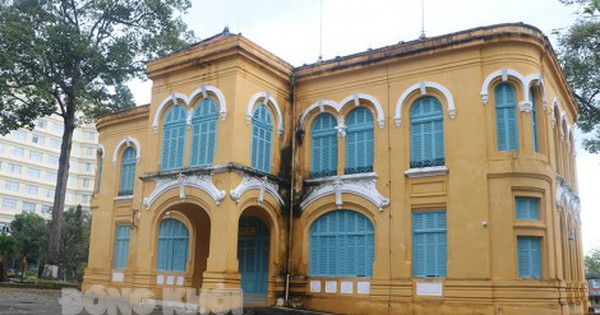
Constructed in the early 20th century, the building was originally commissioned by the French colonial administration as the "Dinh Tham Bien" - the official residence and office of the provincial governor (or Résident Supérieur). This purpose was strategically driven by the building’s location: it sits on a spacious plot with four faces and three major street frontages (Hung Vuong, Le Dai Hanh, and Cach Mang Thang Tam), allowing for maximum visibility and control over the surrounding area.
The architectural style is distinctively Classical French Colonial. It features solid, imposing walls, typically utilizing a meticulous two-layer brick construction designed to keep the interiors cool in the tropical heat. The structure is characterized by its one ground floor and one upper floor, featuring elegant arched windows and high ceilings.
Visitors will notice ornate details, such as carvings of mythological animals, florals, and fruits adorning the facade and window lintels. This imposing, sophisticated Western design stood in stark contrast to the surrounding traditional Vietnamese homes, symbolizing the authority of the colonial regime.
Exploring the historical core: The main building and its significance
The revolutionary tradition exhibits
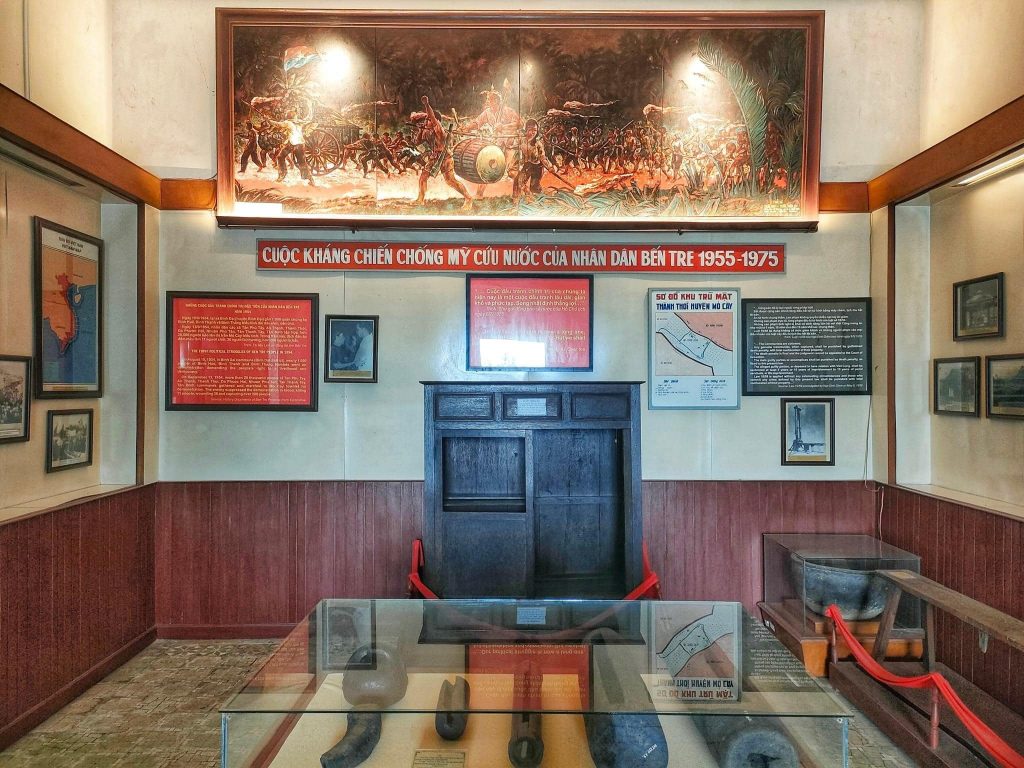
The interior of the main building, across its two floors, is divided into six major exhibition rooms that guide the visitor chronologically through the province's turbulent history. The overarching theme is the unyielding spirit of the Ben Tre people during the struggle for independence.
The exhibits vividly portray the key periods of conflict, focusing heavily on the two resistance wars - against the French colonialists and the American intervention. These rooms are filled with powerful displays: original uniforms, meticulously restored weaponry , and detailed photographs that capture the grim realities of jungle warfare and urban uprisings.
A central narrative thread is the Dong Khoi Movement (General Uprising) of 1960. Ben Tre was the crucible of this movement, which fundamentally shifted the balance of power in the Mekong Delta, demonstrating the revolutionary potential of the rural masses. Exhibits here include detailed maps showing the coordinated efforts, personal testimonies, and artifacts used by the female soldiers and citizens who spearheaded this pivotal moment in Vietnamese history. The museum successfully conveys the profound impact of this local uprising on the national strategy.
The story of colonel Pham Ngoc Thao
One of the most compelling and dramatic narratives within the museum revolves around the life and operations of Colonel Pham Ngoc Thao. The very room where he worked and lived is preserved, offering a unique glimpse into the life of a master spy.
From 1960 to 1962, Pham Ngoc Thao operated from this building with the astonishing title of Chief of Province of Kien Hoa (the former name of Ben Tre province) under the South Vietnamese regime. What his contemporaries didn't know was that Thao was a dedicated strategic intelligence officer for the North. He used his high position as the ultimate cover to gather intelligence and, more importantly, to actively sabotage the enemy’s efforts.
In his short year and a half in office, he utilized his authority to strategically free and place over 2,000 revolutionary cadres and political prisoners. He released them back into the revolutionary network, thereby strengthening the resistance movement at a crucial time. He orchestrated political unrest and military chaos from the inside, demonstrating an almost unparalleled level of courage and commitment.
The exhibits detail his complex background, his service history, and the eventual discovery and tragic end to his mission.
The unique outdoor and cultural exhibits
The museum's grounds extend far beyond the main colonial structure, offering diverse exhibits that celebrate both Ben Tre's rugged history and its gentle, unique culture.
The coconut house (Nhà Dừa)
A short stroll from the main building leads you to one of the museum's most photogenic and culturally rich installations: the Nhà Dừa (Coconut House).
The house is a faithful reconstruction of a traditional Southern Vietnamese three-compartment peasant home, known as the nhà chữ Đinh. What makes it truly extraordinary is that the entire structure - from the columns and rafters to the walls and decorative carvings. It is crafted entirely from the wood of the coconut tree. The craftsmanship on display is exquisite, showing how the hard, fibrous coconut trunk and roots are transformed into durable building materials.
It stands as a peaceful sanctuary, providing a genuine sense of the local environment and the historical simplicity of Ben Tre life. Visitors often note the cool, airy atmosphere within the house, which contrasts with the heavy stone of the main building.
Moreover, the Coconut House acts as a living cultural venue. On the 30th night of every lunar month, the house hosts performances of "Đờn ca tài tử"- the Southern Vietnamese traditional chamber music recognized by UNESCO as Intangible Cultural Heritage. It offers an authentic, emotional immersion into the romantic soul of the Mekong Delta, surrounded by the very material that defines the region.
Outdoor exhibition area
The War Relics display features impressive, large-scale military hardware collected during the resistance wars. Visitors can walk among plane wreckage, heavy artillery pieces, and enormous bomb casings - the stark, metallic evidence of a devastating past.
Adjacent to these somber monuments are the deliberately placed Scenic Spots (Check-in locations). These include carefully manicured rice fields, tranquil lotus ponds, a traditional coconut bridge (cầu dừa), and even a charming water buffalo statue. These scenes offer a moment of reflection and a beautiful backdrop for photography, highlighting the peace that the war relics fought to secure. The juxtaposition of the war equipment and the peaceful countryside is a powerful reminder of Ben Tre’s triumphant return to tranquility.
Socio-economic achievements building
The journey through the museum continues into the dedicated Socio-Economic Achievements Building
This exhibit focuses entirely on the period since the reunification of Vietnam on April 30, 1975. It uses detailed photography, documents, and samples of local industry to illustrate the impressive progress Ben Tre province has made. Visitors can see the evolution of the province’s key sectors, particularly its famed coconut industry, from simple production methods to modern processing techniques.
The unique outdoor and cultural exhibits
The content provides a comprehensive overview of the province’s transformation, covering advancements in infrastructure, education, healthcare, and cultural preservation. It serves to contextualize the current Ben Tre - a vibrant, growing economy that honors its past while resolutely looking toward the future. It’s a crucial section for understanding the spirit of development that followed the era of revolutionary struggle.
Why must you visit Ben Tre Museum ?
The Ben Tre Provincial Museum is undeniably one of the most enriching and important sites to visit in the Mekong Delta. Its dual appeal - as a repository of heroic revolutionary history and a vibrant showcase of unique local culture, makeing it an unmissable stop.
From the refined French architecture that housed a master spy to the simple coconut-wood pillars of the Nhà Dừa, and the imposing war relics standing guard over a peaceful lotus pond, the museum offers a powerful and comprehensive narrative of the Coconut Land. It is a place for reflection, education, and genuine connection with the resilience of the Vietnamese spirit. Do not simply pass through Ben Tre; stop, look closely, and allow this National Relic to tell you its story.
Practical tips
To make the most of your educational and cultural excursion, here are a few practical pointers:
- Best time to visit: We strongly recommend visiting either early in the morning (7:00 AM to 10:00 AM) or late in the afternoon (3:00 PM to 5:00 PM). The midday heat in Ben Tre can be intense, making the outdoor exhibits less comfortable.
- Estimated time needed for a visit: Plan to spend approximately 1.5 to 2 hours to thoroughly explore all the indoor exhibition halls, the outdoor war relic display, and the cultural exhibits at the Coconut House.
- What to do nearby: The museum’s prime location offers easy access to other attractions. After your visit, you can walk a short distance to the Ben Tre River pier to arrange a boat tour of the surrounding fruit orchards and coconut processing workshops. The area around the museum also features small, authentic local markets and cafés where you can sample fresh coconut water and local delicacies.
Ready to immerse yourself in the lush landscapes and inspiring history of the Mekong Delta? The Ben Tre Provincial Museum is the perfect starting point for an unforgettable journey. At Sinhcafe, we specialize in crafting personalized tours that seamlessly blend historical education with authentic cultural experiences, ensuring you don't miss any of the unique charm of the Coconut Land.
Share via




Related articles

Vung Tau port: Discover the bustling port life and exciting activities
Blog | 20/08/2025
Phát Diệm cathedral: Discover the Majestic Phat Diem Stone Cathedral in Ninh Binh
Blog | 30/12/2025
Nha Trang Cathedral: The Gothic Soul Anchored in the Heart of the Coastal Pearl
Blog | 30/12/2025
Vietnam’s Hidden Jungle Paradise Cuc Phuong National Park
Blog | 30/12/2025









There are no reviews yet